
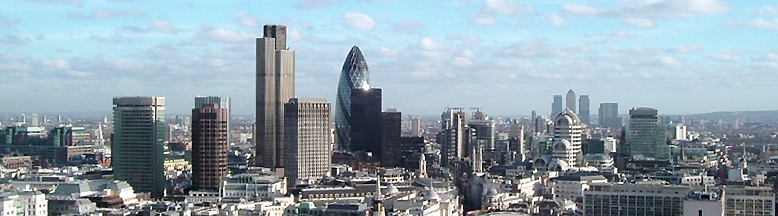
This essay was written by Lower Sixth Form student Oliver Godkin as an Independent Learning Assignment (ILA). It was shortlisted for the 2023 ILA/ ORIS award. The following provides a short introduction to the full essay:
We’ve all heard the word smart added as a prefix to everything nowadays – smart speaker, smart businesses, smart plugs, smart air purifiers, and you can even buy a smart fridge.
There are also smart cities.
Smart cities are a relatively recent breakthrough in urban planning and design, and for the past few decades, have seen proponents far and wide from individual planners to governmental organisations, global tech firms, and billionaires.
With the current global population sitting at 8,036,344,468 at the time of writing, and with 4.4 billion people (56% of global population) living in urban areas as of April 2023, cities are at the forefront of tackling global issues, as a majority of the world’s population lives in urban areas. With rural to urban migration showing no signs of slowing, and with widening inequality in cities worldwide, the city of tomorrow is becoming more and more of a concern, arguably an issue, with which we need to deal with now, lest we forsake our descendants, and leave them a depleted, uninhabitable, planet.
Smart cities are one of the foremost defences against modern global issues, however currently they remain largely a theoretical concept, often confused with other urban design principles, and hence their application in the real world has been varied in success and support.
To view Oliver’s full article, follow this link below:
 The Unchained Library