
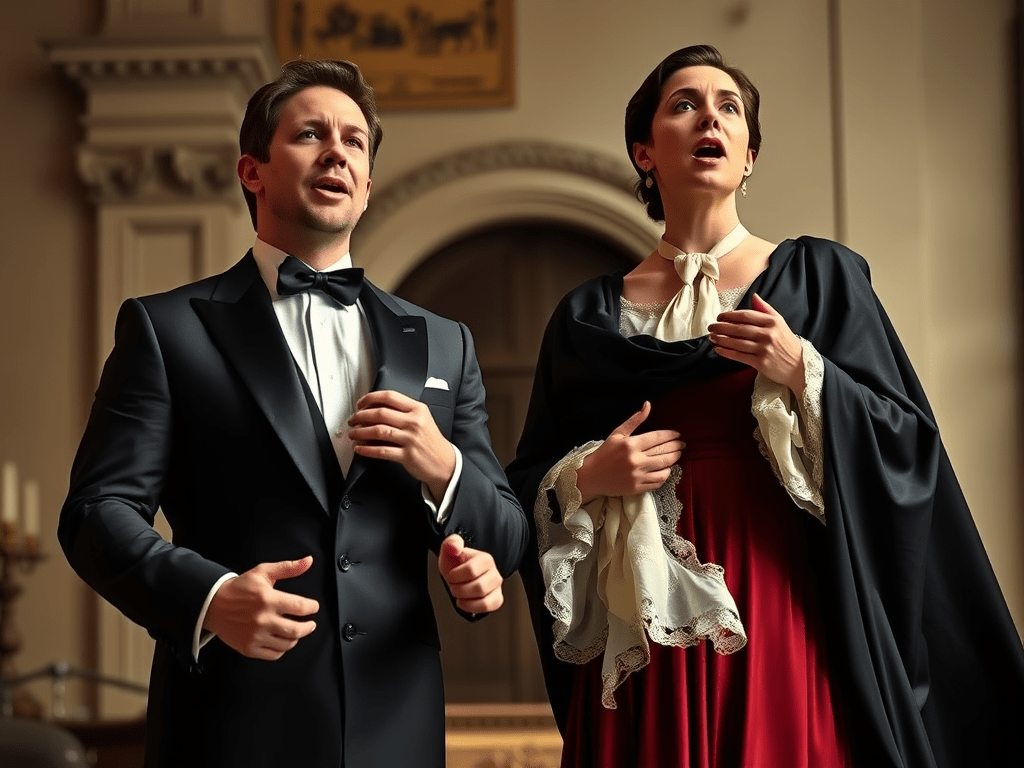
This essay was written by Lower Sixth Form student Oscar Ford as an Independent Learning Assignment (ILA). It was the winning submission in the Arts/ Humanities category of the 2025 ILA/ ORIS award. The following provides a short introduction to the full essay:
Bel canto is a term widely used, and one surrounded by misunderstanding and controversy. While it saw its culmination in the 19th century with pivotal teachers such as the Spaniard Manuel Garcia II (Stark, 1) and Giovanni Battista Lampert, its roots can be traced back to the North of Italy in the late 16th century to small and specialised groups of singers. It was in these groups “whose vocal prowess eclipsed amateur choristers” (Stark, 190) that singers began to display their virtuosic skills through their ease in coloratura, diction and emotional expression. This gradually developed, over lifetimes of dedicated study and experience, into a more familiar idiom of singing that is well studied (despite easily being approximated [Potter, 31]) and that we take for granted today as the healthiest method of classical singing. While the bel canto operas of Bellini and Donizetti were still flourishing, a radical, new, seemingly irreconcilable school of singing came about in Germany, arguably as a nationalist separation (Whitener, 155) from the Italian tradition that had “no other ambition than to satisfy this shallow audience” (Wagner, 44). While derived from similar fundamental principles as bel canto, this new Germanic school took the muscularity and physicality of the style to new heights and new pedagogy emerged. In order to compare these sometimes seemingly incompatible styles, it is logical to try to break the technique down into individual, manageable parts within a phrase; preparation, onset and phonation. Through this method, one can locate both similarities and differences in small scale vocal physiology while maintaining a somewhat comprehensive image of how each aspect integrates with one another to form a complete technique.
 The Unchained Library