This poem was written by upper sixth-former Hugh Jones
Estimated read time: < 1 minute
What colour is the moon? Our language reaches, but falls short of Grasping that ephemeral beauty, Too sublime to be caught in words.
What colour is the moon? Grey? Yes grey, but richer than a single hue; Rather a thousand, layered with majestic artifice – With halo celestial the pale disk crowned.
What colour is the moon? White? Yes white, but not so innocent, Carrying a darker beauty, deliciously marred- Tainted by the sins indulged in her light.
What colour is the moon? Silver? Yes silver, yet unlike that imperial spoil, The celestial orb hangs beyond grasping man’s Grasping tongue, indescribable, and thus, unconquerable.
Runner up for the Cambridge Society for Economic Pluralism essay competition, written by upper sixth-former Jack Donnelly.
Estimated read time: 11 minutes
The Global North is rich largely due to exploitation and underdevelopment of the Global South, which still goes on to this day, and therefore owes reparations to rectify this rift. Discuss.
Murmurs of discontent spread throughout the former colonies. In July 2020 this went beyond mere whispers as the Democratic Republic of the Congo demanded compensation for the pain inflicted by decades spent under colonial rule. Just a month later, Burundi laid the same demands at the feet of Belgium and Germany – to the tune of $43 billion. There’s no doubt that a massive proportion of Sub-Saharan Africa’s – and indeed the Global South’s – modern troubles come courtesy of their exploitation under the Global North; the question emerges, do the modern nations owe reparations for crimes committed centuries ago?
The Global North is an oft-cited idea which, in reality, lacks clear boundaries or uniting principles. For one, the conceptual Global North ignores the geographical parameters implied by the name – it is not simply a conglomerate of nations existing above the Equator or, indeed, some agreed latitude. Therefore, before discussing the Global North-South divide we must establish what the Global North actually describes. The Brandt Report of 1980 gave economists and politicians an idea of the immense gulf in development between the two hemispheres; more importantly, it gave us the ‘Brandt Line’ which depicts the divide based on GDP per capita as a factor. Notably, it straddles the Earth at 30o N but drops to include New Zealand and Australia as part of the Global North. Brandt himself was optimistic for the new century and that coordination between the hemispheres could ‘build a world in which sharing, justice, freedom and peace might prevail’.
In another sense, the geopolitical North-South divide was highlighted in Alfred Sauvy’s Trois Mondes, une planète where he coined the terms First, Second, and Third World. The phrases were originally instituted for the USA and the USSR and their respective allies, along with the unaligned Third World – a term now synonymous with poverty and underdevelopment, rather than a particular political alignment. Today we like to characterise the divide through a number of developmental factors: income inequality, wealth, democracy indices, along with political and economic freedom.
Regardless of how you categorise the divide – it is most certainly there. Examining its extent, the North earns four-fifths of the world’s income while constituting less than a quarter of its population; additionally, at least up until the early 2000s, over 90% of global manufacturing took place in the North. Interpreting the level to which exploitation has brought about the current situation could allow a conclusion to be reached on whether reparations are truly owed.
The most obvious example of historical Northern exploitation of the South is colonialism – it’s simply inescapable. Initially, it came commercially, through companies such as the British and Dutch East India Companies[1] which grew to dominate the economies of their respective subjugated nations. At its height, the East India Company accounted for over 50% of global
trade and acted with the sovereignty and jurisdiction of a self-governing nation. The global mechanism of colonialism was analogous to that of a catapult. The colonial powers of Western Europe played a major role in the deindustrialisation of non-Western societies; British intervention in the Indian subcontinent reduced its share of global GDP from almost a quarter to just a couple of measly percentage points as shown in Figure 2. The metaphor completes itself in the way colonialism catapulted Western powers to global superiority through the exploitation of their colonial subjects.
Nothing is a more egregious act of exploitation than the Atlantic Slave Trade existing between the sixteenth and nineteenth centuries. Briefly ignoring the horrific brutality and the dehumanising nature of the slave trade, we can identify it as the catalyst for so many demographical and economic issues facing Africa today. Some 12 million Africans were captured and shipped out – primarily to America – by the Europeans, destroying their social fabric and depleting the workforce immensely. The poorest parts of modern Africa share a direct correlation with the areas where the most slaves were taken. The scars of colonialism are visible to this day; African nations were created from thin air, ignoring cultural or geographical divides and instead opting for arbitrary borders which have incited enormous amounts of conflict – both national and international – since.
Even beyond exploitation in its most explicit forms, the colonial powers of Western Europe capitalised on their supremacy by taking further advantage of unfair trade. Through ‘gunboat diplomacy’[2], they forced many countries which had escaped colonisation to sign unequal treaties, leaving the nations bereft of tariff autonomy. To understand the impact of this, we must examine the strength of protectionist policies in young economies. Alexander Hamilton argued in his 1791 Report on the Subject of Manufactures that the US needed to defend
‘industries in their infancy’ from cheaper imports in the more competitive and developed international market. By stripping young economies of ‘infant industry protection’, the powers of the Global North deprived many Latin American and Asian countries of a fair chance at development. Many of these treaties lasted for decades – even well into the twentieth century in some cases. The affected Southern countries experienced negative per capita income growth during the late Industrial Revolution period; an inability to nurture and promote their youthful industries contributed immensely.
While the level of ‘exploitation’ today does not even hold a candle to its heights in colonial times, forms of neo-colonialism exist between powerful modern countries and the ‘Third World’. China is exercising its financial might – through FDI[3] – across the entire continent of Africa, moulding it into essentially a ‘China’s China’; in this case, however, the development is not necessarily one-sided. The truth is that China is richly compensating African nations as they surge forwards with rapid urbanisation in the ‘fourth industrial revolution’[4]. Daan Roggeveen, the founder of an Architecture firm and an author of books on Chinese and African
Urbanisation, said ‘right now you could say that any big project in African cities that is higher than three floors or roads that are longer than three kilometres are most likely being built and engineered by the Chinese. It is ubiquitous’. Africa is sitting on a massive stockpile of natural resources and China has been quick to take advantage of the power vacuum in the wake of departing colonial powers. China itself is still considered a part of the Global South, but in essence its actions in Africa are reminiscent of historical Northern intervention. Indeed, there have been cries of exploitation and Chinese imperialism, with the former governor of Nigeria’s central bank criticising their removal of natural resources without any provision of economic enrichment in the form of skills and jobs. Regardless, Africa benefits in some sense from the massive amounts of FDI – something one could consider a form of economic reparation.
Conversely, a significant portion of the North’s success can be attributed to their intrinsic development. Throughout history, a correlation can be identified between the quality of institutions, the strength of government and more advanced economic development. These are elements of a country which can be built up naturally over time; alternatively, they can be instigated by colonisers or conquering foreign powers. School enrolment and greater provision of public goods, for example, contribute a powerful multiplier effect to development. It could be argued that the Global South has not arrived in its disadvantaged position as a result of exploitation, but instead due to unfortunate geography, climate and numerous other factors.
The Global South has, beyond this, suffered from factors exogenous to the influence of the North. Geography is key to this argument – Africa and South America have been disadvantaged greatly due to their narrow orientation; Eurasia benefits from wide, vast plains of arable land perfect for cultivation and the domestication livestock. A lack of genetic immunity in the ‘New World’ led to the decimation of native populations throughout the continent; immunity that
European settlers had from centuries of close integration with livestock – something native Americans never had. Ultimately, the resulting underdevelopment cannot be pinned on European settlers; they could never have foreseen the devastation they would reap on the relatively immunocompromised natives. The blame here falls upon the poor geographical starting points of Southern societies.
Furthermore, Modernisation Theory attempts to explain the underdevelopment of the Global South as a result of their own policies and socio-economic structures rather than Northern intervention. Feudalism, tribalism and relatively primitive economic structures have led their societies to a point where they lack regulation, democracy and have failed to modernise and develop themselves. The theory considers Third World society largely responsible for its own poverty. The archetypal societal approach tends to grant too much power to individuals; corruption in a country’s elite leadership can obviously be enormously detrimental to development – but it is all too prevalent.
The Global South now has its own mechanisms in place which, certainly in part, negate the need to have reparations paid by the North. One of the most notable institutions representing the spirit of the developing Global South is the BRICS[5], a multilateral group of major emerging Southern economies. Between them, they constitute 41% of the global population and approximately 23% of world GDP. The BRICS have two key components to their financial architecture which are dedicated to the development of the Global South, the New Development Bank (NDB) and the Contingent Reserve Arrangement (CRA). The bank, in particular, aims to lend up to $34 billion annually with a focus on massive infrastructure development. When outlining the plan for the organisations, the BRICS found themselves keen to distance Southern investment from the North’s sphere of influence; since they are willing to offer competitive rates to their Southern associates, perhaps they are best left to collaborate without the need for Northern intervention or reparations.
Moreover, we are obligated to question the feasibility of reparations being paid by the North. Multilateral payments of any kind are notoriously difficult to agree upon, as could be witnessed with the days of debate over collective debt[6] assumption in the EU in response to the Coronavirus Pandemic. Now consider the complexity of any agreement that would require payment by the collective ‘North’ to the collective ‘South’ on the basis of centuries of
exploitation and mistreatment. Even if it were decided that the current Global North needed to be held responsible for the actions of past generations, the practicality of it dispensing payments or other forms of compensation is contentious at best. Perhaps the more effective method of extending the olive branch would be through bilateral – rather than multilateral – action and intervention; individual Northern powers could be responsible for making reparations with the countries specifically impacted by their ventures.
Ultimately, the statement is true: ‘The Global North is rich largely due to exploitation and underdevelopment of the Global South’ – to a certain extent. While the North has benefited significantly at the detriment of Southern countries, it is unfair to say that their wealth comes largely from exploitation. A significant portion of Northern success came from the strength of their innate development – strong institutions and a focus on societal growth and evolution have built them into successful nations. Regarding reparations, it is apparent that payment from a United North to a United South would be impossibly complicated to arrange; instead, individual acts of bilateral aids between wealthy Northern nations and poorer Southern nations targeting rapid economic and social development could be a far more constructive option.
Bibliography
Allen, R. C. (2011). Global Economic History: A Very Short Introduction. Oxford: Oxford University Press.
Banerjee, A. V., & Duflo, E. (2013). Under the Thumb of History? Political institutions and the Scope for Action. Annual Review of Economics.
Chang, H.-J. (2014). Economics: The User’s Guide. London: The Penguin Group.
David, D. (2018). The Almighty Dollar. London: Elliott and Thompson Limited.
Elvin, M. (1984). Why China Failed to Create an Endogenous Industrial Capitalism: A Critique of Max Weber’s Explanation. Theory and Society, vol. 13, no. 3, 379-91.
Iyer, L. (2007, November 6). Direct versus Indirect Colonial Rule in India: Long-Term Consequences. Harvard Business School Working Paper, 5-51.
Kamarck, A. (1976). The Tropics and economic development; a provocative inquiry into the poverty of nations. The John Hopkins University Press.
Nunn, N. (2007). Relationship-specificity, incomplete contracts, and the pattern of trade. Quarterly Journal of Economics, 569-600.
Ramachandran, S., & Rosenberg, N. A. (2011). A test of the influence of continental axes of orientation on patterns of human gene flow. Am J Phys Anthropol, 515-529.
Rappaport, J., & Sachs, J. D. (2003). The United States as a Coastal Nation. Jounral of Economic Growth, 5-46.
Sachs, J. (2001). The Geography of Poverty and Wealth. Scientific American, 284.
Sauvy, A. (1952). Trois Mondes, Une Planéte. L’Observateur, 14.
The Persistent Underdevelopment of The Global South. (2018, November). Retrieved from
Warner, A. M., & Sachs, J. D. (2001). The Curse of Natural Resources. European Economic Review, 827-838.
Woolcock, M., Szreter, S., & Rao, V. (2009). How and Why Does History Matter for Development Policy? Brooks World Poverty Institute.
[1] The British East India Company operated in the Indian subcontinent while the Dutch East India Company was in the Dutch East Indies, modern-day Indonesia.
[2] Pursuit of foreign policy objectives with the aid of conspicuous displays of naval power
[3] Foreign Direct Investment – Investment in the form of a controlling ownership in a business in one country by an entity based in another country.
[4] ‘The Fourth Industrial Revolution’ is the ongoing automation of traditional manufacturing and industrial practices, using modern smart technology.
[5] Brazil, Russia, India, China, South Africa (BRICS)
[6] The EU agreed in July 2020 to an $869bn recovery package with debt shared between each member state. Despite close links between the EU states it took several days of debate to reach an agreement.
This article was written by sixth-former Omeet Atara.
Estimated read time: 3 minutes
In the case of Irving vs Penguin Books Ltd, the law was embroiled in a difficult case, which forced them to decide on the validity of a historical claim. Whilst it was labelled a libel case, this was a fundamental question about history. Experts included Richard J Evans were called to the stand to work as witnesses throughout the trial. The significance of this trial is not in the actual arguments, but the result delivered by the judge and historical judgements made.
History is a complex subject and is about interpreting and understanding the past. Historians use a variety of primary and secondary sources to, put colloquially “work out what happened”. By using these sources, they can justify arguments and theories about past actions. However, historians do disagree and in this case, the argument was over the Holocaust. David Irving brought a British libel suit against Deborah Lipstadt and her publishers Penguin Books for claiming he was a Holocaust denier her book, Denying theHolocaust. Significantly, the case was brought in Britain rather than America, where Lipstadt was based; in British libel suit, the defendant holds the burden of proof whilst in America, it is the other way around. Hence, Lipstadt was forced to legally and historically show her claim about Irving was true. The mixing of historical information and legal complexities caused this trial to gain widespread media coverage within historical circles but also the academic media.
The case itself was a bench trial and both sides hired high-quality reputable lawyers in what was not just a legal case but a defining moment in academic history. The lawyers for Lipstadt spent significant periods, with expert historians, trawling through the works of Irving. They were ultimately forced to prove that Irving was historically incorrect, and they did this by reading the footnotes. They would search through each of his sources and ensure that they represented the view Irving took. What they found was a group of misused and distorted historical sources. They were able to argue the comments by Deborah Lipstadt to be true. Therefore, this proof made the libel claim impossible to justify- it was not libel but academic truth.
However, they also asked key historians like Richard J Evans to look at the work of Lipstadt and Irving to try and gain his expert opinion. This brings in the idea of historiography; which is simply the study of written history. He writes the book In Defence of History, which explores the value of history and historiography in the modern age. This has been a key debate at university and in academic history over how we should use this skill. As the expert witness, he concluded that Irving had been factually and intellectually incorrect in denying the Holocaust. He compared the reasonings and the factual evidence provided to make this judgement. He presented written and oral testimony to the court; he was also subject to a cross examination. This formed the basis of the Lipstadt defence which can be described as the justification defence. Rather than use legal escapism, she simply ensured her actions were shown to be fair and justified.
Irving and his lawyers began with the advantage due to the burden of proof. However, the irreconciled actions of falsely manipulating sources inevitably caused significant difficulties when he came to argue his side. Ultimately, his defence was doomed because there was no libel case- what Lipstadt had said was blatantly true now that the sources had been explored.
The judge delivered a crushing 397-page verdict in which he ruled in favour of Lipstadt and gave a damning report of Irving. They concluded him to be a holocaust denier, disappointing historian and the defence was entirely correct. This was a judgment that has set an important legal and historical precedent for the future.
The law and history interacted in what was a case of incredible interest and importance. David Irving was proven to factually incorrect and it established the value of evidence in historical law. Despite the claim from Irving about the personal, economic and academic hardship he suffered the truth and history remained prioritised. The competition between historians over finding the truth makes it an interesting discipline. Regardless of the topic or personalities involved the history and evidence should come first rather than persona and economic disputes. Academic history which has a reliance upon evidence was strengthened once again.
Further to this, the law was integrated with historical debate. Legally, the precedent was set for the value of evidence and removed the potential for other historical libel cases. This is a topic with no legislative agenda and hence the civil case uses precedent entirely. Hence, this ruling will be significant for years to come. The law also proved the strength of evidence no in academia but also in legal cases.
History and law are both academic and complex subjects however and have been discussed and debate together in this example. The intertwining of topics has caused civil law to address historical issues; it is impressive to see how the law controlled and acted upon these issues. The Holocaust was a tragedy and to be debating abut its existence is disgusting- that is not the significant thought here. It is that the law sets a precedent for historical works on evidence, not personality.
This long-read article was written by sixth-former Jack Farrant.
Estimated read time: 8 minutes
The influence of slavery has long been considered to be the most important contributor to the start of the American Civil War. Historians since the days of the Civil War itself have often cited slavery as the primary, or even singular, point of tension. This view, although up to a point valid, is a gross simplification of what was in reality far more complex situation. The government of South Carolina, the first of eleven states to leave the Union, chose slavery as the main cause for the succession in their 1860 Declaration of Succession, saying that there was ‘increasing hostility on the part of the non-slaveholding States to the Institution of Slavery’. Although it is clear that the tensions of slavery were a factor in the outbreak of the Civil War, it is no doubt useful to also take a more Revisionist point of view. Indeed, while the divisive issue of slavery was a cause of tension among States, the problem of inherent disunity between those States encompasses much more than the dispute over slavery. It is more fitting to argue that it was the role of slavery within larger, more complex issues of economy, demography, and geography, that was more of a factor in the outbreak of the Civil War, as opposed to declaring slavery the sole source of tension.
Historiographical debate over the last two centuries has provided the framework of modern opinion about the outbreak of the Civil War. For many years, it has been understood that the origins of the Civil War cannot be questioned without also looking at the wider context of international affairs and domestic tension within American society at the time. In addition to this, it is important to take into account the difference in opinion about the origins of the Civil War in Northern and Southern accounts. Especially in the years directly following the end of the Civil War, and into the Reconstruction Era at the end of the 19th Century, general Southern collective memory was that States’ Rights and Northern Aggression were the key factors in the outbreak of the war. On the other hand, Northern abolitionists, as well as the majority of today’s professional historians, point to the institution of slavery as the primary cause.
On the 20th August 1619, an English trade ship, The White Lion, arrived at Point Comfort near Jamestown, Virginia. It carried with it approximately twenty Africans, who became the first slaves to arrive in the British Colonies in America. By 1860, the slave population was four million. Although Revisionism is appropriate when considering the causes of the Civil War, it is still pertinent to acknowledge the importance of slavery as a source of tension. The uncomfortable question of slavery had remained unanswered since the early days of the Revolutionary War; a shortcoming of the revered Founding Fathers. Slavery had been practised in America for as long as it had been a colony, and so became a contentious issue in the new Union. George Washington, despite being a slave-owner himself, claimed that ‘There is not a man living who wishes more sincerely than I do, to see a plan adopted for the abolition of it.’ This duplicitous idea is at the core of early-Union hypocrisy over the morality and legality of slavery. The nationalistic sentiments of the Declaration of Independence and the United States Constitution affirmed ‘that all men are created equal’, but despite these claims, slavery would remain legal in the former colonies for the time being. In the years following the Revolutionary War, certain States began to prohibit slavery within their territory, creating a great divide within the Union. The politicians of the early Union were far more content to compromise than to take on the problem of slavery outright, a sentiment emphasised in the inclusion of the Three-Fifths Compromise, which decreed that each slave would be counted as three-fifths of a person, in order to increase House representation for slave-holding States. Further legislation, such as the 1793 Fugitive Slave Act, allowed for escaped slaves in free States to be returned to their masters in slaveholding territories. The sentiment of compromise rather than action confirms slavery as a cause for tension in America, and so it is clear that the response to early-Union slavery was an important factor in the lead-up to the Civil War.
Political mismanagement of slavery no doubt also contributed to the inter-State tensions preceding the Civil War. Throughout the early 19th Century, a careful balancing act of slaveholding and free States in the Union was undertaken to ensure no side of the argument had majority representation in Congress. Just as had been prevalent in the 18th Century, a number of compromises were made to try and preserve the Union. The 1820 Missouri Compromise created the Free State of Maine to counteract the admission of the Slave State of Missouri, and banned all slavery in Louisiana Purchase territory North of the 36° 30’ parallel, excluding the State of Missouri. This was contentious legislation; contemporary writers such as ex-President Thomas Jefferson claimed that the division of the country along sectional lines would lead to the breakdown of the Union. Although the Missouri Compromise undoubtedly delayed the outbreak of war, Jefferson was proven correct just forty years later.
The concessional nature of the legislation did nothing but delay the inevitable confrontation between North and South, rather than avoid it entirely. The Compromise of 1850 not only enhanced the power of the Fugitive Slave Act, but also defused a confrontation over slavery in the recently acquired New Mexico Territory. While this bill lessened tensions in the short-term, it was yet another example of compromise rather than pragmatism, and so did nothing in the longer-term to quell the confrontation. Further events such as the Kansas-Nebraska Act of 1854, allowing self-determination over slavery in the new States of Kansas and Nebraska, and the infamous Dred Scott v. Sandford court ruling, which devalued of the Missouri Compromise of 1820 by forcing Scott to remain a slave even though he had lived in free territory for four years, brought the country closer and closer to war, arguably dooming the Union to its impending division. It is clear that the lack of political pragmatism, and by extension the willingness to compromise, did nothing to stop the inter-State problems that had existed since the days of the Revolutionary War. In this way, political mismanagement of the institution of slavery caused just as much tension as the existence of that institution.
For many years, the President of the United States has been one of the world’s most influential and powerful political figures, and is supposed to act as the defender of the Constitution and of liberty across the world. The position of President has, over American history, been held by some of the greatest leaders such as Abraham Lincoln, among many others. Despite this, the Presidency in the years leading up to the Civil War was not nearly as reassured or steadfast as it had been. The Election of 1856 saw Pennsylvania Democrat James Buchanan carry every Southern state. In his inaugural address, he left the question of slavery up to individual states, perpetuating the passive approach taken to slavery that was common at the time. Buchanan was a highly divisive figure, and as an advocate of the continuation of slavery, he alienated many Northern abolitionists. Some of the clearest evidence for the divisions within America was the election results in 1856. The divide between Northern and Southern States was obvious, with Buchanan winning every Southern State, and Republican candidate John Fremont, who arguably would have taken a more pragmatic stance to slavery, winning almost every Northern State. This was symbolic of the regionalised nature of American society in the years preceding the Civil War. The anti-abolitionist ideology of President Buchanan was generally popular among Southern voters, and highly unpopular among Northern voters. His politics, just like the Kansas-Nebraska Act, divided the Union among sectional lines. The Election of 1856 was a microcosm of a wider split in the Union; a situation getting closer and closer to Civil War. Overall, the influence of the Presidency during this time did nothing to quell tension within the rapidly failing Union. General historical opinion tends to disregard this factor of the Civil War, but it can be argued that the divisions of American politics were just as important to the start of the Civil War as the existence of slavery is usually considered to be.
Ever since the early days of post-Revolution America, the issue of States’ Rights had been highly contentious, and the source of much debate among Northern and Southern politicians for decades. For decades, the split between North and South was obvious, encompassing economics, politics, and society. Many in the Southern States argued that Congress favoured the North, and despite being proven correct on multiple occasions, the feeling of dejection felt by many in the South fuelled inter-State rivalry in the Antebellum Union. The Articles of Confederation in the days of the Revolutionary War had allowed the central government little authority in the running of individual States, instead allowing the Union’s constituents to govern themselves on a self-determinist basis. The Constitution a few years later strengthened the government, decreeing that the Federal Law was ‘the supreme Law of the Land’. Despite these efforts to strengthen central government, the federalism present in the early Union meant that post-Revolutionary America was not much more than a loose confederation of individual entities. This lack of complete unity would continue to perpetuate through Antebellum America; it can be said that the Constitution itself split the country along sectional and regional lines, with each constituent member of the Union governing largely separately from the central government. The problem with federalism was most obvious in the early 19th Century, in particular regarding the Nullification Crisis of 1832. This event highlighted more than anything else the innate differences between the Northern and Southern States. The North viewed overseas trade as problematic, due to its industrialised and domestic economy. On the other hand, the much more rural and backwater South relied heavily on international trade, due to the larger emphasis on agriculture and exportation. In the late 1820s and early 1830s, Congress passed a series of tariffs that clearly favoured the Northern economy over that of the South, and the divisive Nullification Crisis began in 1832 when South Carolina declared the tariffs of 1828 and 1832 void within the State, prompting President Andrew Jackson to threaten military force. This brief showing of anti-Union sentiment turned out to be a precursor to the events directly preceding the Civil War, with South Carolina the first State to succeed from the Union in 1860. Overall, the existence of anti-Union sentiment in Southern States, and the popular Southern idea that the government favoured the North helped to fuel tensions between the constituent States of the Union, at the time a broad confederation of entities rather than a singular united body. The inherent split between North and South highlighted the single largest problem with creating such a Union; the political, economic, and social situations between the two sides of the country were so different.
In conclusion, the influence of slavery in the outbreak of the Civil War cannot be understated. Its continued legality in some parts of the Union fuelled debate and division for decades after the Revolution, and in time tore the Union apart along sectional lines. However, from a Revisionist frame of reference, it is vital to understand that slavery as a part of American society was not wholly to blame for the start of the war. Indeed, the split legality of slavery based upon which State you lived in was symbolic of the innate problems within the early Union, as was the lack of pragmatism from politicians who were much more willing to compromise than to confront issues. The multifaceted split between the North and South was as much a problem of economy and society as it was slavery, with the Antebellum Union arguably trying to hold together what should really have been separate nations in first place. Regardless, the most important factor in the lead-up to war in 1861 was not slavery itself, but rather the divisions in the Union caused in part by slavery, and the half-hearted attempts to reconcile the problems of slavery. The fundamental differences between North and South, and the inability of politicians to effectively reconcile the problems caused by the division, is more influential to the outbreak of the Civil War American slavery itself. In the opinion of President Lincoln, the goal of the Civil War was to preserve the Union, not to end slavery, and so it is clear that the Union fell apart due to its own incompetence in dealing with slavery and other issues dividing North and South, not due to the outright existence of slavery in post-Revolutionary America.
This long-read article was written by sixth-former Alexander Norris.
Estimated read time: 8 minutes
As we celebrate Easter, some may, in the abundance of tacky eggs and bunnies, forget the Christian roots of this festival – either by accident or design! This widely celebrated feast is in fact based on a very controversial question: the issue of the Resurrection.
The reason this is such a controversy is because of its practical implications, both for the 2.2 billion adherents of Christianity, the world’s largest religion, and for those who reject the message of the Gospel. This has been admitted from very early on, with St Paul writing to the Corinthians in the first century AD that ‘if Christ has not been raised, your faith is futile, and… we [Christians] are of all men most to be pitied.’
This demonstrates the crucial importance of the Resurrection as the touchstone of the Christian faith, since the choice is a clearly binary one – if it happened, Christians are right; if it didn’t, they’re wrong. In other words, the claimed Resurrection was either the greatest miracle the world has ever seen, or the greatest hoax in the history of mankind. There is no middle way.
Indeed, what makes this an even more contentious matter is the fact that it is theoretically possible, using historical research, either to prove it beyond reasonable doubt or to utterly debunk it, hence the paramount importance of such an investigation.
The Facts
Completely apart from the Gospels sympathetic to Christ and his followers, we have a large number of Jewish and Roman sources who mention this man’s claims from a sceptical point of view, giving their testimony particular value for historians. There are Roman sources (such as Tacitus, Pliny the Younger, Suetonius, Lucian of Samosata, Celsus, Thallus, and Phlegon) and Jewish sources too, which include Josephus, Toledot Yeshu, the Talmud, and Mara Bar-Serapion. The number of sources makes it impractical to fully analyse them in a brief essay such as this, but what we can ascertain from their agreement are the following historical facts:
Jesus of Nazareth claimed to be the Messiah foretold by the Jewish scriptures
He was arrested by the Jewish authorities and handed over to the Romans to be tried
He was tried by the Roman governor, Pontius Pilate, and crucified as a political criminal
Three days after his death, several women disciples of his alleged that his body had disappeared from the tomb
His disciples claimed that God had raised him from the dead, and that he appeared several times to them before ascending into heaven
Security Precautions
We know more than this, though, from the context of his death, especially given the fact that he had apparently predicted his death and Resurrection beforehand – in any case, the Jewish authorities were taking no chances of making him a martyr.
According to the Gospels, he underwent six trials to ensure his condemnation: one before Annas (the previous High Priest), one before Caiaphas (the present one), and one before the Sanhedrin of Jewish elders, before being handed over to the Romans, who tried him before Pilate (who could not find any grounds for condemning him) then passed to the nominal authority of King Herod Antipas, before finally being sentenced by Pilate again under pressure from the Jews. The final sentence was as follows: he was found guilty of claiming the title of ‘King of the Jews’ and so setting himself up in political opposition to the authority of Tiberius Caesar, the Roman emperor at the time – this was the crime of treason, and as such merited death by crucifixion.
Crucifixion itself was so gruesome and degrading a torture that Roman citizens could not legally be crucified, hence why most crucifixions were reserved for slaves in uprisings. Here is a brief description of the typical process:
Before crucifixion the victim would be whipped with a flagella – a whip with multiple ends, into which were sewn pieces of rock, bone and metal – which would uncover the muscles and some bones of his back. The flagellation usually ceased when the victim was deemed to be near to death.[15]
After this, the victim would have had to carry a crossbar of c.50 kg to the place of his execution (which in this case was just under a kilometre away) – this crossbar was so heavy and he was so weak that he had to be helped by a passer-by, as the Romans did not want him to die before they could torture him. He would then be stripped of his clothes and nailed to the cross.
Even then, death would only come after a lengthy period of torture: the prisoner would suffer incredibly painful cramps, which would make him unable to push himself up with his legs, his muscles would become paralysed, so that he could inhale but not exhale air, carbon dioxide would build up in the lungs and the body would make spasmodic movements up, so he could exhale; this process was repeated for many hours, sometimes taking days.
Death would be from suffocation; and the legs were usually broken to terminate torture when the guards had had enough.
The Gospel accounts are in this respect completely accurate as to the process of crucifixion, and even included the detail that Christ’s legs were not broken because he was already dead. They also mention that blood and water flowed from his heart when the centurion pierced it – not only would this spear thrust have killed him had he not already have been dead, but in deaths by torture, clear pericardial fluid (what would have looked like water) builds up around the heart only after death. Furthermore, the Roman governor could only hand over the body to be buried once death had been certified by four professional executioners. This all serves to demonstrate the certainty of his death.
Christ would then have been taken down from the cross and buried in a tomb, whose entrance would be c.4-5 feet high; this again is verified by the Bible which says that St John had to stoop to enter. He was buried with 100 lb of spices in myrrh (not an unusual quantity for the time) smeared under the burial cloths as a kind of glue so that they could not be taken off very easily. Moreover, investigations of the weight of the stone shows it would have weighed between 1½ and 2 tons – it would have been rolled in place by gravity on a slope, and thus could not be removed without intense physical exertion.
As it happens, the Jews requested a Roman guard for the tomb to stop the body being stolen – this would typically have consisted of sixteen men, four on each side, which theoretically could hold 36 square feet against an entire battalion by utilising the space to their advantage. When they slept in turns, they slept in such positions so that nobody could get past without stepping on them and waking them up. Desertion and falling asleep on duty both required the death penalty by Roman law, so the possibility of this is minimal. Finally, the tomb would also have been sealed with the Roman governor’s seal, which represented the authority of Rome, and thus breaking it would be considered treasonous too.
What Happened?
Therefore, there are certain things that must have happened for the Resurrection even to be a possibility:
Someone/something broke the governor’s seal, invoking the penalty of death if they were caught (to avoid this punishment all Jesus’ disciples had fled, and even their chief, St Peter, had denied any association with him three times).
Someone/something rolled away the stone (requiring a great deal of manpower).
Someone/something removed the body (if they hadn’t, then the Jewish authorities could have produced it as evidence of the disciples’ mendacity, especially given the fact that they began to preach in Jerusalem itself where the grave was).
Someone/something caused the Roman guard to flee (desertion was punishable by death, hence they must have had a pretty good motive for doing so!)
Someone/something left the graveclothes neatly folded (an unusual twist).
Someone/something convinced a huge number of people that they had seen the risen Christ (this included Mary Magdalen, two disciples on the road to Emmaus, the apostles in the locked room, and even 500 people at once, all of which were recorded by St Paul 30 years later who added that they were still alive – in effect, saying ‘Ask them yourselves if you don’t believe me!’) with a large variety of backgrounds (mourning, scepticism, open hostility) and various emotional responses (passion, fright, incredulity).
Women claimed to have seen him first (also seemingly unreliable since they were unable to testify in a court of law, which is why the other disciples refused to believed them at first).
Theories about the Resurrection
There are many theories about what happened, so here I’ll outline them as succinctly as possible, and show why so many of them contain major inconsistencies:
Nobody knew where Jesus was buried – although crucified men were usually buried in a common grave, there is archaeological evidence that this did not always happen, especially when the man had a large group of family and friends; in this case Jesus was laid in the private tomb of Joseph of Arimathea, which was clearly well known to both his disciples (who had laid him there) and the Romans (who stationed a guard there).
The women went to the wrong tomb – similarly, although most tombs would be fairly indistinguishable, this was a private burial ground; indeed, this relies on everyone (including St Peter, St John, the Roman guard and the Jewish authorities) all independently going to the wrong tomb. Also, if his body was present anywhere the whole story could have been nipped in the bud immediately by showing it.
The resurrection was a legend invented long after Jesus’ death – this is untenable given the accounts we have from the mid-first century AD by which point the story had already become well-established, especially St Paul’s mention in 56 of over 500 witnesses still alive who could verify it.
Jesus’ disciples hallucinated – firstly, hallucinations tend to occur to either paranoids or schizophrenics, and the disciples were neither of these (they had a wide range of personalities and came from a large variety of backgrounds); secondly, hallucinations are very private and not only did Christ appear to a large number of people, but ate with them, and invited them to examine his wounds; thirdly, most of the appearances were in broad daylight (there were fifteen of these, at one point to over 500 people); fourthly, hallucinations require an anticipating spirit which was not present, since the disciples thought that Christ was permanently dead and at first refused to believe that it was he (St Mary Magdalen went to anoint his dead body); fifthly, not only did the hallucinations happen irregularly and ceased at a fixed point (Christ’s Ascension), they also do not square with the reaction of the Roman Guard and chief priests, or with the empty tomb and broken seal.
The disciples stole the body – this was the most common accusation at the time, despite the issues already described which stopped them getting to the tomb in the first place (especially the Roman guard, every trained soldier of which could have easily finished off the whole band of simple fishermen); also, it fails to explain why ten of the original twelve apostles died horrible deaths as martyrs, without there being records of a single one of them admitting that it was all a lie.
The Roman or Jewish authorities stole the body – they could have done this to stop it being used as a relic, but given the damage it did them they could easily have presented the body at any point together with witnesses to its removal to disprove the disciples’ story; there is no evidence that anything of the sort was ever even suggested.
Jesus fainted on the cross and recovered in the tomb – this theory assumes that: (1) Jesus managed to survive the immense torture of scourging, lifting his cross-bar (which he could not even do on his own), nailing to the cross, and crucifixion; (2) when a spear was thrust into his side on the cross, eyewitnesses were wrong that blood and water came out, a sign of death; (3) his death was confirmed by four experienced Roman executioners, who must all have been mistaken; (4) over 100 lb of spices and linen encased his body, he must have breathed through it all; (5) in this state he managed to burst out of his garments, (6) roll the stone away from the inside (impossible for a strong man to do on his own, let alone one so weak) and (7) fight off the guards, then (8) appear in this almost-dead state to his disciples and convince them that he was the triumphant Lord of Life. This would in fact be more miraculous than a resurrection, and requires more faith to believe, especially since such an appearance of Jesus as a man badly in need of food, water and medical aid would hardly have cheered them up, and certainly would not have filled them with enthusiasm to dedicate their lives to preaching about his Resurrection.
As has been shown, all of these theories contain major problems, to the extent that to believe them requires a greater leap of faith than has often been ascribed to Christians.
Conclusion
So what was it that transformed the lives of the disciples, turned them from despair to hope, from fear to courage, and gave them the ability to die fearlessly for their beliefs when beforehand they had been cowering behind locked doors, afraid of their lives?
What was it that changed this small group of penniless fishermen, tax collectors and peasants into the oldest institution in human history, and the one with the most numerous followers?
What changed the most ardent persecutor of this tiny sect into the greatest missionary of the global Universal Church of Christ?
In the words of Sir Arthur Conan-Doyle, ‘when you have eliminated the impossible, whatever remains, however improbable, must be the truth’. Only one adequate theory therefore remains: that as the Gospels narrate, Christ rose from the dead.
This long-read article was written by Sixth Former Sam Cherry. It provides a new translation of the first chapter of the Gospel of John, from the New Testament of the Christian Bible. It concludes with a translator’s commentary.
Estimated read time: 8 minutes
The Gospel According to St. John, Chapter 1:
1 In the beginning was the Logos, and the Logos was with God, and the Logos was God. 2The same was with God in the beginning. 3All things were made through Him, and without Him nothing which has been made was made. 4In Him was a way of life, and that way of life was the light of humankind. 5And the light shines in the darkness, though the darkness did not understand it.
6There came a man sent from God, named John. 7This man went as a witness in order to testify about the light, such that all might believe through him. 8He was not that light, but came to bear witness about the light. 9There was a true light, who illuminates all people coming into the world. 10He was in the world, and the world was made through Him, though the world knew Him not. 11He came into His own, and His own did not receive Him. 12But as many as did receive Him, He gave to those who believe in His name the power to be made children of God; 13they were not born from blood, nor from the will of the flesh, nor from the will of man, but of God. 14And the Word became flesh and tabernacled amongst us, and we admired His glory: His glory as the only child begotten from the Father, filled with grace and truth. 15John testifies about Him, and cried out, saying: ‘He was the same one of whom I spoke; the one who is coming after me came before me in precedence, because He was before me’. 16And from His fullness we all received that grace in place of grace; 17because the Law was given through Moses, yet grace and truth came through Jesus Christ. 18No one has ever seen God, but the only-begotten son, being in the bosom of the Father, has made Him known.
19And this is the testimony of John: when the Jewish Temple authorities sent priests and Levites in order to ask him ‘who are you?’ 20he confessed and agreed that ‘I myself am not the Christ,’ and did not deny it. 21So they asked him: ‘who are you then? Are you Elijah?’. And he says: ‘I am not’. ‘Are you the prophet?’ He answered: ‘no’. 22They therefore said to him: ‘who are you? In order to give an answer to those who sent us, what do you say about yourself?’. 23He said: ‘I am a voice in desolation, crying out: make straight the way of the Lord, just as the prophet Elijah said’. 24But the men who had been sent were from the Pharisees, 25and they asked him and said to him: ‘if you are not the Christ, nor Elijah nor a prophet, why then do you baptise?’. 26John responded, saying: ‘I baptise in water, but in your midst stood one whom you did not know. 27He is the one who is coming after me, who came before me in precedence; I myself am not worthy to loose the strap of His sandal’.28These things came to pass in Bethany, on the other side of the Jordan, where John was baptising.
29The next day John sees Jesus coming to him and He says: ‘Behold the Lamb of God who is taking away the sin of the world. 30This is the same Man of whom I said: “before me is coming a Man who came before me in precedence, because He was before me”. 31And I myself did not know Him, but, in order that He might be revealed to Israel, for this reason I went into the water baptising’. 32And John testified saying that: ‘I have seen the Spirit descending as a Dove from heaven above, and it remained upon Him. 33And I did not see Him, but, having sent me to baptise in water, He told me that: “whomever you might see the Spirit descending and remaining upon is the same person who is baptising in the Holy Spirit”. 34And I recognised and testified that He is the Son of God’.
35The next day again, John was standing with two of his disciples, 36and, having seen Jesus walking, says: ‘behold the Lamb of God’. 37The two disciples heard him speaking and followed Jesus. 38But Jesus, having turned around and seeing them following Him, says to them: 49‘what do you seek?’. And they said to Him: ‘Rabbi,’ (which is to say, being translated, ‘Teacher’), ‘where are you staying?’. 40He says to them: ‘come, and you will see’. Thus they came and saw where He stays, and stayed with Him that evening; it was about the tenth hour. 41Andrew, one of the two men having heard from John, and having followed him, was the brother of Simon Peter. 42That same man finds his brother and says to him: ‘we have seen the Messiah,’ (which is to be translated ‘the Christ’). 43And he led him to Jesus. Jesus, standing, said to him: ‘you are Simon, the son of Jonah. You will be called Kephas,’ (which is to be translated ‘Peter’).
44The next day Jesus wanted to go out into Galilee. And He found Philip and says to him: ‘follow Me’. 45And Philip was from Bethsaida, the city of Andrew and Peter. 46Philip found Nathanael and says to him: ‘we have found Him, whom Moses and the Prophets wrote about in the law – Jesus of Nazareth, the Son of Joseph’. 47And Nathanael said to him: ‘what from Nazareth can be good?’. Philip says to him: ‘come and you will see’. 48Jesus saw Nathanael coming towards Him and says about him: ‘behold a true Israelite, in whom there is no deceit’. 49Nathanael says to Him: ‘whence do you know me?’. Jesus answered and said to him: ‘before Philip had called you, I saw you under a fig tree’. 50Nathanael responded and says to Him: ‘Rabbi, You are the Son of God; You are the King of Israel’. 51Jesus replied and says to him: ‘do you have faith because I said to you that I saw you under a fig tree? You will see greater things than these’. 52And He says to him: ‘truly, truly I say to you, henceforth you will see heaven above opening, and the messengers of God ascending and descending on the Son of humankind’.
Translator’s Commentary:
My source was the Koine New Testament as published in 1904 and 1942 by the Ecumenical Patriarchate of Constantinople, with later corrections by the Church of Greece. It departs ever so slightly from other versions by dividing the text into 52 verses instead of 51; what is v.48 in other editions is split into v.48 and v.49 in this text. For reference I used Strong’s Greek Concordance and Liddell & Scott’s English-Greek lexicon, both accessed online.
I have taken a largely literalist approach to the translation. This includes the preservation of the historic present, and the keeping of participles as participles, even when in English it might be more natural to use normal verbs, insofar as was possible. In order to preserve clarity, I have omitted or introduced conjunctives or pronouns in some places into the translation (e.g. v.45 & 46)[1]. All speech punctuation is editorial, as it does not exist in the original.
Perhaps the most obvious difference in my translation of the first chapter of the Gospel according to St. John, versus most other versions, lies in the very first sentence, in my decision to leave Logos (Λογος) untranslated [v.1]. What inspired me in the first place to undertake translating this passage was my dissatisfaction with the popular rendering of Λογος as ‘Word’. The Greek term has a multitude of meanings: reason, story, purpose, decree, maxim, doctrine, account etc. – the list goes on and on. Picking any single word then as a direct translation, I think, necessarily removes the nuance that comes from the multiplicity of meanings captured in ‘Λογος’. Whether that was St. John’s original intent or not, I think this obscurity, these possibilities, should be reflected in the translation as they exist in the original. The only way to do that, then, is to leave the term as it is, untranslated.
I found it difficult to find a suitable way of capturing the word ‘ζωη’ in English [v.4]. While most translators render in literally as ‘life’ (take for example the NIV, KJV or ESV) I think this translation is an oversimplification. ‘ζωη’ means more than ‘life’ in the simple biological sense (the corresponding Greek for that would be ‘βιος’), but rather the totality of the spiritual, physical and active aspects which constitute human life. My best attempt therefore was ‘a way of life’, though this still feels insufficient in my opinion.
Also in v.4, I have decided to interpret ‘των ἀνθρωπων’ in a gender-neutral sense. No doubt the word itself is masculine, and is thus often rendered as ‘mankind’ or ‘man’, but as ‘ἀνθροπος’ in is understood to refer to all humans and not just males I think ‘humankind’ is a more fitting translation. Later, in v.52 I have opted to translate ‘του ἀνθρωπου’ as ‘of humankind’ again given the context, even though it is in this case singular, as ‘the Son of human’ sounds very unnatural in English.
The word translated as ‘flesh’ (‘ἡ σαρξ’) [v.13 & 14], often has associations with human nature, and especially the human inclination to sin, alongside the terms more biological meaning. The nuance of St. John’s use of this term then in v.13 (‘the will of the flesh’) is more or less obvious, but less so in v.14. Strong suggests that ‘ὁ Λογος σαρξ ἐγενετο’ (‘the Word became flesh’) refers not only to Christ taking human form in the incarnation, but also to indicate that Christ took on human nature, with its moral weakness. While the term ‘flesh’ in English does, to an extent, have an association with carnality, I cannot find a way of communicating in English a suggestion of both physicality and weak human nature, so ‘flesh’ remains the best translation of ‘σάρξ’, if an imperfect one.
I think my choice to translate ‘ἐσκηνωσεν’ [v.14], usually translated as ‘dwelled’, instead as ‘tabernacled’ reflects the meaning of the word more accurately. Though it literally means to pitch a tent, Greek Jews reading this passage at the time would have noticed the nuance in this particular verb, as ‘σκηνη’ (meaning dwelling, tent or hut) was the term used to translate the Hebrew word for the Tabernacle (‘מִּשְׁכָּן’, ‘mishkan’) in the Septuagint. I wanted the English to reflect this, as otherwise the theological significance which resides in this unusual word (it occurs only once in the Gospels) would be lost.
St. John linguistically distinguishes between the Jewish people who supported Jesus, and those who opposed Him. Typically, he refers to those who opposed Jesus as ‘οἱ Ἰουδαιοι’ [v.19], though elsewhere in his Gospel this term is used more neutrally, including when Jesus is described as ‘βασιλεὺς τῶν Ἰουδαίων’ (‘King of the Jews’). Elsewhere, he uses ‘οἱ Ἰσραηλίται’ to describe Jews who are favourable to Jesus (e.g. in v.43). While it may seem obvious to translate ‘οἱ Ἰουδαιοι’ as ‘the Jews’ this is not by far an adequate translation, as it would suggest that the persecution was propagated by all Jews, as opposed to a select number of the Temple authorities. Moreover, elsewhere in the Gospel St. John uses the term interchangeably with the Pharisees or chief priests, showing the St. John was accustomed to using the term for subgroups of the Jewish people, and did not intend it to mean all Jews. In the context of the passage, with this in mind, I have thus translated ‘οἱ Ἰουδαιοι’ as ‘Jewish Temple authorities’ and not as ‘the Jews’.
I decided to translate ‘ἐν ἐρημῳ’ [v.23] as ‘in desolation’. Most literally, as a noun, it refers to a place of sparse vegetation, but adjectivally is used to describe an empty place of solace, so I think ‘desolation’ is the most accurate reflection of the meaning in context.
The word rendered as ‘heaven above’ (‘οὐρανος’) [v.32 & 52] is used to refer both to heaven in the spiritual sense, and to the sky or atmosphere. While the word ‘heaven’ in English also has this duality, it is more associated, especially in a theological context, with the spiritual meaning, and thus to translate ‘οὐρανος’ simply as ‘heaven’ neglects the nuance of the Greek. To capture both the spiritual and physical meanings, I think ‘heaven above’ is the best translation, as ‘heaven’ capture the spiritual side, but ‘above’ tempers this with a spatial and hence physical aspect.
Also in v.32 ‘upon Him’ may instead be translated as ‘in His presence’. Similarly, in v.33 ‘remaining upon’ could as be translated as ‘remaining in their presence’. This is due to the ambiguity in the precise meaning of the preposition ‘ἐπι’ in the context of the phrase ‘ἐπ’αὐτον’.
In v.43, Jesus names St. Peter, who is originally called Simon, ‘Kephas’, a transliterated Aramaic term (‘כֵּיפָא’, ‘kepha’); the corresponding Greek word is ‘Petros’ (Πετρος). Though normatively translated as ‘rock’ or ‘stone’, there is some dispute as to whether the Aramaic, and correspondingly the Greek term, should be thought to mean jewel instead. This possible translation could suggest that Peter was special or valuable, conferring a different meaning than if it were translated as ‘rock’, which is usually understood to refer to St. Peter’s reliable and strong character, and his position as the foundation of the Church (c.f. Matthew 16:18).
[1] Additionally, in v.49 the participle ‘ὀντα’ (being) was omitted for clarity.
This article, questioning whether the problem of evil is a conclusive argument against the existence of God, was written by sixth-former Sam Cherry. It won him a place on the St. Andrew’s Logos Institute Summer School.
Estimated read time: 5 minutes
The problem of evil (PoE) posits that it is a logical contradiction for the omnipotent, omniscient and benevolent God of theism to exist in a world that contains evil. The argument is summarised by Mackie thus: ‘God is omnipotent; God is wholly good; and yet evil exists. There seems to be some contradiction between these three propositions, so that if any two of them were true the third would be false. But at the same time all three are essential parts of most theological positions: the theologian, it seems, at once must and cannot consistently adhere to all three’. In other words: no possible world exists in which both God and evil coexist. If this argument is sound, it is therefore a logical impossibility that the God of theism exists.
Implicitly, the argument assumes that a benevolent God could not permit the existence of moral evil. In my opinion most worthwhile counter-arguments to the PoE seek to attack this assumption. Mackie recognises this when he states that the free will defence is the only somewhat plausible reconciliation, despite him ultimately rejecting it.
It is important to note here, before further discussion, two fundamental limits to Mackie’s argument. First, it defends for only moral, but not natural evils. While Mackie admits that this line is not always clear cut, causes of suffering arguably exist that are not attributable to human actions, such as the deaths resulting from natural disasters or diseases. The free will argument does not inherently address natural evils. This question must be left to the theodicies, such as Irenaeus’, which argues that the suffering arising from natural evils might be instrumentally good in helping develop moral goodness in humans.
Second, the argument requires a libertarian or compatibilist view of free will, and if we reject this, the argument becomes nonsensical in either direction, as without free will the concepts of moral good and evil don’t make sense.
The theologian Plantinga argues that evil is the product of human free will, endowed to us by God. He argues that freedom is a ‘higher-order’ good, i.e. one that is necessary for the meaningful existence of other goods. It is more good, according to Plantinga, for there to be a world in which people freely choose to do good things (which necessitates them also being able to do evil) than one in which people cannot do evil, as if it was impossible for humans to do evil, then there would be no virtue in our not doing evil. At least superficially, I think this argument successfully reconciles benevolence with evil.
Plantinga’s argument leads to two questions. First, why is it the case that God, if He is omnipotent, cannot create a world in which people always freely choose to do good? Second, to what extent does the existence of human free will effect God’s omnipotence?
Mackie argues that God’s omnipotence permits Him to create a world in which people could always freely choose the good, and God’s benevolence inherently predisposes him to create the least evil of all possible worlds, i.e. the one without moral evil. Mackie’s argument is as follows: when we say that a person (P) had free will when undertaking an act (X), we mean that before the act was undertaken (at t1) there were no ‘external antecedent sufficient causes’ to effect P to do X or ¬X at a later time (t2) when P actually acts. If it is the case that in any given individual act at t1, P can do X (where X is the morally ‘good’ act), it follows that it is logically possible for every P at every t2 to have always performed X without this changing the fact that at t1 P always had the possibility of performing ¬X. In this way could God create humans such that they always freely chose the good?
No. Plantinga responds by saying that a world with freedom but without the possibility of moral evil is impossible – that the notion of God being able to create humans such that they ‘always freely chose the good’ is incoherent. This is because of what he calls ‘trans-world depravity’: the concept that in every possible world where moral good exists, the possibility of for P to choose to the evil act must also exists. In all possible worlds with free will the potential to do evil exists, therefore God cannot create a possible world in which He predestines P to do one or another, as such a predestination would eliminate the free will at t1.
God could have created a world in which there was only moral good, but this would be the product of the near infinitesimally small chance that free agents always choose the good, and hence this result would still not be the product of God’s volition. If God could foresee that P would always choose good acts over evil then P’s acts would be predestined, not free. If the possibility that P could commit evil exists, it follows that this possibility might be actualised. That a world with God and no moral evil is possible is irrelevant to the question of whether there is a possible world in which both God and evil coexist. From this it follows that though in this world evil exists, this is not in conflict with the Nature of God.
Even if we accept that God couldn’t create such a world as Mackie envisions, and we agree that free will necessitates some moral evil, it may still be argued that this is only possible by radically limiting our notion of God’s omnipotence to solve the ‘inconsistent triad’. First, if humans truly have free will then God would not be all powerful, as he couldn’t interfere with P’s actions without violating P’s freedom. But moreover, Plantinga’s argument requires an all-powerful God to create something which is then outside of His control, which is a contradiction. This is analogous to the problem of whether God could create a rock so heavy He could not lift it.
These problems arise from considering God to be omnipotent in the sense that He is ‘all-powerful’ i.e. able to bring about any state of affairs. This is an incoherent notion as it leads to all sorts of paradoxes, such as making it possible for God to do the impossible -a direct contradiction. Therefore an actualised God cannot have this impossible (un-actualisable) property. In my opinion, it makes more sense to talk of God as ‘maximally-powerful’, i.e. able to bring about any possible state of affairs. A maximally powerful being cannot be overpowered, as if it could be it would not be maximally powerful, but it is still the most powerful being that can possibly exist. Because, as I have argued, it is a logical impossibility for a world to exist in which free agents always necessarily choose the good, it follows that a maximally powerful being cannot create such a state of affairs.
Similarly, if we define omniscience as knowing all that it is possible to know, this is not inconsistent with God not knowing at t1 whether P will do good or evil at t2, as God having this knowledge is inconsistent with P having free will. God can still have knowledge of all that has happened and all that could happen (which is all that can possibly be known in a world with free will), so it is not improper to describe him as ‘maximally-knowledgeable’.
Therefore, I believe that the PoE is not a conclusive argument against the existence of God. God’s omnipotence allows him to create a state of affairs such that people have free will, but does not allow him to create the impossible state of affairs whereby everyone has free will yet is predestined to always choose the moral act. God’s benevolence requires him to maximise moral good, and as moral good cannot meaningfully exist without the higher order good of freedom, he creates a world in which there exists freedom. As a product of this freedom, people are able to commit evil. God is not able to interfere with this evil or know about it prior to it being committed, as doing so would remove their freedom. Therefore a world containing moral evil and a benevolent, maximally-knowing and maximally-powerful God is possible. The PoE is not a conclusive argument against the existence of God because it fails to conclusively disprove the possibility of this state of affairs.
This long-read article was written by sixth-former Alexander Norris.
Estimated read time: 7 minutes
The Delian League was formed in 478 BC as an alliance of Greek city-states in the immediate aftermath of the Persian Wars, primarily for the purpose of mutual military support against their common enemy, the Persians. By 454, however, when the League’s treasury with all its contents was moved from the eponymous island of Delos to Athens, after which all meetings of the League’s assembly were held there too, it had de facto ceased to be a confederation of free states, but rather had become a federation under Athenian control, which would later be known as the ‘Athenian Empire’. What this essay will demonstrate is that the transition of the Delian League from alliance to empire was essentially through a centralisation on Athens, caused in part by growing Athenian imperial ambitions and in part by the misjudgement and inaction of the League’s other members.
Ostensibly, the Athenians’ reason for the League’s formation was, as Thucydides writes, ‘to take revenge for their losses by devastating the Persian King’s territory.’1 However, the word Thucydides uses for ‘reason’ – ‘πρόσχημα’ – can more accurately be translated as ‘pretext’ or ‘excuse’. In fact, it literally means ‘a screen in front of [something]’ so Thucydides would seem to be implying that in his view this was not the real reason for establishing the League, as Hunter R. Rawlings makes clear.2 The implication is that the Athenians had imperialistic ambitions from the very formation of the League, being concerned less with fighting the Persians than with furthering their own interests.3 One explanation for this is that Thucydides – writing fifty years later – would have been able to see the Athenians’ later, much more blatant, imperialism, and consequently may have assumed it always to have been present. He could nonetheless acknowledge the Athenians’ point of view as when he reports them as claiming, ‘Fear was our first motive; afterwards honour, and then interest stepped in’4, hinting that they only began trying to gain power for themselves once they realised they had the opportunity of doing it, having set up the League originally for quite a different purpose.
Thucydides indicates, moreover, that the nature of the League (ostensibly a defensive anti-Persian alliance) was more aimed at conquering other Greek city-states than at taking revenge on the Persians; for example, in the expeditions against Skyros, Carystus and Naxos.5 This contrasts strongly with the ‘pretext’ of the League (as Rawlings has again pointed out)6 and makes it appear that the Athenians used all their new-found military might to add to their dominions within Greece. Nonetheless, it’s possible (as with the analysis of their primary intentions) that Thucydides merely chose to lay particular emphasis on these events to demonstrate how shocking their actions were as abuses of their authority, as A. French has argued.7 This would suggest that such campaigns were not only not the norm, but far from it.
The role individual city-states played in the early League is ambiguous, insofar as that Thucydides’ accounts of how the voting systems were organised are unclear – thus, he describes the allies’ voting as ‘κοινῶν ξυνόδων’, ‘πολυψηφίαν’ and ‘ἰσοψήφους’ (‘in a common assembly’, ‘[with] an excess of votes’ and ‘equal in vote’)8 from which it appears that they had theoretically the same power as the Athenians, although this could mean that each city-state including Athens had one vote in a common assembly, or alternatively it could signify – as Meiggs has suggested9 – a bicameral assembly whereby an assembly of the allies had collectively the same power as the Athenian assembly. On one hand, the bicameral arrangement had contemporary precedent, with Sparta using a similar system for its allies, whereas a ’one state, one vote’ policy could have been humiliating for the Athenian assembly, placing it on a par with each of the other states; on the other hand, though, such an arrangement would have been in turn resented by the stronger states which felt Athens was growing too powerful, and the Athenians would have known that they would be able to influence the voting of the smaller states, and so wield far more actual power in that environment than in one where there was a clear distinction between Athenians and non-Athenians – this seems the most convincing explanation.
Athens was clearly the pre-eminent member state of the League from its formation, but actual hegemony of the League is less clear so early on – the reason Athens was chosen over Sparta, which was renowned for its military capabilities and so would seem to be the natural leader of anti-Persian military action (as indeed it was in the Persian Wars) was because of the arrogant behaviour of Pausanias.10 In theory, the Hellenic League from the war continued under Spartan leadership until 46111 and so it is notable that states felt so repelled by Pausanias’ behaviour that they started another alliance. Of course, after the great land power of Sparta, the naval power of Athens was the logical leader (as can be seen by the oaths sworn to them and their allies rather than to the League per se12). By the time of the Athenian Empire, though, there were undertones of political sovereignty which were not evident at the beginning of the League, with Pericles in 449 proposing a ’Congress Decree’ that would have asserted Athenian superiority in no uncertain terms, and the use of imperialistic language such as the inscription: ‘The cities which the Athenians rule.’13 How this developed was in large part due to a development of the economic functioning of the League.
The premise on which the League was founded was that member states would pay a certain sum (‘φόρος’) into a common treasury which was located on the island of Delos, collected either in ships or in money, depending on the state.14 This φόρος would be accumulated by Athenian officials called ‘ἑλληνοταμίαι’ and given to the Assembly to deploy against the Persians. The actual amount states would have paid originally is disputed, since while Thucydides claims the first collection was in total worth 460 talents15 this seems unrealistically high, although Meiggs has pointed out that it could have been lowered in later years for that very reason.16 Furthermore, given the large amount of money that had accumulated in Delos by 454 – 8,000 talents according to Diodorus Siculus17 – it doesn’t seem improbable for the Athenians to have requested such a large amount. As it turned out, much of that went to rebuilding Athens after it had been ravaged by the Persians in 480, but the other members of the League had little control over this. The extraction of tribute from League members was certainly important in ensuring the Athenians had a solid financial foundation for their empire, but it should be remembered that the tribute was agreed by the League’s members, as opposed to other forms of authority which Athens wielded arbitrarily; these are far more significant in turning the League into an empire.
The interference of the Athenians in the member states of the League developed gradually, since at the beginning Meiggs has shown that ‘the autonomy of members was taken for granted and there was no question of their leader interfering in political cases.’18 However, by the time the Old Oligarch was writing he made the point that the Athenians ‘force the allies to sail to Athens for judicial proceedings’19 even going so far as to refer to them as ‘οἱ σύμμαχοι δοῦλοι τοῦ δήμου τῶν Ἀθηναίων’ (’the ally slaves of the people of Athens’).20 Therefore, it is fundamental to understand how the Athenians were able to interfere, judicially and politically, in the affairs of other states.
The judicial interference of which the Old Oligarch speaks is well documented in the later Chalcis Decree of 446, where autonomy was granted to states ‘except in cases involving exile, death, and loss of rights’ and also required the inhabitants to take an oath ‘to be obedient to the Athenian demos.’ Another instance of this was the Phaselis Decree of c.469, where in much the same way judicial cases were transferred to Athens – a apparent violation of their judicial autonomy. Alternatively, though, it could be viewed as merely a form of judicial standardisation, and de Ste. Croix has argued that this arrangement actually favoured Phaselis because the Athenian polemarch’s court was known for giving preference to foreigners.21 The Athenians prided themselves on their legal impartiality (as Thucydides himself claimed: ‘In Athens the laws [are] impartial’22) and the legal standardisation of the League could have benefited all its members. Nonetheless, regardless of the potential benefits of such an imposition, it remains clear that by doing so the Athenians aided their influence and ultimately the formation of the Athenian Empire. More significant than this, though, was the Athenians’ interference into the political functioning of other states.
In terms of political interference, while member states of the League comprised a large variety of seemingly autonomous political systems, there are also examples of the Athenians imposing democracy on them – for example, the Decree of Erythrae in 453. Further instances of political interference include states being forced to join the League (such as happened to Naxos, Melos and Calystus) and the establishment of cleruchies (for example, in Scylos or Melos) – the most significant interference, though, was in states’ forced change of financial status in the League from naval (ship-paying) to tributary (money-paying) such as Thasos in 465. This is significant because Athens had much more control over the use of money than of ships, and hence much greater influence over the tributary states. According to de Ste. Croix, moreover, this was stressed by Thucydides, who consistently ‘conceived the condition of the tributary allies, whom he describes as “ὑποτελεῖς φόρου, φόρῳ ὑπήκοοι”23 as one of “δουλεία” but except on one occasion he is willing to call the naval allies “αὐτόνομοι” and “ἐλεύθεροι”.’24 De Ste. Croix admits that there was no official distinction between the levels of autonomy a state enjoyed since each case was dealt with on its own basis25, but nonetheless the way Athens was able to force states to agree to terms that they had never originally accepted through the influence that supremacy in the League gave them was fundamental in the League’s transition from alliance to empire.
In conclusion, therefore, it was this centralisation of the League’s resources that enabled the Athenians to turn it into an empire, as a result of both Athenian ambitions and fear. As Thucydides has the Athenians say to the Spartans, ‘You turned against us and begun to arouse our suspicion: at this point it was clearly no longer safe for us to risk letting our Empire go, especially as any allies that left us would go over to you’26, and later adds about the Empire that, from Pericles’ point of view, ‘it may have been wrong to take it; it is certainly dangerous to let it go.’27 A third factor crucially comes into play here, and that is the League’s members’ inaction in providing checks and balances to Athenian – this too is highlighted by Thucydides, when he states of the Empire that ‘for this position it was the allies themselves who were to blame’28 implying that had they acted they may have been able to thwart Athenian aspirations. Their inaction allowed the Athenians to centralise their power, which ultimately resulted in the transferral of the League’s treasury to Athens in 454, after which it was managed by the Athenian assembly alone. Thus, the transition of the Delian League from alliance to empire occurred through the concentration of the League’s authority in Athens, which in turn was facilitated by the inertia of the League’s members and their failure to curb Athenian power.
This long-read article was written by OG Matthew Sargent, as a response to a debate between Mary Beard and Boris Johnson.
Estimated read time: 6 minutes
“Liberté, égalité, fraternité had nothing whatsoever to do with ancient Greece … Liberty, for the Romans, was not just some simple Periclean slogan … the real point for me is that the Romans were the first people systematically to debate the limits of political liberty. They faced head on the unanswerable questions that matter now to us most: how far should the rights and the freedom of the individual citizen be suspended in the interests of homeland security … Classical Athens was a very small place; there were perhaps 40,000 people, not all citizens, living in the city itself … the city of Rome itself was home to a million people. It was the biggest city in the west until nineteenth century London. The Romans were committed to making urban living, modern style, work … Rome devoted itself to organising big city life … Top of the Roman agenda were the practical issues of living together and how to make a human community work … Finally, Roman society incorporated those who were mostly excluded in the ancient world, most obviously women … What does survive from Rome are all kinds of attempts, admittedly by men, to construct a variety of female voices in Greek and Latin – not just suffering heroines, ridiculous parodies, or lovelorn females … that is Roman culture all over. It’s fun, it’s warm, and it’s raising more important points than you might think, without all the fuss and pretension … Ultimately it was not the incorporation of women into the state, into a role in the state, but it was the incorporation of new citizens into the state. Rome had a mechanism for becoming Roman. Classical Athens had such an exclusive, a narrowly ethnic – you might even call it racist – policy on who could become a citizen … at he same time, slaves in their millions were freed at Rome, and in the process – completely unlike in the Greek world – they became full Roman citizens … Rome’s real, it’s rough, it’s in-your-face, it’s open, it’s welcoming, and it’s us.”
– Mary Beard
This piece was conceived as a response to a debate held in November 2015 between Professor Mary Beard and then Mayor of London, Boris Johnson, on which was better ‘Greece or Rome?’ Since it aired, I’ve often returned to the arguments brought up by both sides, but this piece aims at re-evaluating some of Mary’s claims as to why Rome was the better civilization. Despite identifying as a Hellenist myself, and admittedly having a pro-Greek bias (which cannot be avoided, rather acknowledged and factored into one’s reasoning), neither will counter-examples be suppressed, nor has Mary’s speech been trimmed in such a way as to lead to confusion and misrepresentation.
Essentially, her argument rested on three pillars, namely the relevance of the Roman notion of libertas to modern parliamentary democracy, Rome’s commitment to city planning, looking after its citizens (importantly through the corn dole), and addressing the exigencies imposed by living in a city of more than a million inhabitants, and thirdly their openness to migrants, inclusiveness of women, incorporation of slaves and ethnic non-Romans into the citizen base, and their down-to-earth and unpretentious and realistic approach to everyday problems and societal concerns.
Before laying out my criticisms of her line of argument, it’s worth registering how – with the exception of the Emperor Caracalla’s citizenship grant in 212 AD – Mary nowhere noted in her talk how life in the Republic changed under the emperors. Suetonius may be right in claiming that Augustus found Rome as a city of bricks but left it a city of marble, but with the appearance of principial rule came a diminution in the de facto power of the senate (the one emperor who tried to hand over the reins of government entirely to the senate, Tiberius, saw his plans scuppered by senatorial apathy, and his reign ended in a decade long ‘Personal Rule’), a suspension of voting rights for ordinary citizens, and – depending on the emperor – the exercise of invariably unmitigated violence against the urban plebs or the aristocracy or both. Boris may have omitted to mention Sparta in his answer at all, but Mary’s guilty of passing over mention of the Principate.
First question: did the Greeks debate these questions of political liberty and tackle moot points such as the extent to which the rights of the individual should be sacrificed in the interests of the state? Beard references the Catilinarian Conspiracy as one such instance where the tension between state and individual surfaced. Did Classical Athens hold equivalent debates? We should note that Athens, which was never a Republic, and for most of its history was either governed by kings, tyrants, or democrats, was likely to discuss similar, but not the same questions; the form of government does not just determine how the political agenda gets implemented, but to an extent governs the agenda. Athens may not have had a Catilinarian Conspiracy, but they did have the trial of the Athenian generals after the naval disaster at Arginusae, as a result of which the six generals on trial were convicted by an impassioned mob and executed; Plato would cite this as but one case-study of the disordered crowd getting carried away by emotion. When in 404 the Thirty, a pro-Spartan oligarchic regime, commenced their Reign of Terror, they targeted in particular metics and wealthy Athenian families, confiscating property and murdering the well-off. In the years after their fall, they were systematically eliminated, either in private prosecutions or assassinated by the regime’s victims. So, Athens did have to navigate issues such as the rights of the individual in relation to the state, the accountability of the state for its perceived wrongdoings, and political theorists like Plato were constantly interrogating the merits of different forms of government, not least radical democracy.
And before we start making highfalutin claims about Roman openness, let’s remember that all ancient power was ferociously jingoistic and nationalistic, even borderline racist. Just as Athenian citizenship laws excluded aliens from participating in the city’s political business, so Rome would go to war with her allies over the matter of enfranchisement – the so-called ‘Social War’ – and she held debates in the senate over the admission of Gallic nobles into Rome’s governing bodies (preserved on the Lyon Tablet, from Claudius’ reign). Roman woman, like at Athens, technically had no political rights, even though they were likely freer and subject to less strict social expectations, but let’s remember the Roman empire was powered by an enormous slave economy, which was cruelly run (albeit, this finds a strong parallel in the treatment of Messenian helots at Sparta), whereas the Athenians were notoriously relaxed in terms of the control they exerted over their slaves – read a chapter from the Old Oligarch to see how unfussed they were, indeed he even claims that, at Athens, citizens and slaves were indistinguishable from one another in the streets!
So, this notion of Rome as an open, inclusive, cosmopolitan society has to be qualified. Mary arraigned against the pretension of Boris’ praise of Periclean politics and the institution of democracy, but if we’re looking for pretension how much further need we look than the Roman triumph, or the Res Gestae inscription put up by Augustus to commemorate his deeds, or the hypocrisy of the Stoic philosopher and statesman Seneca, who defamed the dead emperor Claudius by writing a play called ‘Pumpkinification’, tried and failed to advise the emperor Nero, and despite (in typical Stoic manner) recommending sufferance and endurance of ills, was one of the wealthiest men at Rome and one of the largest private slave-owners from antiquity. Fifth-century Athenian democracy may only have lasted some hundred and ten years, in its pristine form, roughly, but during that period Athenian citizens were freer and enjoyed more rights than at any time in Rome, Athens became the ‘school’ of the ancient world with schools for Platonic, Aristotelian, and Epicurean thought in a way never achieved by Rome (and, indeed, by no other ancient city with the exception of Alexandria), its artistic and literary output was prodigious in a way never rivalled even under Augustan Rome, and while libertas may have been Republican Rome’s main political legacy to us, from Athens we inherited concepts of isonomia (equality of rights), isegoria (equality of speech), parrhesia (freedom of expression), and most importantly eleutheria (freedom); these canonized human rights occupied a place in the Greek consciousness in a way never seen at Rome.
Cicero said of Socrates that he had brought philosophy down from the heavens and set it among mortal men, so even by the standards of Rome’s most euphuistic forensic orator Greek philosophical study was hardly pretentious. And besides questions of individual rights and the accountability of magistrates and tyrants, we should also appreciate the vast repository of other questions and important debates first aired by the Greeks, questions such as do we have free will or are we just subject to a predetermined fate; how do we, and how does the world, exist; what are the benefits of different forms of government; what makes us civilized in relation to barbarians; how does race impact citizen identity; what does living a good life mean; how do we attain happiness; do laws matter; what makes a democratic assembly truly sovereign; how does freedom differ from slavery; how should we lead our lives; and the question that underpinned all ancient expansion and was especially crucial to the Roman moralists, can empire ever be a good thing? Greek thought provides us with a conceptual framework for our modern debates, be it about philosophy or politics or identity or interaction of the sexes or civilization versus barbarism. Greece has bequeathed unto us more than some Periclean slogans about the greatness of democracy. Rather, they were the first to systematically interrogate the fundamental questions which still occupy us today, about the human condition, about how we define us and situate ourselves in the world, about how we are to live life.





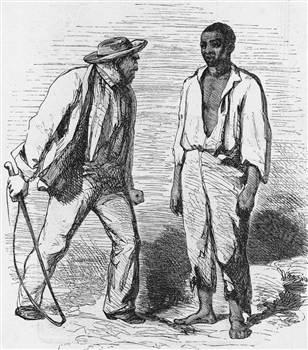
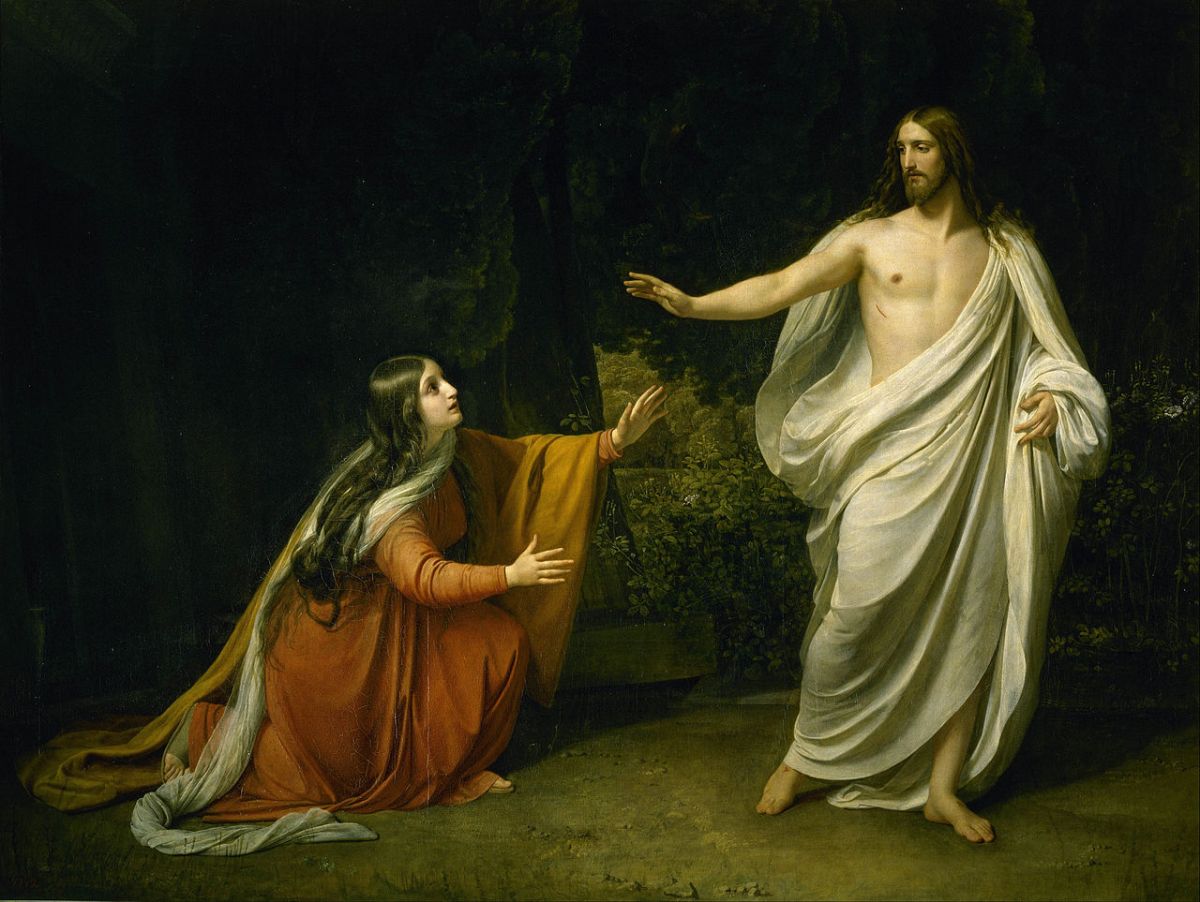

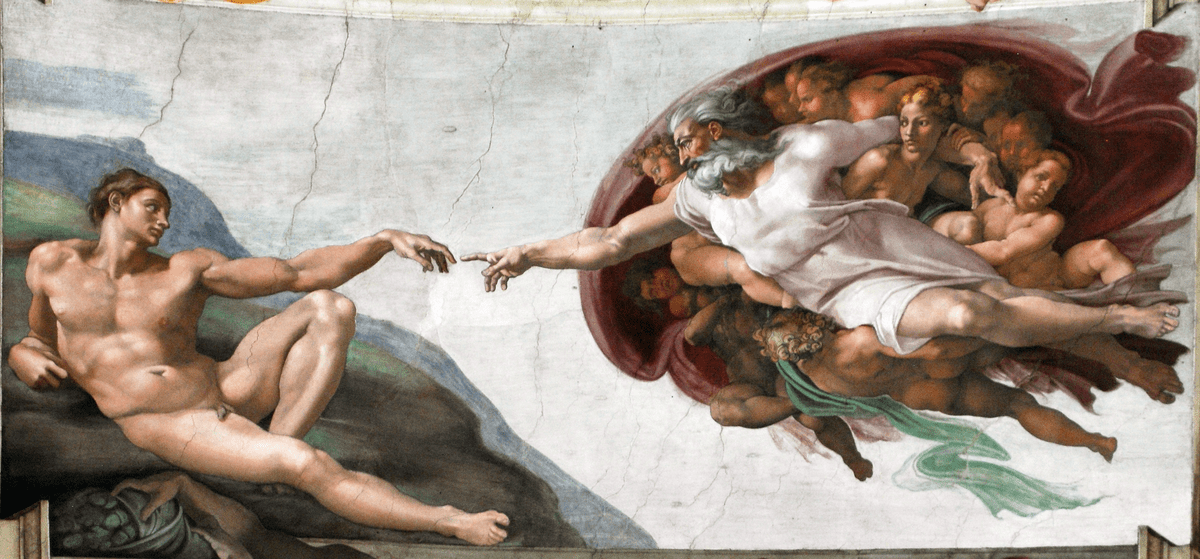
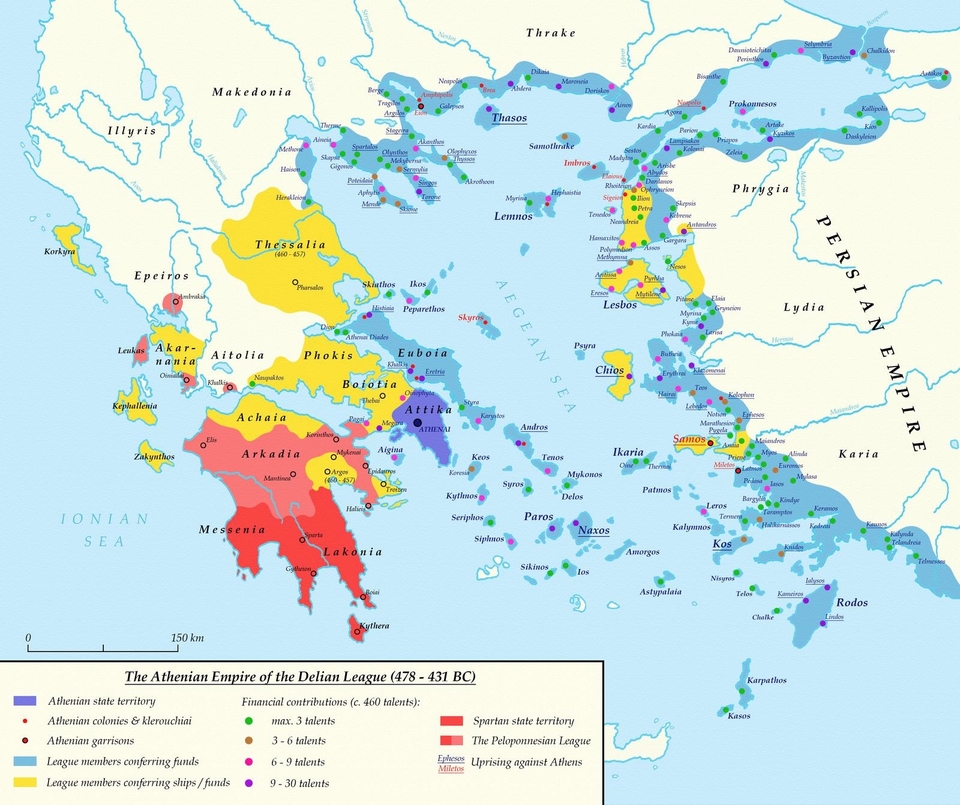
 The Unchained Library