Categories
Independent Learning Assignment STEM

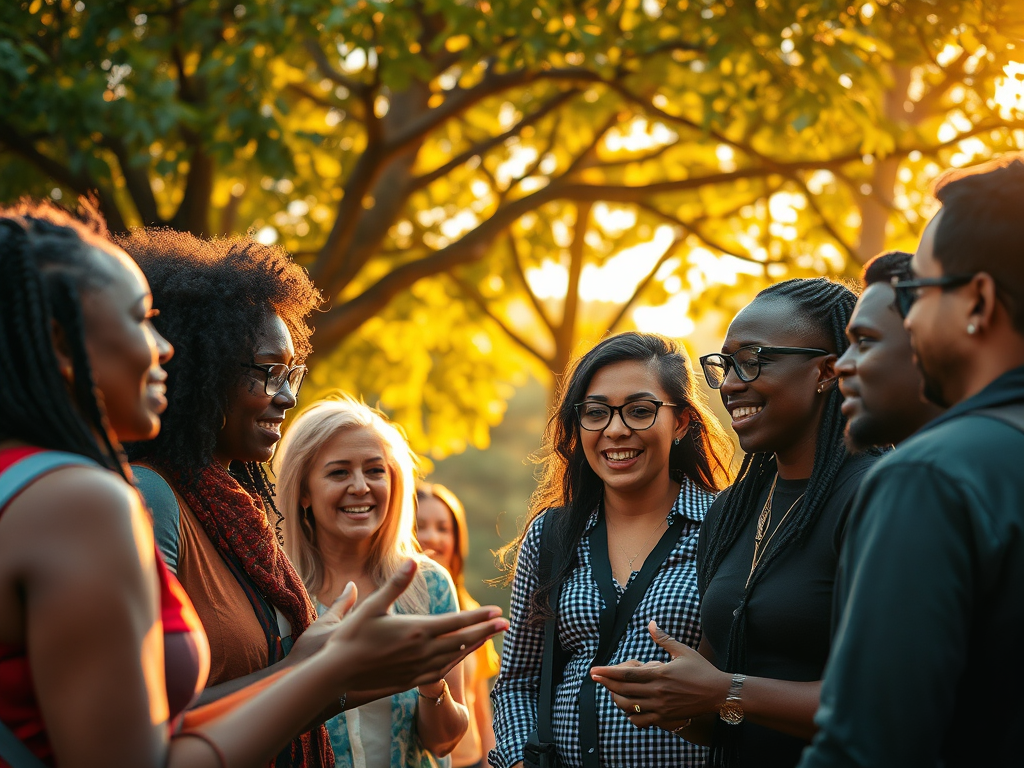
How altruism and prosocial behaviour can be explained from an evolutionary, psychological, and chemical perspective.

This essay was written by Lower Sixth Form student Joe Millar as an Independent Learning Assignment (ILA) project. It was the winning submission in the STEM category of the 2025 ILA/ ORIS award. The following provides a short introduction to the full report, which can be found below:

Altruism refers to the tendency of social organisms to display prosocial
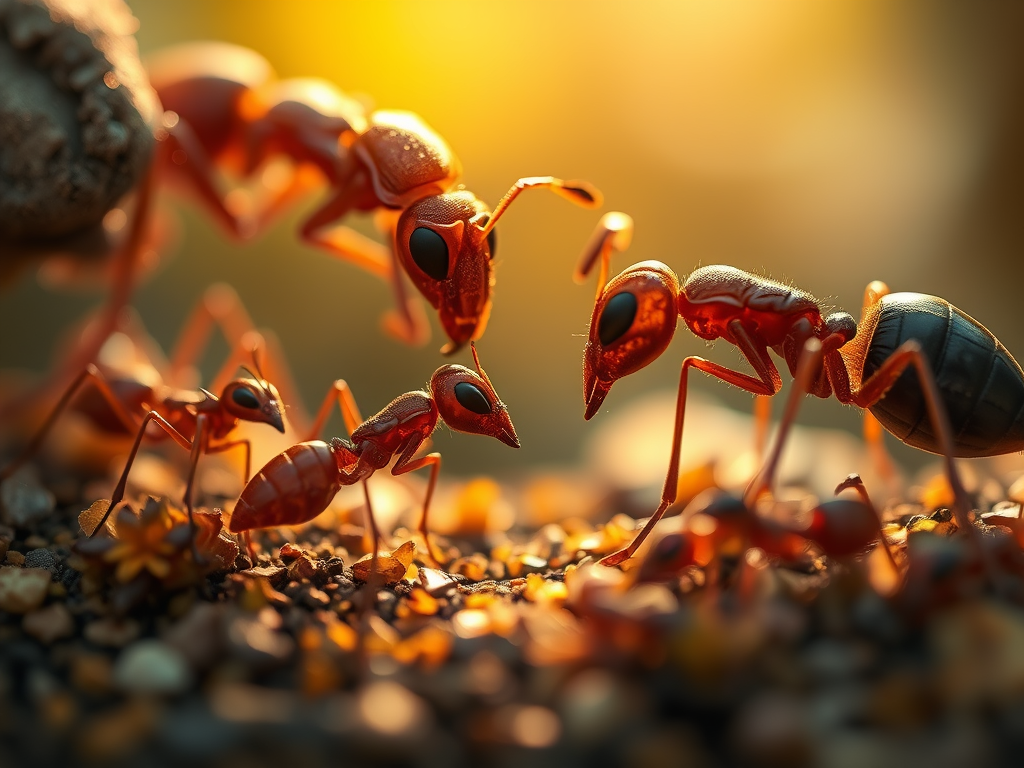
behaviour to other individuals at their own detriment, or without benefitting themselves. At first, it appears to be an evolutionary paradox. If anything, selfish behaviour – the opposite of prosocial behaviour – would appear to be the most certain path towards reproduction. Even so, across the human and natural world we see evidence of altruism occurring. Whether it be in insect colonies or human civilizations, altruism appears to
be an integral part of the global ecosystem. This essay will attempt to explain the evolutionary, psychological, and chemical reasons why we see altruism so often in nature.

Categories
Arts & Humanities Independent Learning Assignment Music

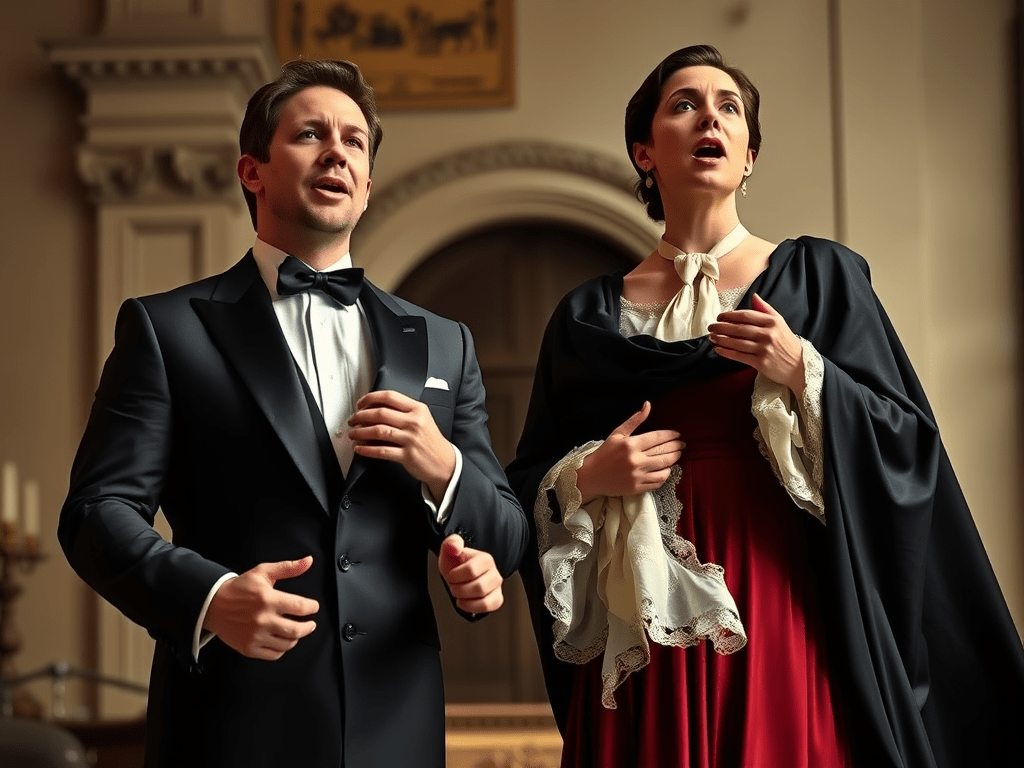
Bel Canto: To what extent is the Germanic school of singing technique the opposite of the Garcian school of singing?

This essay was written by Lower Sixth Form student Oscar Ford as an Independent Learning Assignment (ILA). It was the winning submission in the Arts/ Humanities category of the 2025 ILA/ ORIS award. The following provides a short introduction to the full essay:

Bel canto is a term widely used, and one surrounded by misunderstanding and controversy. While it saw its culmination in the 19th century with pivotal teachers such as the Spaniard Manuel Garcia II (Stark, 1) and Giovanni Battista Lampert, its roots can be traced back to the North of Italy in the late 16th century to small and specialised groups of singers. It was in these groups “whose vocal prowess eclipsed amateur choristers” (Stark, 190) that singers began to display their virtuosic skills through their ease in coloratura, diction and emotional expression. This gradually developed, over lifetimes of dedicated study and experience, into a more familiar idiom of singing that is well studied (despite easily being approximated [Potter, 31]) and that we take for granted today as the healthiest method of classical singing. While the bel canto operas of Bellini and Donizetti were still flourishing, a radical, new, seemingly irreconcilable school of singing came about in Germany, arguably as a nationalist separation (Whitener, 155) from the Italian tradition that had “no other ambition than to satisfy this shallow audience” (Wagner, 44). While derived from similar fundamental principles as bel canto, this new Germanic school took the muscularity and physicality of the style to new heights and new pedagogy emerged. In order to compare these sometimes seemingly incompatible styles, it is logical to try to break the technique down into individual, manageable parts within a phrase; preparation, onset and phonation. Through this method, one can locate both similarities and differences in small scale vocal physiology while maintaining a somewhat comprehensive image of how each aspect integrates with one another to form a complete technique.

Categories
Independent Learning Assignment STEM

Modelling Acoustic Scattering via Fractal Mesh Decomposition

This essay was written by Lower Sixth Form student Yuvan Raja as an Original Research in Science (ORIS) project. It was the winning submission in the ORIS category of the 2025 ILA/ ORIS award. The following provides a short introduction to the full report, which can be found below:

In this project I develop a variety of strategies for code that produces fractal meshes for Koch Snowflake and Heighway Dragon curves. These meshes are created so that the mesh components can represent infinitesimal elements when approximating numerical integrals on fractal domains. The task of performing numerical integrals on fractal domains is an area of interest, as evaluating these integrals is a key challenge in finding the solutions of Integral Equations on fractal domains, such as those governing acoustic wave scattering.

Categories
Arts & Humanities Features Philosophy & Theology

Does free speech build or break a community?

This essay was written by Lower Sixth Form student Marcus Perkins for submission to the prestigious, national Karen Becher Essay Competition 2025, run by the National Holocaust Museum, which he went on to win. A full copy of the essay can be found below. A brief extract is included here:

Communities are fragile concepts (Bauman, 2000). Most people struggle to identify a physical community they belong to, yet historically, they have been essential for trust and societal efficacy (Anderson, 2010). The Oxford English Dictionary (Oxford University Press, 2024) defines ‘community’ in several ways, including groups based on geography, identity, and common interests. This essay will consider all three when exploring whether free speech helps build and sustain communities or undermines them to the point of dissolution.

Categories
Independent Learning Assignment STEM

Will Knot Theory Pave Our Future?

This essay was written by Lower Sixth Form student Thomas Dowson as an Independent Learning Assignment (ILA) project. It was the winning submission in the STEM category of the 2024 ILA/ ORIS award. The following provides a short introduction to the full report, which can be found below:

A knot is a simple yet complex object, which can be found almost anywhere in the world. If you have ever been climbing, I’m sure you can appreciate the power a knot has. Can a knot be more than just a rope used as a safety measure for people who can’t climb?

If we look at a knot, surely there must be some way of describing it. Looking at the dictionary definition, it states: ‘a join made by tying together the ends of a piece or pieces of string, rope, cloth, etc’. In comes Knot Theory, a constantly developing branch of mathematics and physics, where advances are being constantly made in the quantum branch with new knot variants and invariants being discovered, and quantum fields and gravity being developed consequently.

Although quantum might seem unfamiliar to many, knot theory finds applications across various fields of science. Both computer science and mathematics feature specialized branches dedicated to the study of knots.

Categories
Independent Learning Assignment STEM

Initiating the development of a library for plastic polymers using Raman spectroscopy

This essay was written by Lower Sixth Form student Joel Sellers as an Original Research in Science (ORIS) project. It was the winning submission in the ORIS category of the 2024 ILA/ ORIS award. The following provides a short abstract of the full report, which can be found below:

Plastics, and particularly microplastics (MPs, plastic pieces <5mm), are ubiquitous and have developed into a serious issue for our marine environments. Not only do they pose a threat to aquatic organisms directly exposed to plastic pollution, but there is also a potential risk to humans further down the line, due to prolonged exposure to these small particles through the food they eat, the air they breathe, or the water they drink. Scientific evidences have been provided showing that plastic polymers have been detected in human blood, as well as in the placenta or human stool. Consequently, it is critical to assess the sources of MPs exposure to humans. One source is table salt, particularly when it comes from sea salt. The characterisation and detection of such small particles remain an analytical challenge due to their small size, the quantity of material available, the colour of the material, and the natural organic matter that can adsorb onto MPs degraded in the environment. Raman spectroscopy is one of the leading tools for MPs analysis as it is non-destructive and requires little to no sample preparation with a spatial resolution of 1 mm. However, in order to identify these tiny pieces of plastic, reference spectra are needed. There are many obstacles in providing these spectra that make building up a library challenging. This project set out to not only initiate the process of creating a plastic polymer library using Raman spectroscopy, but also to identify potential interferences. 15 different samples of plastic litter were analysed and added to the library, and possible challenges were identified. The project provided a foundation for further research and development.