Categories
Social Sciences

The Problem with Cashless Societies

This article was written by sixth-former Utkarsh Dandanayak.

Only with the use of technology can we mitigate the adverse effect of technology.

— Utkarsh Dandanayak

Estimated read time: 2 minutes

No one likes parting ways with hard-earned cash. As consumers, this behavioural trait of ours allows us to think twice before engaging in transactions that we may later regret. However, now there is a chance that this trait will be lost, with the introduction of Mastercard, Apple Pay and the like, which digitalise payment processes to provide transactional convenience. What is often forgotten is the subtle but potent side effect — financial abstraction — the fundamental problem with a cashless society.

Financial abstraction is simply a rewording of “out of sight, out of mind”. When we don’t see a physical transfer of money from consumer to vendor (and instead swipe a credit card, for example), it results in a reduction in our perceived value of money. Making money less tangible and thus adding to its abstract nature induces in us a spendthrift attitude.

Disney has invested $1bn in exploiting this habit, with the introduction of “MagicBands” to their theme parks. These allow the wearer to purchase meals and souvenirs from anywhere within Disneyland premises with a wave of their wrist. The result? Per capita spending increased by 8 per cent in the first quarter after their inception due to higher ticket prices and increased food and drink sales.

Financial abstraction can step outside the gates of Disneyland and into consumer markets, the most palpable example being the establishment of mobile payment systems.

A strong upward trend in the usage of mobile payment services is evident. Success is most apparent in China, where the consumer spending boom has allowed “WeChat Pay” (its largest mobile payment provider) to flourish. WeChat had more than 1.09bn users in 2018. Businesses have inevitably followed the money, with countless retailers flocking to offer such payment methods. This story is similar to when credit cards came to the masses 50 years ago.

In 2017, UK mobile payment volume grew by 328 per cent and UK consumer debt rose by 11 per cent. Abstraction is at play once more. Our natural pragmatism incentivises the usage of cashless payments, while our conception of money is distorted to become more illusory, increasing one’s propensity to spend indiscriminately, thus inducing debt.

Although debt is fine in moderation, extreme levels mean that “millions are living on the financial precipice, leaving them vulnerable to financial shocks,” explains Mike O’ Connor, the former chief executive of debt charity StepChange. 

The problem is exacerbated by the fact that younger generations are using these services extensively. Such abstraction may cause children, who are more likely to see money as limitless, to be prone to future financial mismanagement.

While I do not oppose the use of electronic payment systems, financial education must become a priority in anticipation of the transition to cashless societies. Furthermore, I believe that we should employ the free online financial tools made available to most individuals, including budgeting apps such as Mint, that allow one to track digital spending as well as informing one when certain bills are due. 

Only with the use of technology can we mitigate the adverse effect of technology.

Categories
Independent Learning Assignment STEM

How altruism and prosocial behaviour can be explained from an evolutionary, psychological, and chemical perspective.

This essay was written by Lower Sixth Form student Joe Millar as an Independent Learning Assignment (ILA) project. It was the winning submission in the STEM category of the 2025 ILA/ ORIS award. The following provides a short introduction to the full report, which can be found below:

Altruism refers to the tendency of social organisms to display prosocial
behaviour to other individuals at their own detriment, or without benefitting themselves. At first, it appears to be an evolutionary paradox. If anything, selfish behaviour – the opposite of prosocial behaviour – would appear to be the most certain path towards reproduction. Even so, across the human and natural world we see evidence of altruism occurring. Whether it be in insect colonies or human civilizations, altruism appears to
be an integral part of the global ecosystem. This essay will attempt to explain the evolutionary, psychological, and chemical reasons why we see altruism so often in nature.

Categories
Arts & Humanities Independent Learning Assignment Music

Bel Canto: To what extent is the Germanic school of singing technique the opposite of the Garcian school of singing?

This essay was written by Lower Sixth Form student Oscar Ford as an Independent Learning Assignment (ILA). It was the winning submission in the Arts/ Humanities category of the 2025 ILA/ ORIS award. The following provides a short introduction to the full essay:

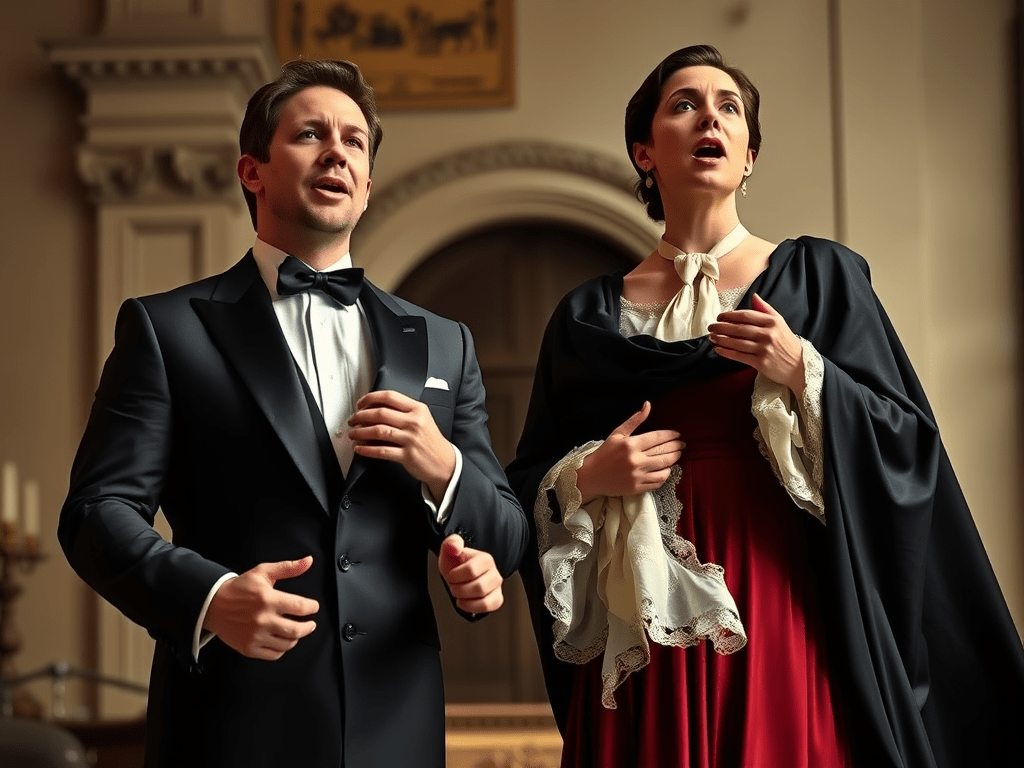
Bel canto is a term widely used, and one surrounded by misunderstanding and controversy. While it saw its culmination in the 19th century with pivotal teachers such as the Spaniard Manuel Garcia II (Stark, 1) and Giovanni Battista Lampert, its roots can be traced back to the North of Italy in the late 16th century to small and specialised groups of singers. It was in these groups “whose vocal prowess eclipsed amateur choristers” (Stark, 190) that singers began to display their virtuosic skills through their ease in coloratura, diction and emotional expression. This gradually developed, over lifetimes of dedicated study and experience, into a more familiar idiom of singing that is well studied (despite easily being approximated [Potter, 31]) and that we take for granted today as the healthiest method of classical singing. While the bel canto operas of Bellini and Donizetti were still flourishing, a radical, new, seemingly irreconcilable school of singing came about in Germany, arguably as a nationalist separation (Whitener, 155) from the Italian tradition that had “no other ambition than to satisfy this shallow audience” (Wagner, 44). While derived from similar fundamental principles as bel canto, this new Germanic school took the muscularity and physicality of the style to new heights and new pedagogy emerged. In order to compare these sometimes seemingly incompatible styles, it is logical to try to break the technique down into individual, manageable parts within a phrase; preparation, onset and phonation. Through this method, one can locate both similarities and differences in small scale vocal physiology while maintaining a somewhat comprehensive image of how each aspect integrates with one another to form a complete technique.

Categories
Independent Learning Assignment STEM

Modelling Acoustic Scattering via Fractal Mesh Decomposition

This essay was written by Lower Sixth Form student Yuvan Raja as an Original Research in Science (ORIS) project. It was the winning submission in the ORIS category of the 2025 ILA/ ORIS award. The following provides a short introduction to the full report, which can be found below:

In this project I develop a variety of strategies for code that produces fractal meshes for Koch Snowflake and Heighway Dragon curves. These meshes are created so that the mesh components can represent infinitesimal elements when approximating numerical integrals on fractal domains. The task of performing numerical integrals on fractal domains is an area of interest, as evaluating these integrals is a key challenge in finding the solutions of Integral Equations on fractal domains, such as those governing acoustic wave scattering.

Categories
Arts & Humanities Features Philosophy & Theology

Does free speech build or break a community?

This essay was written by Lower Sixth Form student Marcus Perkins for submission to the prestigious, national Karen Becher Essay Competition 2025, run by the National Holocaust Museum, which he went on to win. A full copy of the essay can be found below. A brief extract is included here:

Communities are fragile concepts (Bauman, 2000). Most people struggle to identify a physical community they belong to, yet historically, they have been essential for trust and societal efficacy (Anderson, 2010). The Oxford English Dictionary (Oxford University Press, 2024) defines ‘community’ in several ways, including groups based on geography, identity, and common interests. This essay will consider all three when exploring whether free speech helps build and sustain communities or undermines them to the point of dissolution.

Categories
Independent Learning Assignment Lower School STEM

Dobble – Brilliant but flawed

This essay was written by Third Form student Junior Shaw as a Junior Independent Learning Assignment (ILA JNR) project. It was the winning submission in the Third Form category of the 2025 Junior ILA awards. The following provides a short introduction to the full report, which can be found below:

Back in October of 2024, my family and I were on holiday. Accompanying us was the game of Dobble, from which my research began. In particular, my father and I became quite intrigued by the nature of the game, the ‘mono-match’ principles of it, and how it was constructed. Over the course of my investigations, I discovered an unexpected flaw within the game!

Categories
Independent Learning Assignment Lower School STEM

Is time travel fact or science fiction?

This essay was written by Fourth Form student Thomas Aczel as a Junior Independent Learning Assignment (ILA JNR) project. It was the winning submission in the Fourth Form category of the 2025 Junior ILA awards. The following provides a short introduction to the full report, which can be found below: 

The essay that you are currently reading has travelled through time. This is not even in the boring sense that most people would fall into the misconception of accepting. It is, yes, going into the future as we all are, but not only that, the series of binary digits that make it up have been sent through a combination of electrical signals and electromagnetic waves. This is a more interesting and different type of time travel. The difference would be the same if you ran up and down a corridor with it in your hands. Why? Time travel is not what you think …

Categories
Independent Learning Assignment STEM

Will Knot Theory Pave Our Future?

This essay was written by Lower Sixth Form student Thomas Dowson as an Independent Learning Assignment (ILA) project. It was the winning submission in the STEM category of the 2024 ILA/ ORIS award. The following provides a short introduction to the full report, which can be found below:

A knot is a simple yet complex object, which can be found almost anywhere in the world. If you have ever been climbing, I’m sure you can appreciate the power a knot has. Can a knot be more than just a rope used as a safety measure for people who can’t climb?

If we look at a knot, surely there must be some way of describing it. Looking at the dictionary definition, it states: ‘a join made by tying together the ends of a piece or pieces of string, rope, cloth, etc’. In comes Knot Theory, a constantly developing branch of mathematics and physics, where advances are being constantly made in the quantum branch with new knot variants and invariants being discovered, and quantum fields and gravity being developed consequently.

Although quantum might seem unfamiliar to many, knot theory finds applications across various fields of science. Both computer science and mathematics feature specialized branches dedicated to the study of knots.

Categories
Independent Learning Assignment STEM

Initiating the development of a library for plastic polymers using Raman spectroscopy

This essay was written by Lower Sixth Form student Joel Sellers as an Original Research in Science (ORIS) project. It was the winning submission in the ORIS category of the 2024 ILA/ ORIS award. The following provides a short abstract of the full report, which can be found below:

Plastics, and particularly microplastics (MPs, plastic pieces <5mm), are ubiquitous and have developed into a serious issue for our marine environments. Not only do they pose a threat to aquatic organisms directly exposed to plastic pollution, but there is also a potential risk to humans further down the line, due to prolonged exposure to these small particles through the food they eat, the air they breathe, or the water they drink. Scientific evidences have been provided showing that plastic polymers have been detected in human blood, as well as in the placenta or human stool. Consequently, it is critical to assess the sources of MPs exposure to humans. One source is table salt, particularly when it comes from sea salt. The characterisation and detection of such small particles remain an analytical challenge due to their small size, the quantity of material available, the colour of the material, and the natural organic matter that can adsorb onto MPs degraded in the environment. Raman spectroscopy is one of the leading tools for MPs analysis as it is non-destructive and requires little to no sample preparation with a spatial resolution of 1 mm. However, in order to identify these tiny pieces of plastic, reference spectra are needed. There are many obstacles in providing these spectra that make building up a library challenging. This project set out to not only initiate the process of creating a plastic polymer library using Raman spectroscopy, but also to identify potential interferences. 15 different samples of plastic litter were analysed and added to the library, and possible challenges were identified. The project provided a foundation for further research and development.

Categories
Features Law & Politics Social Sciences

Fiduciary law and the case of Aparna and Beth

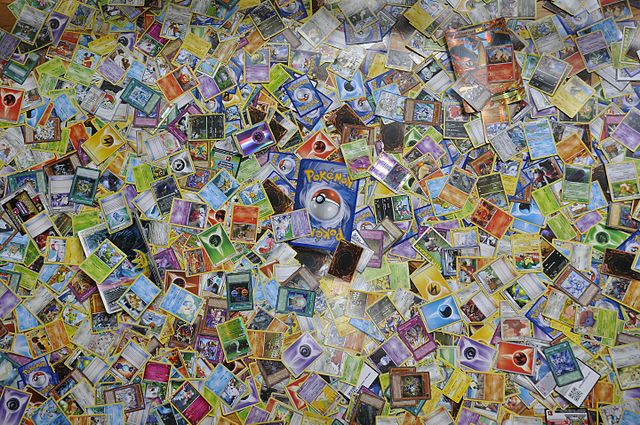
This essay was written by Lower Sixth Form student Charlie Everitt for submission to the Peter Cane Prize for Legal Reasoning, organised by Corpus Christi College, Oxford. His work was highly commended by the judges. The task was based on fiduciary law and a hypothetical case involving Aparna and Beth, who are both avid Pokémon collectors. The full task can be found outlined in the document below, alongside a full copy of Charlie’s essay. A brief extract is included here:

Fiduciary Law and the Fiduciary Act 2023

Fiduciary duties have long been recognised under English common law, generally arising when one party ‘has undertaken to act for or on behalf of another in a particular matter in circumstances which give rise to a relationship of trust and confidence’[1]. In being a fiduciary it is thought that one should prioritise the desires and benefits of the other party, even above one’s own. This seems a logical concept when we consider certain categories of fiduciary relationship that are automatically recognised: for example, doctor and patient, solicitor and client, trustee and beneficiary. However, this is not a closed list and ad hoc fiduciary relationships can and do exist.

The Fiduciary Act 2023 (the “Act”) expressly provides (in Section 1(2)) that ‘Subject to this Act, fiduciary law remains in force’. The inference here is that the objective of the Act is to codify (or possibly extend) the existing law in some way. In the UK, a Court looking to interpret statutes should first attempt to give effect to the plain meaning of the words used. If plain meaning is in doubt the Court may opt for a purposive enquiry to determine the intent behind the statutory provision[2]. Therefore whilst the principles developed by the existing common law on fiduciary relationships may have some relevance, the starting point for the analysis of the posed case must be the wording of the Act.


[1] Bristol & West Building Society v Mothew [1998] Ch 1

[2] Statutory Interpretation Explained, Ross R – 5. Pey, Cambridge University Law Society

Categories
Features Psychology Social Sciences

Subliminal Advertising: A Hidden Message

This essay was written by Lower Sixth Form student Raul Murphy and was a joint winner of the RGS 2023/24 4000 Characters essay competition. In this competition, students had to submit an essay of no more than 4000 characters (including spaces!) inspired by the quote ‘You can’t judge a book by its cover’.

The phrase “you can’t judge a book by its cover” has gained added significance in the subtle world of advertising. On the surface, advertisement can be seen to showcase a product or vision, however, the methods beneath  challenge our ability to distinguish the true intent and perhaps hidden objective.

A subliminal message uses visual or auditory stimuli which are inaudible to the conscious mind yet register in the unconscious. Subliminal advertising capitalises on these techniques to influence consumer behaviour without their awareness and avoids resistance. Consider a billboard for Coca-Cola, characterised by vibrant colours and refreshing imagery – at first glance it infers a positive association, however, under the surface, one can find potential images of a woman on top of a can amongst other things. Advertisers employ subtle symbols or depictions that trigger unconscious desires or emotions related to the product. This creates a challenge in our inability to judge the impact of these hidden details that are forced upon us.

Another form of subliminal messaging involves the insertion of “hidden” messages into movies and TV programs. This concept relies on the viewer seeing a singular frame at different points within the show. The hidden command will flash across the screen so quickly that it is not consciously perceived but instead will appeal to the subconscious mind, and thus have some an effect on the viewer’s behaviour. During the 2000 U.S presidential campaign, a television ad campaigning for Republican George W. Bush showed parts of words scaling from foreground to the background of the television screen. When the word “Bureaucrats” flashed on the screen, one frame showed only the last part, “RATS” – implying negative connotations. The case was investigated, but no sanctions applied. Who knows how much this affected the presidential race?

Subliminal advertising capitalizes on the power of suggestion, and often appeals to deep seated desires, fears or aspirations. The danger occurs when consumers, unaware of these influences, make choices guided by these advertisements, that are ultimately beyond their conscious understanding. One of the most chilling potential subliminal messages comes from a case in 1985, where two young adults aged 18 and 20 made a suicide pact to kill themselves. One of them survived, then transpired that they had been listening to Judas Priest that afternoon, a heavy metal band, and claimed that there were subliminal messages in the music, such as “Try suicide,”, “Let’s be dead” and “do it, do it.” Whilst these claims were ruled against, it is impossible to say that the music did not have any effect on their decisions.

Furthermore, various studies on subliminal perception have been conducted and yielded interesting findings. It was questioned if anaesthetized patients are completely unaware whilst apparently asleep or unconscious, and whilst the patients themselves reported no knowledge of events whilst they were under anaesthetic, indirect methods of examining knowledge retention confirmed that information was perceived without any conscious awareness.

In the future, as technology advances and advertisers continue to cast the net wider, the importance of looking beneath the surface becomes increasingly critical. The phrase “you can’t judge a book by its cover” serves as a call for vigilance, encouraging consumers to question and seek transparency in the messages that swamp us everyday.

To conclude, in the ever-growing battle between consumer consciousness and deceptive advertisers, subliminal messaging stands as a potent example of the phrase “you can’t judge a book by its cover.” The layers of persuasion masked under seemingly innocent jingles will always challenge our ability to discern truth from manipulation. Recognising the existence of such techniques helps us take the first step in regaining control over our choices and ideas.