Categories
Arts & Humanities FTRP Geography

How can the Lego Group adapt to a world more focused on environmental sustainability?

This essay was written by lower-sixth former Sam Rooke, and shortlisted for the 2020 Fifth Form Transitional Research Project. The following provides a short abstract to the full essay, which can be found at the bottom.

Estimated read time of abstract: 1 minute
Estimated read time of essay: 11 minutes

The world is becoming increasingly aware of the impact that plastic has on the environment and its role in climate change. Therefore companies like Lego who’s brand relies on ABS Plastic could face major issues in the future if they do not find an environmentally sustainable method of operating. This research project investigates the impact of The Lego Group on the environment and its aims to become more economically sustainable. In order to do this it was important to understand the meaning and significance of environmental sustainability; why The Lego Group weren’t currently achieving this; how successful previous initiatives have been; and finally how achievable their future goals are.

To view Sam’s full article, follow this link below.

Categories
Arts & Humanities FTRP History

What was the most important initiative carried out in response to problems posed by the Crimean War in improving healthcare for infantry soldiers?

This essay was written by lower-sixth former Sebastian Evans, and shortlisted for the 2020 Fifth Form Transitional Research Project. The following provides a short abstract to the full essay, which can be found at the bottom.

Estimated read time of abstract: 1 minute
Estimated read time of essay: 9 minutes

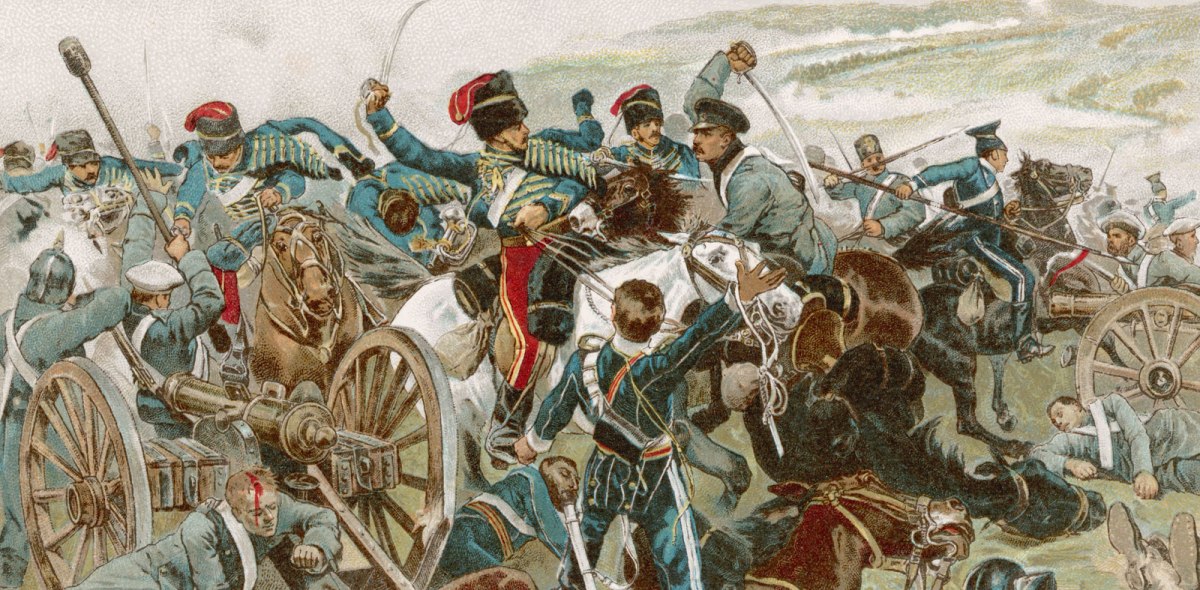
This FTRP is about the main medical advances in healthcare for British infantry units during the Crimean war, which lasted from 1853 – 1856, and how these advances helped the British infantry in future wars fought by the British empire. The document talks about advances and improvements in hospitals, improvements in the soldiers’ diets, the introduction of ambulance trains and ambulance ships, and improving the medical staff working to save wounded soldiers. The document looks at not only the achievements of Florence Nightingale, but also other factors and initiatives that helped improve the chances of survival for sick or wounded infantry during the war. While all the initiatives mentioned were important in helping the infantry and improving healthcare, the single biggest one was undoubtedly the improvements to hospitals during the course of the war.

To view Sebastian’s full article, follow this link below.

Categories
Economics FTRP History STEM

How Gambling in the 17th Century has shaped insurance markets in the 21st century

This essay was written by lower-sixth former Moog Clyde, and shortlisted for the 2020 Fifth Form Transitional Research Project. The following provides a short abstract to the full essay, which can be found at the bottom.

Estimated read time of abstract: 1 minute
Estimated read time of essay: 11 minutes

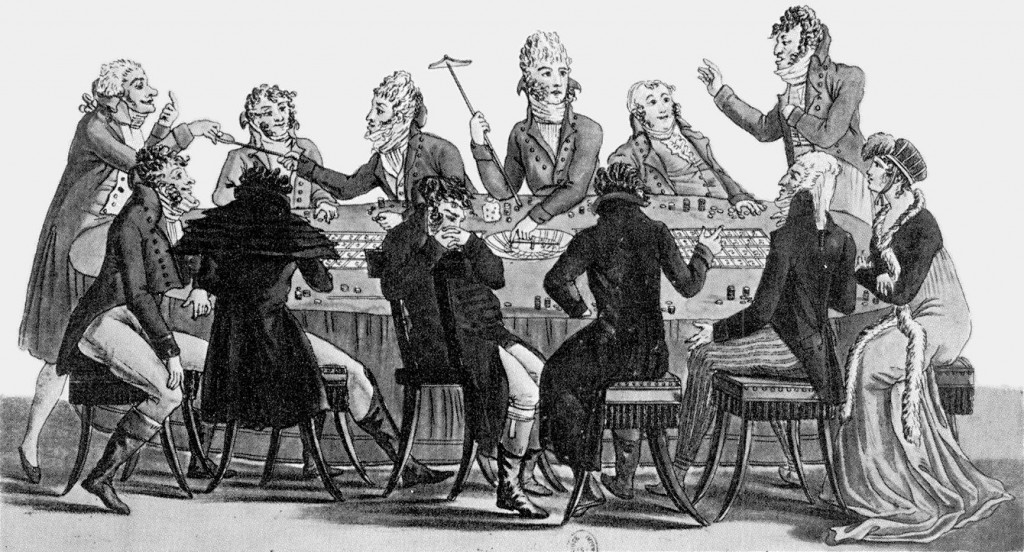
In 1654, the Chevalier de Mere, a French nobleman, posed the notorious ‘Problem of the Points’ to Blaise Pascal, an esteemed mathematician. The Problem of the Points concerned a game of chance containing two players with equal chances of winning any given round, and posed the question of how to split the stakes if one gambler has to leave the game prematurely. Despite several attempts, finding a definitive solution stumped even the greatest minds of the previous two hundred years, most notably Luca Pacioli (the ‘Father of Accounting’ ) in 1494 and Niccolò Tartaglia (solver of cubic equations and the first to apply maths to the paths of cannonballs, otherwise known as ballistics) in 1556. Even the great Galileo failed to discover a reasonable solution to the problem. Pascal was determined to find a logical and fair solution, and thus reached out to Pierre de Fermat, a brilliant mathematician himself. In their resulting correspondence, the pair developed the first explicit reasoning about what today is known as ‘expected value’ and laid the groundwork of probability, earning them both joint title of ‘the Fathers of Probability.’

Although it is easy to underplay the significance of this breakthrough as merely a clever, tidy solution, to appease opposing gamblers, in reality, it was truly revolutionary. It is difficult to understate how vast and significant the cognitive shift across Europe that occurred following this solution was. The notion that you can hang numbers into the future was alien to mathematicians merely years before this solution was proposed. Soon, others began to see the possibilities that this concept generated.

Within three years Christiaan Huygens adapted Fermat’s theory into a coherent pamphlet entitled ‘De Ratiociniis in ludo aleae,’ which was used as the standard text on probability for the next 50 years. Huygens attributed his developments to “some of the best mathematicians of France” (i.e. Pascal and Fermat). This text spread like wildfire among the academic community as it was evident that the new science of probability had the potential to transform the world. In the next few years, Huygens’ text was ripped out of the context of gambling and thrust into several aspects of life, including law and maths. In particular it was applied to a very different, brand new data set: mortality tables. Almost immediately, by using specific intricate data, insurance shifted from a form of blind gambling, based on hunches and guessing, to a remarkably accurate science.

It now is clear that this rapid chain reaction of discovery underpins all notions of mathematical ‘expected value’ and insurance came not from savvy merchants but from avid gamblers, eager to improve their craft.

To view Moog’s full article, follow this link below.

Categories
Arts & Humanities Classics English FTRP Poetry

To what extent can ‘The Tale of the Heike’ and ‘The Iliad’ be considered similar poems?

This essay was written by lower-sixth former Mattie Sutton, and shortlisted for the 2020 Fifth Form Transitional Research Project. The following provides a short abstract to the full essay, which can be found at the bottom.

Estimated read time of abstract: 1 minute
Estimated read time of essay: 13 minutes

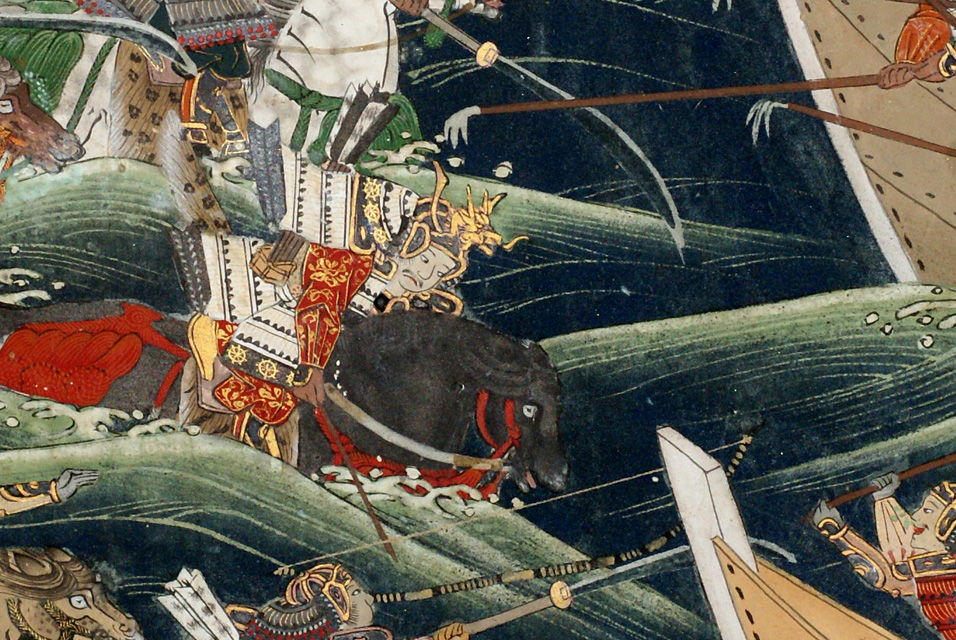
‘The Tale of the Heike’, a Japanese tale of the fall of the Taira clan to the Minamoto, and ‘The Iliad’, the enchanting story of Achilles’ and the Greeks’ struggles against Troy, are two of the greatest epic poems to ever be written, yet from opposite sides of the globe. However, their geographical distance doesn’t necessarily mean they can’t share similarities and form a fascinating piece of literary discussion.

In this essay we look at both poems’ themes use of language and the tradition that surrounds them. We’ll delve to into the specifics of the Japanese and Greek, as well as taking a more holistic view of how the themes such as impermanence, glory, and the view of individuals work together to create the epics. Finally, sweeping from the Aeneid to Tolstoy, from the Hagakure to Bushido: The Soul of Japan we’ll consider the cultural impact of both epics and come to a conclusion over how similar these two pieces of awe-inspiring literature are.

To view Mattie’s full article, follow this link below.

Categories
Arts & Humanities Independent Learning Assignment Linguistics

Why have there been changes in the phonetics and phonology of Khmer since the existence of Proto-Austroasiatic?

This essay was written by upper-sixth former Tom Hemsworth, and shortlisted for the 2020 Independent Learning Assignment. The following provides a short abstract to the full essay, which can be found at the bottom.

Estimated read time of abstract: 4 minutes
Estimated read time of essay: 30 minutes

Khmer is the language spoken mainly in the Kingdom of Cambodia, in South-East Asia. Khmer is part of the Austroasiatic language family, which encompasses 168 languages spoken across South-East Asia. The origin of this family is the language Proto-Austroasiatic which is believed to have originated in southern China. From this proto-language, several other language branches began to evolve from around 5000 BC. Modern Khmer is derived from the Khmeric branch, which appeared around 2000 BC. This too is a proto-language, called Proto-Khmeric. 

Around 600, the first stone inscriptions were recorded at the time that a group of kingdoms called the Chenla Empire occupied what is now Cambodia. This marked the birth of a new period in the Khmeric branch: Old Khmer. After the fall of the Khmer Empire in 1431, the language once again shifted to Middle Khmer, which spanned until around 1800, when Modern Khmer emerged. 

Upon examining the phonetics of Proto-Austroasiatic and Proto-Khmeric, I began to notice that there were not too many differences between them. This was surprising, as when you inspect the Swadesh 100 list, a list of one hundred basic words used for historical and comparative linguistics, the transition between the two columns is visibly the largest between any two consecutive word lists. The question is: why do the phonetics differ only slightly whereas the vocabulary is in many cases quite dissimilar? 

When reconstructing pAA, Paul Sidwell and Felix Rau used 21 consonants which were all carried through to pK. On the other hand, there are several vowel changes including the appearance of the long vowel sound [*ɛː], a particularly odd case. On the Swadesh list, most pK words in which [*ɛː] is present are unrelated to their pAA predecessors, which leads me to think that these are either new terms coined by people as they migrated from the Austroasiatic homeland in China into Cambodia and other South-East Asian countries, or if they are related, merely slight differences in pronunciation, such as between the pAA *cgəj and the pK *ckɛː (‘dog’). This point about migration brings me back to the question I posed. As Figure 1 indicates, when the Austroasiatic language family broke off into branches, its speakers either travelled west towards India or south into Cambodia and its neighbours. Many general terms will have only gone in one direction. Examples of this can particularly be found in words relating to flora and fauna. Take the pAA word *draŋ (‘horn’), which does not relate to the pK *sneːŋ. Words that derive from the pAA term can be found in Munda languages, for example dereŋ in Santali, spoken in Northeast India. 

Next in the timeline is the transition out of proto-language to Old Khmer. The basic consonant phonemes do not change from pK to OK; however, the voiceless stops [t], [p], [c] and [k] also began to occur with aspiration in OK, purely because it is a lot easier to say a word like *pkaːj with aspiration as pʰkaːj. As well as the phoneme [ɗ] and its bilabial equivalent [ɓ] appearing due to the glottis in the vocal cords being lowered and narrowed, vowel sounds became simpler in Angkorian society. The diphthong [*ie] evolved into [iə] or [iː] and [*uo] underwent similar alterations: either to [uə] or [uː]. 

However, there are certainly more apparent evolutions in language from OK to the modern day. Firstly, devoicing occurred. This is the term describing when the voiced stops in a language become voiceless. The reasons behind devoicing can be discovered by examining other languages in South-East Asia, such as the Tai family. The Chinese linguist Li Fang-Kuei wrote that “voiced consonants have become devoiced in practically all dialects” of Tai languages. Since the fall of Angkor was at the hands of the Ayutthaya, a kingdom which was located in modern day Thailand, I have deduced that the influence of this kingdom is a key reason behind devoicing. Devoicing did not occur in Thai until after the 15th century, so I believe that this process started thereafter and thus influenced the Khmer language.  

Another change was registrogenesis, the development of separate ways of speaking in a language. Two levels of lexical register occur in Khmer: ‘Head Register’ for formal language and ‘Chest Register’ for informal language. Chest Register, characterised by a breathier voice caused by the lower pitch from the larynx, was present in OK and MK. The low voice characteristic remains in standard Khmer, but it has lost its breathiness. 

Devoicing and the registrogenesis of Khmer are the reasons why, between OK and modern Khmer, new vowel sounds developed. For the first time, the vowels [ɨ], [ɨː], [ɑ], and [ɑː] appeared regularly in Khmer, as well as new short diphthongs. There are three of these: [ĕə], [ŏə] and [ŭə] (the diacritic ˘ represents an “extra-short” vowel). The open front unrounded vowel [a] is unable to be lowered any further therefore when people speak with a lower pitch, short diphthongs are born. 

During the French control of Cambodia, Khmer picked up loan words, which included new phonemes which had never been part of the language before, including [f] as in tiːfoŋ (‘typhoon’), and [z] as in zaːmaːʔiːk (‘Jamaican’). After the departure of the French, the future of Khmer looked set: the language was in the safe hands of Buddhist monks, including Chuon Nath, who compiled the first Khmer Dictionary. They removed many French and Siamese words from Khmer, a reason why French is no longer used as much in Cambodia. The Khmer Rouge halted this ‘Khmerisation’ process, particularly in education, which was greatly suppressed. Chuon Nath’s dictionary was only brought back in 2009, but at this point, Cambodian society had been partially taken over by English – virtually every sign in Cambodia now has both Khmer and English writing on it. 

The future may seem menacing for Khmer, but despite the worry of Khmer being dominated by English, I see no reason that it will disappear entirely. The influence of the modern, business- and technology-rich world will surely produce many new phonetical and phonological changes in the future, and it will undoubtedly prove to be a fascinating area of study. 

(Appendices showing timeline, phonemic inventories and Swadesh 100 list can be found in the full version of the ILA)  

Abbreviations 

pAA – Proto-Austroasiatic 

pK – Proto-Khmeric 

OK – Old Khmer 

MK – Middle Khmer 

To view Tom’s full article, follow this link below.

Bibliography

Diffloth, G., 2005. The Contribution of Linguistic Paleontology to the Homeland of Austro-Asiatic. In: L. Sagart, R. Blench & A. Sanchez-Mazas, eds. The Peopling of East Asia. Oxford: RoutledgeCurzon. 

Ray, N. & Lee, J., 2016. Cambodia. 10th ed. Singapore: Lonely Planet Publications Pty Ltd. 

Sidwell, P., 2018. Austroasiatic Studies. Hsinchu, National Tsing Hua University. 

Ferlus, M., 1992. Essai de phonétique historique du khmer. Mon-Khmer Studies, Volume 20. (French). 

Li, F.-K., 1977. A handbook of comparative Tai. Manoa: University Press of Hawaii. 

Shorto, H. L., 1962. A Dictionary of Modern Spoken Mon. London: Oxford University Press. 

Henderson, E. J., 1952. The Main Features of Cambodian Pronunciation. Bulletin of the School of Oriental and African Studies, 14(1). 

Wayland, R. P. & Jongman, A., 2002. Registrogenesis in Khmer: A phonetic account. The Mon-Khmer Studies Journal, Volume 32. 

International Phonetic Association, 1999. Handbook of the International Phonetic Association. 1st ed. Cambridge: Cambridge University Press. 

Sasagawa, H., 2015. The Establishment of the National Language in Twentieth-Century Cambodia: Debates on Orthography and Coinage. Southeast Asian Studies. 

Sok, K., 1999. La khmérisation de l’enseignement et l’indépendance culturelle au Cambodge. Bulletin de l’École française d’Extrême-Orient, Volume 86. 

SEAlang, n.d. Khmer Dictionary and Dictionary of Old Khmer[Online] 

Headley, R. K., 1998. Cham Evidence for Khmer Sound Changes. Papers in Southeast Asian Linguistics, Volume 15. 

Jenner, P. N., 1974. The Development of the Registers in Standard Khmer. South-east Asian Linguistic Studies, Volume 1. 

Categories
Arts & Humanities Economics Geography Social Sciences

Should the world open all borders to immigration?

This article was written by upper-sixth former Anish Goel.

Estimated read time: 6 minutes

Since World War Two, countries have reduced trade barriers and have tended to move towards free trade. Should the world follow a similar path with respect to immigration and open all borders?

Most economists tend to agree with both the policies of free trade and free movement of people.[1] To a free market economist, restricting immigration prevents the free market from allocating labour most efficiently. Free movement of people, in theory, should increase world GDP, with The Economist estimating that it could make the world $78 trillion richer.[2] However, there are other important factors including the effect on the natives and the large cultural and social effects. The definition of ‘open borders’ also may vary, although it could, it does not necessarily mean we become a nationless world with no borders between country. Countries could maintain their borders and vet everyone who enters their country but would allow everyone in, except in extremely extenuating circumstances e.g. a security risk.

Open border immigration has the potential to lower the wages of native workers. Immigration increases the supply of available labourers so (ceteris paribus) one might expect wages to fall for native workers as they now have more competition in the labour market. This problem is exacerbated by the fact that migrants often take low-skilled work, e.g. in the UK in 2013 of the 13 million low-skilled jobs, 2.1 million were occupied by migrants.[3] Low-skilled workers earn lower wages and so if their wages are lowered even more by immigration, it could lead to some not being able to afford the necessities e.g. food, utilities, rent etc and so would be an undesirable policy for governments to follow as a government’s job is to protect its own people first.

In reality however, immigrants don’t necessarily reduce native wages, especially in the long run.

Immigrants are also consumers and so will need to buy more products to sustain themselves. Therefore, increasing the demand for goods and services which increases the derived demand for labour to provide these products. This may then help to offset the reduction in native wages. The Mariel Boatlift case study illustrates the reality that the influx of immigrants may have little effect on native wages. In 1980 there was a sudden influx of Cuban immigrants into Miami, the size of the labour force increased by 7%. There seemed to be virtually no effect on the wages of natives, nor on the unemployment rate even for African American minority groups.[4] Immigrant’s don’t necessarily

compete for the same jobs as natives, often companies rearrange their structure and delay their automation due to the available supply of immigrant workers. This allows native workers to move onto more complex roles with more technical ability and communication required. In the short term a certain minority of low-skilled workers may see wage reduction however overall, in the long term, wages will likely go up.[5]

Open borders may make it possible for workers to commute from one country to another which could lead to native wages decreasing, especially in regions near the border. Commuting immigrants may spend their wages in their native country rather than the country in which they are working. So, the derived demand for labour will not increase. With the increased supply of labour from the commuting immigrants we could see a reduction in wages for natives. The native country may not feel the benefits of immigration if the ‘demand channel’ is shut down and the wages of the immigrants are repatriated.[6] A similar effect could be seen if the immigrants send a significant amount of their earnings back home. So, for an open border policy to fully benefit the natives, some regulation would need to be enforced which restricts the ability of individuals to reside in one country and work in another.

Another potential problem associated with open border immigration is the existence of state welfare. As Friedman suggested, in a welfare state, “the supply of immigrants would be infinite”7. Taking the UK for example, the NHS is already under immense pressure and all immigrants can make full use of the service. Hitherto Britain’s departure from the EU, EU citizens were able to claim jobseekers allowance.[7] Open borders could lead to a high number of immigrants immigrating to use these services and therefore reducing its quality for all. However, this problem is not as big as one would expect. Firstly, in the OECD European countries, it was found immigrants contribute more in social and tax contributions than they receive in individual benefits.[8] Secondly, even if immigrants did take more than they give, if borders were opened, governments could write legislation limiting immigrants’ ability to gain free access to public services until they have worked in the country for some time.

The immigrants themselves have much to gain; that’s why they move. When they move to a new country, they move somewhere they can be more productive by making use of their new countries’ capital, efficient firms, stability, and strong legal system.[9] They are therefore compensated more with a higher wage. Unskilled Nigerians can increase their earnings by 1000% by moving to the USA.11 Thus, opening borders has the potential to decrease global poverty and inequality more than foreign aid ever could; it would improve the immigrant’s standard of living.

By increasing their productivity, immigrants can also provide more value to their new country and the world. Michael Clemens claims that the complete opening of borders could double global GDP.

Shutting borders traps human talent in low productivity countries.[10] Countries who receive immigrants increase the number of their factors of production and so increasing their potential output. Immigrants increase the proportion of the country, which is of working-age population, they bring new skills to a country and contribute to human capital development of receiving countries.[11] Immigrants will provide more than the sum of their labour as they are enterprising and often start  businesses and organise the factors of production. Through creating jobs and increasing GDP, migrants grow a nation’s economy. 

Immigration has the potential to promote more gender equality amongst natives. Immigrants often enter jobs such as childcare, cleaning and catering[12] and so the increased supply of these types of workers decreases their cost.15 In the UK 19% of cleaning jobs are taken up by immigrants.[13] Domestic jobs like cleaning and childcare are often taken up by women as unpaid labour. By decreasing the cost of such services, they become more affordable for families and so they may free women up to join the workforce. The price of childcare may be reduced enough to make it worthwhile for a woman to get a job, and then pay for someone to help with childcare.  This would allow women to have more fulfilling careers and when they join the workforce, they can take up more productive jobs and provide more benefit to society in terms of tangible economic value.

It could be argued that the influx of new culture has a positive effect on a country. Take the UK for example, whose curry houses in 2016, employed 100,000 people and had annual sales of £4.2 billion.[14] This income and these jobs are a direct result of immigration from South Asia and the culture which followed. The cultural benefits of immigration are not limited to culinary choices. Immigrants are often hard-working, risk-takers and entrepreneurial. Out of the USA’s top 500 companies, 43% were founded or co-founded by immigrants or their children[15]; immigrants bring a more innovating culture to a country and can make use of their ‘cross-cultural experiences’ to create better products.[16]

There is also the notion that immigrants bring a culture of crime with them; however, the data does not necessarily support this, e.g. in the USA foreign-born residents are only a fifth as likely to be incarcerated.[17] Some may also argue that open borders allow terrorists to enter the country, however, there is that risk with our current immigration system. Having open borders does not forfeit a countries right to vet those entering their borders. Additionally, due to the economic

growth that results from immigration, there is evidence to suggest that terrorist activity is reduced by immigration.[18]

The biggest loser of immigration is probably the nation from which immigrants leave. If the risktaking and resilient citizens leave a country, that country is bound to suffer. A smaller population will cause decreases in GDP, and due to the nature of those leaving, it may see fewer businesses set up. In Haiti 85% of their educated youth leave and thus the average education of the Haitian population decreases.[19] However, this problem can be limited. Firstly, open borders would allow individuals to make use of richer countries’ universities, if they study there, they may return to their country more educated and therefore more productive. Secondly, immigrants often send money back to their family, this extra money is therefore pumped back into the local economy. Thirdly, many immigrants return to their home country having gained valuable work experience abroad and perhaps a broader cultural outlook, e.g. 45% of Mexicans who immigrated to the US eventually return.23

Overall, I strongly believe borders should be opened far more than they already are, the potential economic value of immigrants living in low productivity countries is too great for countries to not take advantage of. Given current immigration levels, the sudden opening of borders could see too many people entering and countries could face overpopulation problems e.g. housing shortages. However, in the long run, I believe borders should eventually be opened up. Despite the fears of cultural clash and native culture getting ‘washed away’ and overwhelmed, many of these thoughts lay in racist and colonial attitudes[20]; natives often vastly overestimate the presence of immigrants in their own country.[21] Not only would immigration be beneficial economically, but in my opinion, it isn’t ethically right to restrict an individual’s standard of living based on the location of their birth, something of which they have no control over. In order to progress to an economically efficient world, where individuals’ talents are used to their potential, we must move towards opening our borders.

Bibliography

Abhijit V. Banerjee, Esther Duflo. 2019. Good Economics for Hard Times. London: Allen Lane.

Bowman, Sam. 2013. Adam Smith Institute. 03 07. Accessed 08 22, 2020.

https://www.adamsmith.org/blog/economics/milton-friedman-s-objection-to-immigration.

Brandom, Russel. 2018. The Verge. 05 09. Accessed 07 06, 2018.

https://www.theverge.com/2018/9/5/17805162/monopoly-antitrust-regulation-googleamazon-uber-facebook.

Caplan, Bryan. 2019. Foreign Policy. 1 11. Accessed 08 23, 2020. https://foreignpolicy.com/2019/11/01/immigration-wall-open-borders-trillion-dollar-idea/.

Collier, Paul. 2013. The New York Times. 29 11. Accessed 08 25, 2020.

https://www.nytimes.com/2013/11/30/opinion/migration-hurts-the-homeland.html.

Course, Crash. 2016. Youtube. 18 05. Accessed 08 18, 2020. https://www.youtube.com/watch?v=4XQXiCLzyAw.

2020. European Cleaning Journal. 21 02. Accessed 08 22, 2020.

http://www.europeancleaningjournal.com/magazine/web-articles/latest-news/britishcleaning-council-worried-by-uk-government-immigration-proposals.

2020. Kellog Insight. 02 03. Accessed 08 19, 2020.

https://insight.kellogg.northwestern.edu/article/immigration-economic-impact-costsbenefits-open-borders.

Matthews-King, Alex. 2018. The Independant. 24 12. Accessed 08 25, 2020.

https://www.independent.co.uk/news/world/politics/migration-refugee-syria-conflicteurope-mexico-conflict-study-a8698451.html.

2014. Migrants in low-skilled work. Government Report, London: Migration Advisory Committee.

2014. “Migration Policy Debates.” OECD. 05. Accessed 08 25, 2020.

https://www.oecd.org/migration/OECD%20Migration%20Policy%20Debates%20Numero%2

02.pdf.

Moore, Malcom. 2016. “The great British curry crisis.” Financial Times, 08 01.

Peron, James. 2018. The Radical Centre. 22 04. Accessed 08 23, 2020. https://medium.com/theradical-center/what-milton-friedman-actually-said-about-illegal-immigration-6b19efaf7a5.

Peter Vandor, Nikolaus Franke. 2016. Harvard Business Review. 27 10. Accessed 08 23, 2020.

https://hbr.org/2016/10/why-are-immigrants-more-

entrepreneurial#:~:text=In%20the%20U.S.%2C%20immigrants%20are,as%20native%2Dborn %20U.S.%20citizens.&text=It%20appears%20plausible%20that%20entrepreneurial,highly%2 0motivated%20and%20capable%20individuals.

The Economist. 2017. “The $78 trillion free lunch.” 13 07. Accessed 08 25, 2020.

https://www.economist.com/the-world-if/2017/07/13/a-world-of-free-movement-wouldbe-78-trillion-richer.

2017. United Nations Development. 19 10. Accessed 08 19, 2020.

https://www.un.org/development/desa/en/news/intergovernmental-coordination/newglobalization-

report.html#:~:text=These%20trends%20have%20presented%20a,75%20trillion%20USD%20 in%202016.

Uta Schönberg, Christian Dustmann ,Jan Stuhler. 2016. “Labor Supply Shocks, Native Wages, and the Adjustment of Local Employment.” 08. Accessed 08 23, 2020.

https://poseidon01.ssrn.com/delivery.php?ID=240069002121076009081001124116069075 04907305403203309207411211103602304409102406609102810310102300503900802412 7067119093112120105004081081085105088127006024110093109114122017086027&EXT

=pdf.

Vincenzo Bove, Tobias Bohmelt,. 2015. “Does Immigration Induce Terrorism.” 29 10. Accessed 08 23, 2020. http://wrap.warwick.ac.uk/77011/1/WRAP_Bove%20Bohmelt%20JoP.pdf.

Wearing, David. 2017. The Guardian. 09 05. Accessed 08 25, 2020.

https://www.theguardian.com/commentisfree/2017/may/09/immigration-toxic-britaincolonial-past-emmanuel-macron-france-algeria.


[1] Kellog Insight, When Do Open Borders Make Economic Sense?,

https://insight.kellogg.northwestern.edu/article/immigrationeconomicimpactcostsbenefitsopenborders, (Accessed 18 Aug. 2020)

[2] The Economist, A world of free movement would be $78 trillion richer, https://www.economist.com/theworldif/2017/07/13/aworldoffreemovementwouldbe78trillionricher ,(Accessed 19 Aug. 2020)

[3] Migration Advisory Committee, Summary Report,(July 2014) , Migrants in low-skilled, work https://assets.publishing.service.gov.uk/government/uploads/system/uploads/attachment_data/file/333084/

MAC_Migrants_in_lowskilled_work_Summary_2014.pdf , (Accessed 19 Aug. 2020)

[4] David Card, The Impact of The Mariel Boatlift on The Miami Labour Market, NBER Working Paper Series, No.3069, 1989

[5] Crash Course, The Economics of Immigration: Crash Course Econ #33, Youtube Video, May 2016,https://www.youtube.com/watch?v=4XQXiCLzyAw, (Accessed 25 Aug. 2020)

[6] Abhijit V. Banerjee, Esther Duflo, Good Economics for Hard Times, (London: Allen Lane, 2019) 7 Sam Bowman, Adam Smith Institute, https://www.adamsmith.org/blog/economics/miltonfriedmansobjectiontoimmigration, (Accessed 22 Aug. 2020)

[7] FullFact, https://fullfact.org/immigration/migrationandwelfarebenefits/ , (Accessed 22 Aug. 2020)

[8] OECD, Is migration good for the economy?, https://www.oecd.org/migration/OECD%20Migration%20Policy%20Debates%20Numero%202.pdf, (Accessed 25 Aug. 2020)

[9] The Economist, A world of free movement would be $78 trillion richer 11 Lbid.

[10] Bryan Caplan, Foreign Policy, Open Borders Are a Trillion-Dollar Idea, https://foreignpolicy.com/2019/11/01/immigrationwallopenborderstrilliondollaridea/, (Accessed 23 Aug.

2020)

[11] OECD, Is migration good for the economy?,

https://www.oecd.org/migration/OECD%20Migration%20Policy%20Debates%20Numero%202.pdf, (Accessed 25 Aug. 2020)

[12] Banerjee, Duflo, Good Economics for hard times 15 Lbid.

[13] ECJ, British Cleaning Council worried by UK government immigration proposals,

http://www.europeancleaningjournal.com/magazine/webarticles/latestnews/britishcleaningcouncilworriedbyukgovernmentimmigrationproposals (Accessed 22 Aug. 2020)

[14] Malcom Moore, Financial Times, The great British curry crisis, https://www.ft.com/content/2165379eb4b211e583589a82b43f6b2f , (Accessed 20 Aug. 2020)

[15] Banerjee, Duflo, Good Economics for hard times
[16] Peter Vandor, Nicholaus Franke. Harvard Business Review, https://hbr.org/2016/10/whyareimmigrantsmoreentrepreneurial , (Accessed 23 Aug. 2020)

[17] The Economist, A world of free movement would be $78 trillion richer

[18] Vincenzo Bove, Tobias Bohmelt, Does Immigration Induce Terrorism?, October 2015,

http://wrap.warwick.ac.uk/77011/1/WRAP_Bove%20Bohmelt%20JoP.pdf, (Accessed 23 Aug. 2020)

[19] Paul Collier, The New York Times, Migration Hurts the Homeland, https://www.nytimes.com/2013/11/30/opinion/migrationhurtsthehomeland.html ( Accessed 25 Aug. 2020) 23 Alex Matthews King, The Independent, Proportion of migrants who return to country of birth significantly higher than first thought, study suggests, https://www.independent.co.uk/news/world/politics/migrationrefugeesyriaconflicteuropemexicoconflictstudya8698451.html (Accessed Aug. 2020)

[20] David Wearing, The Guardian, Immigration will remain a toxic issue until Britain faces up to its colonial past, May 2017, https://www.theguardian.com/commentisfree/2017/may/09/immigrationtoxicbritaincolonialpastemmanuelmacronfrancealgeria, (Accessed 25 Aug. 2020)

[21] Banerjee, Duflo, Good Economics for hard times

Categories
Arts & Humanities Geography STEM

The uses & consequences of pesticides and the viability of alternatives

This article was written by fifth-former Janek Czarnek, and provides a shortened abstract of his original essay titled: “The Use of Pesticides: Beneficial or Detrimental”. To view his complete article, click the link at the end.

Estimated read time: 4 minutes

The Uses and Consequences of Pesticides and the Viability of Alternatives

            It is clear that pest protection is key to agricultural sustainability globally, which is now more important than ever, as with a rapidly growing human population the demand for food is only becoming greater. It is estimated that between 26% and 40% of the world’s crop yield is lost each year due to pests, and this could rise up to 52% to 80% without the use of crop protection (1). Pesticides are chemical compounds used to kill pests, which can include any destructive organism that is a vector of disease or attacks crops or livestock. Not only are pesticides effective, at least in some circumstances, at directly eliminating the threat of pests, but they can also have secondary benefits such as preserving soil quality (1). However, although pesticides may be effective in some circumstances, their true long-term effectiveness and the consequences that they impose on non-target plants and animals pose an important question about their suitability for continued usage. Pesticides can have devastating consequences on non-target organisms and biodiversity, especially on fish where upon entering water sources can kill many fish through acute poisoning or oxygen depletion (2). Considering these effects on biodiversity, alongside increasing resistance to pesticides due to their great usage, are pesticides an effective long-term solution? Are they beneficial or detrimental to us, humans, and non-target plants and animals?

            Although there are many consequences to pesticide usage, one cannot forget the crucial role they play in crop protection that serves benefits both for food and biofuel production, as well as in disease control and infrastructure maintenance. A full evaluation of how pesticide usage should change in the coming years must consider how their impacts can be mitigated and whether there are viable alternatives that can effectively protect crops on the scale needed.

            Firstly, it is important to note that in some cases the consequences of pesticide usage can largely be mitigated through more careful, and even more regulated, application of these chemicals in a way that is less impactful on the surrounding ecosystems and organisms in addition to those who apply them. Mitigations of the consequences of pesticide use can include simply reading and following labels more closely (3), or using pesticides that do not leach and using more direct application rather than spray application to reduce pesticide drift and subsequently reducing the effects on surrounding ecosystems (3). Farmers can also be advised to leave a ‘buffer zone’ of crops around the edges of fields and agricultural land where pesticides have been used in order to reduce the chance of non-target plants and animals coming into contact with the pesticides (3). Responsible pesticide application can also include taking into consideration the surrounding geography as well as the weather; pesticides should be applied in dry conditions where rainfall is not forecasted because this prevents leaching and surface-run off water carrying the pesticide chemicals away and potentially affecting non target organisms (4). Similarly, pesticides should be avoided where the temperatures are high and when plants are suffering drought as this will increase the rate of transpiration where pesticides can dissolve into water and be dispersed (4). Many other precautions can also be taken; however, it is important to realise that many of the damaging consequences of pesticides can be reduced by taking actions considerate of the surroundings and using them responsibly.

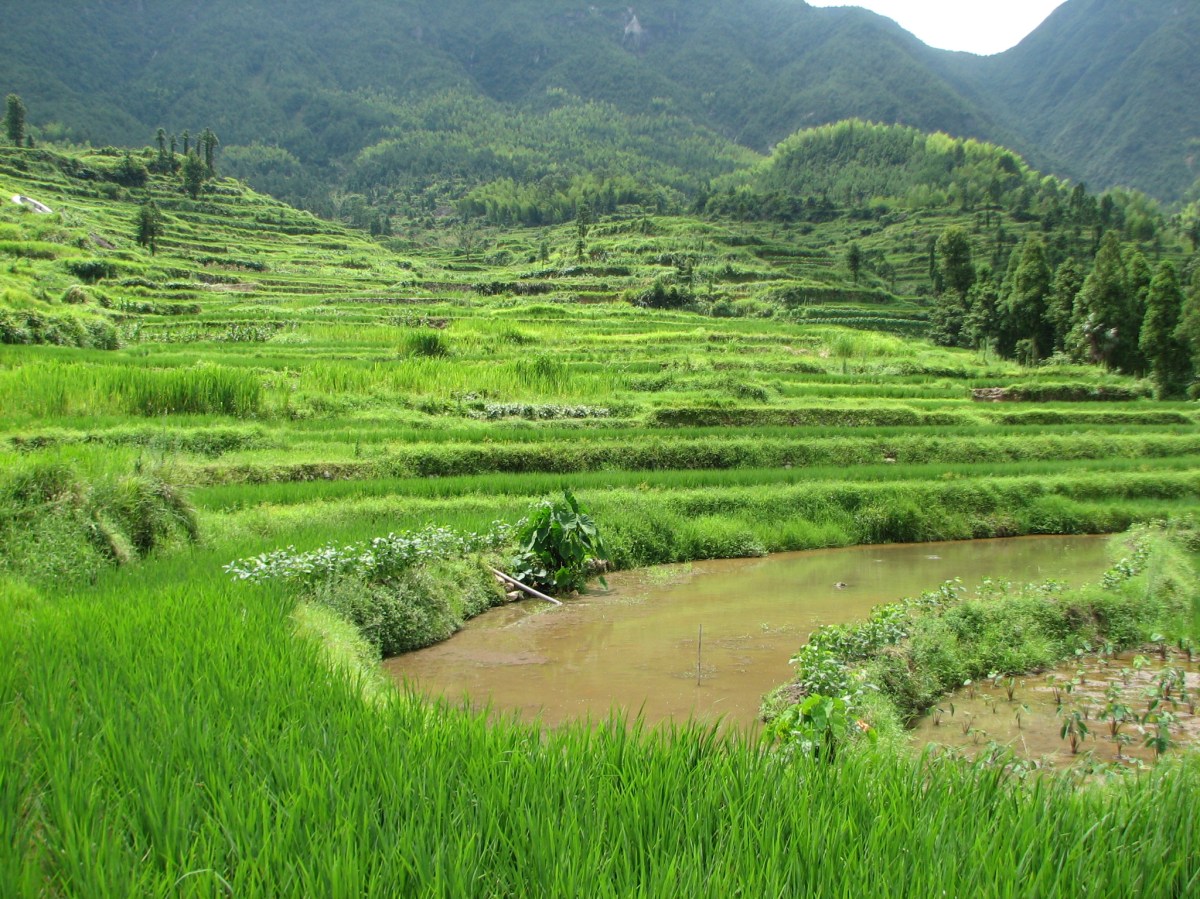
Figure 1 Rice-Fish Culture in China, FAO, http://www.fao.org/giahs/giahsaroundtheworld/designated-sites/asia-and-the-pacific/rice-fish-culture/en/

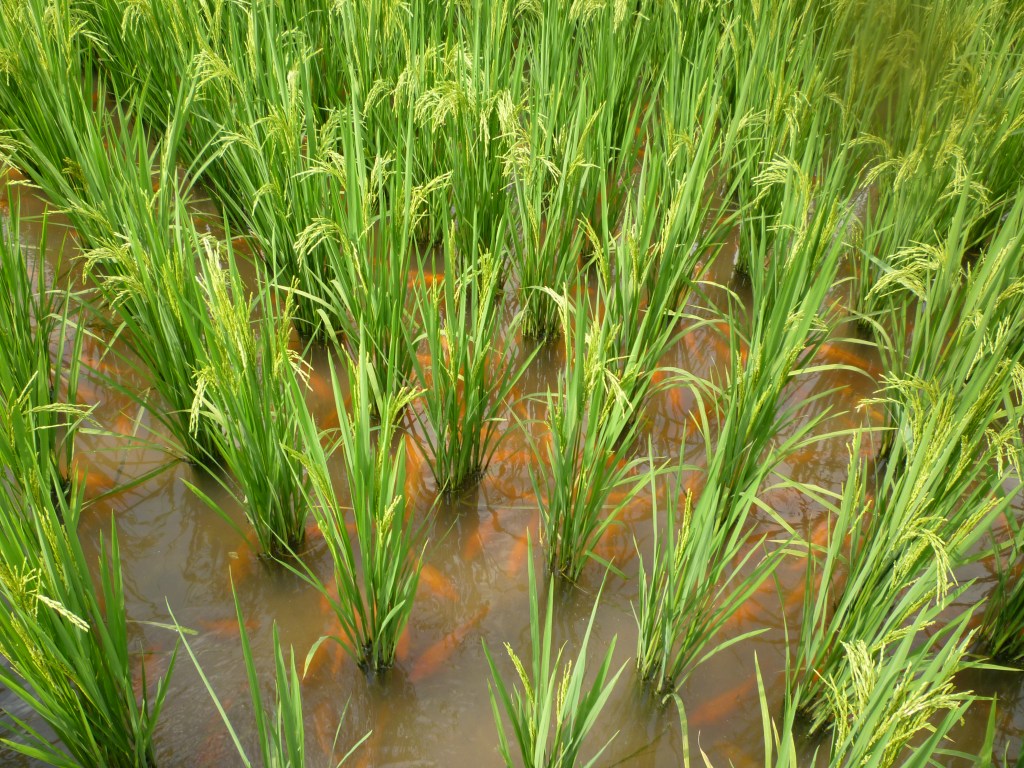
           On the other hand, safer alternatives that can still effectively protect crops are always preferable. Many of these alternatives come under the branch of organic integrated pest management, which includes several methods to control pests in an environmentally sustainable manner (5). An important part of this is effectively preventing pest populations growing in large numbers through methods such as companion planting, where plants that repel certain insects are planted, and biological control, where natural predators are introduced to organically control pest populations (6). An example of introducing natural predators is that of utilising ladybird larvae which are effective at managing aphid populations (6) or other symbiotic relationships such as that of fish in rice fields where fish will eat the pests attracted to the rice (7). In Bangladesh it was observed that pest infestation in rice fields containing only rice were 40-167% higher than those that also contained fish (7). Preventive measures can also be combined with increased monitoring of pests and mechanical pest control through means such as fences and nets to reduce access of pests to crops. Alternative chemical means to protect crops have been developed through genetic modification; for example, the genomes of maize and cotton have been altered to include genes that make the plant toxic to pests and hence protect themselves and the surrounding crops (8). All these methods can greatly reduce the impact that pesticides have on biodiversity, the recent Global Biodiversity Outlook 5 indicated that none of the 20 Aichi Biodiversity targets had been reached in the last decade (9) and the Living Planet Report 2020 has said that between 1970 and 2016 there has been a 68% decrease globally in populations of mammals, amphibians, birds and reptiles on average (10); this is up from 60% in 2018 when looking at the period 1970 to 2014 (11).  Considering these many alternatives to protect crops from damage from pests, and the need now more than ever to do everything we can to stop reducing global biodiversity, it seems clear that action should be taken to increase the usage of these alternatives that greatly reduce the impact on non-target organisms.

            Therefore, in conclusion, pesticides used for agricultural crop protection and other uses with exposure to the surrounding environment are detrimental and have far reaching consequences throughout ecosystems, on both plants and animals, as well as for ourselves. Although pesticides also have important benefits, these will become less effective in the future and can be replaced by alternatives that pose significantly less danger to us and non-target organisms. Moving forward we must ensure that the transition to these safer alternatives is carefully managed, so that they do not affect the availability of food and ensure that they can be provided on the necessary scale. Although this transition may take time, it is clear that pesticides do not have a place in our long-term solution for crop protection from pests and are overall more detrimental than beneficial.

To view Janek’s full article, follow this link below.

Bibliography      

1. OECD/FAO (2012). OECD-FAO Agricultural Outlook 2012-2021. Paris : OECD Publishing and FAO, 2012. https://doi.org/10.1787/agr_outlook-2012-en..

2. Fishel, Frederick M. Pesticide Effects on Nontarget Organisms. EDIS University of Florida IFAS Extension. [Online] [Cited: 7 October 2019.] https://edis.ifas.ufl.edu/pi122.

3. United States Environmental Protection Agency (EPA). Tips for Reducing Pesticide Impacts on Wildlife. EPA.gov. [Online] [Cited: 9 July 2020.] https://www.epa.gov/safepestcontrol/tips-reducing-pesticide-impacts-wildlife.

4. The Royal Horticultural Society (RHC). Chemicals: using them in gardens. RHS.org.uk. [Online] [Cited: 9 July 2020.] https://www.rhs.org.uk/advice/profile?pid=817.

5. United States Environmental Protection Agency (EPA). Integrated Pest Management (IPM) Principles. EPA.gov. [Online] [Cited: 9 July 2020.] https://www.epa.gov/safepestcontrol/integrated-pest-management-ipm-principles.

6. Spence, Steven. Gardening Alternatives to Pesticides. Science Connected Magazine. [Online] 2017. [Cited: 9 July 2020.] https://magazine.scienceconnected.org/2017/07/gardening-alternatives-pesticides/#:~:text=%E2%80%9CSoft%E2%80%9D%20chemicals%3A%20soap%2C,pest%20infestations%20in%20short%20order..

7. Halwart, M. and M.V., Gupta (eds.). Culture of Rice in Fish Fields. s.l. : FAO and The WorldFish Center, 2004. [Cited: 9 July 2020.] http://www.fao.org/3/a-a0823e.pdf.

8. GeneWatch UK. Pest Resistent Crops. genewatch.org. [Online] [Cited: 9 July 2020.] http://www.genewatch.org/sub-568238#:~:text=Pest%20resistant%20crops-,Pest%20resistant%20crops,bacterial%20species%20called%20Bacillus%20thuringiensis..

9. Secretariat of the Convention on Biological Diversity. Global Biodiversity Outlook 5. Montreal : s.n., 2020.

10. WWF. Living Planet Report 2020 – Bending the curve of biodiversity loss. Gland, Switzerland : s.n., 2020.

11. WWF. Living Planet Report – 2018: Aiming Higher. Gland : s.n., 2018.

Table of Figures

Figure 1 Rice-Fish Culture in China, FAO, http://www.fao.org/giahs/giahsaroundtheworld/designated-sites/asia-and-the-pacific/rice-fish-culture/en/ 2

Categories
Arts & Humanities English

Ways of Seeing

This article was written by Dr McEwan of the RGS English Department

Estimated read time: 6 minutes

Given the necessity for screens during blended and remote learning what follows is a discussion of how seeing is always framed in particular ways. 

Dr McEwan – English Department 

According to Anne Friedberg ‘how the world is framed may be as important as what is contained within that frame’ (2006: 1). To comprehend how ways of seeing are always framed in certain ways it is necessary to look at how the frame has evolved. To do this one must go back to one of the earliest forms of frame, the window. If we take the window at its literal meaning we discover that the window is an opening, an aperture for light and ventilation and that it also provides an opportunity to look out onto the three-dimensional world beyond it. A window shows what is physically beyond the pane of glass, yet it is ‘also a frame, a proscenium [and] its edges hold a view in place’ (Friedberg, 2006: 1). As such the window provides a seemingly extensive view of what is beyond it, but it does in fact limit the visual scope of the viewer. When viewing a window in terms of its frame as a boundary we can draw many parallels between other cultural objects. At its most basic definition, as an ‘opening in architectural space’ (Friedberg, 2006: 5), the window automatically supplies us with a common metaphor for the various frames that form the frame of a painting as well as of movies, televisions, and computers. By examining the window, and its gradual architectural evolution into the screen, it will be possible to determine just how ways of seeing are always framed in certain ways. 

Leon Battista Alberti argued that a painting could be seen ‘as an open window through which the subject to be painted is seen’ (cited in Friedberg, 2006: 27). Rather than speaking of a painting as an image that is painted onto a canvas ‘Alberti invokes the image of the window as an instructive substitute for the rectangular frame of the painting’ (Friedberg, 2006: 12). The result of this is that rather than the window being one thing and the painting another they lend meaning and substance to the other until the relation of images is bidirectional. In other words, the window is like a painting as it frames an opening onto the world and the painting is like a window as the painter frames the view as if it were being viewed through a window. This is the basis for Alberti’s argument that the window is predominately used as a metaphor for the frame as it creates a certain set of relations between a fixed viewer to a framed view. The crux of Alberti’s argument was to use the window ‘not as a “transparent” “window on the world”’ (Friedberg, 2006: 12) but rather as a device to focus on the frame that surrounds that window.  

Often disregarded are the everyday frames through which we see things such as the “material” frames of movie screens, television sets, computer screens, and car windshields. It is these frames that usually go unnoticed that ‘provide compelling evidence of the dominance of the frame and its visual system’ (Friedberg, 2006: 13-14). There are now many more possible ways to frame images, whether ‘projected on a large screen, transmitted via broadcast, cable, satellite, or seen on computers, portable DVD screens, or stream[ed] online’ (Friedberg, 2006: 4). Along with the beginning of the projected image a new form of spectatorship was formed, although the basic model was still adhered to, that of the immobility of the spectators and the aperture of a fixed frame. This meant that although the moving image was confined to a frame it ‘provided a virtual mobility for [the] immobile spectators’ (Friedberg, 2006: 5). Rather than a window being the barrier it is the frame that ‘becomes the threshold – the luminal site’ (Friedberg, 2006: 6). Within this particular frame it is possible to be shown an ever increasing array of images and as such the screen has replaced the window in terms of prominence. Screens have become a fixed feature of daily life, buildings are adorned with screens as exterior walls computers interface with other screens and phones take and transmit photos. As well as fixed screens mobile screenic devices have added mobility to the screen’s face in the form of objects such as mobile phones, ipods and now Surfaces. As we shall see it is evident that the window has become a metaphor for the screen and conversely the screen has become an actual substitute for the window. 

It is when talking about computer screens and similar technologies that the metaphor for the window becomes blurred as the window in ‘computer software relies on a different set of assumptions’ (Friedberg, 2006: 1). Rather than the window being used to talk about the computer screen it is used to refer to a ‘subset of its screen surface’ (Friedberg, 2006: 1). This difference when talking about computer technologies is also made apparent in the fact that ‘the Microsoft version of windows has in many ways overtaken its architectural referent’ (Friedberg, 2006: 3). As each new media is introduced there is an attempt to link it to more familiar language with the hope that wrapping the newly strange in the familiar language of the past will render the new cultural object less strange. It was in this way that screens became a ‘component piece of architecture, rendering a wall permeable to ventilation in new ways: a “virtual window”’ (Friedberg, 2006: 1). Yet, on a computer screen it is possible to have open a multitude of individual windows with each one contained within its own frame. A result of this is as the beholders of multiscreen “windows” we now receive images in spatially and temporally fractured frames. Friedberg asserts that this way of framing is both postcinematic and posttelevisual, and yet remains within the delimited bounds of a frame and is still seen on a screen (2006: 7). In other words, no matter how advanced the technology the frame will always be visible as the boundary between what is seen through the window or shown on the screen and what is on the outside of that frame. 

However, we can also consider situations where the frame is more abstract than this. Drawing on film as an example Friedberg states that ‘[t]he frame functions for the film as the field of our bodies does for us’ (2006: 16); if this is the case then it is vital to consider the affects that framing has on the identity of an individual. As we can see from Sturken and Cartwright’s arguments within consumer culture windows are present most dominantly in the form of shop display windows as ‘[s]tores [are] designed with an emphasis on the visual display of goods’ (2001: 194). The shop front plays on the most basic desires of the consumer in that ‘[w]hat one can see in the light of day is always less interesting than what happens behind a pane of glass’ (Charles Baudelaire cited in Friedberg, 2006: 5). Following on from this view we need to consider precisely what message comes through a window to the consumer. People are no longer identified by where they were born but by what they consume, and as such consumption has become about constructing an appropriate identity for ourselves. When viewing products through a shop window the objects on display are both framed and placed behind the physical barrier that is the window itself. Yet, unlike with a painting or a screen it is possible to pass through that barrier and to immediately obtain what we desire. As a result of this shopping has become a key leisure activity where the consumer buys things because they are wanted and not because they are needed. The commodities we purchase frame us as they will ‘become part of one’s self-identity and how one projects that self into the world’ (Sturken and Cartwright, 2001: 198).  

It is essential to remember the frame as it is often forgotten completely in favour for what is contained within it. According to Hubert Damisch ‘“our period is much more massively informed […] thanks to photography, film and now video, than was the fifteenth century’ (cited in Friedberg, 2006: 2) and as such we cannot ignore the frame as it is ever present within all these technologies. Wittgenstein stated that ‘“[t]he limits of [our] language are the limits of [our] world”’ (cited in Friedberg, 2006: 7) and Friedberg extends this to encompass the idea that the limits of our frames of vision determine the boundaries of our world. Therefore, it is not only in technologies such as computer screens, television and movie screens where framing can be considered, ways of seeing are also framed within the identity of the person doing the viewing. It is due to ways of seeing always being framed in certain ways that the viewer is left ensconced behind the window and as such is relegated to the role of ‘spectator against a world which becomes a spectacle’ (Romanyshyn cited in Friedberg, 2006: 16). 

Bibliography

Friedberg, Anne (2006) The Virtual Window: From Alberti to Microsoft, Cambridge MA: Massachusetts Institute of Technology Press 

Keenan, Thomas (1993) ‘Windows: of Vulnerability’ in Bruce Robins (ed.) The Phantom Public Sphere, London: University of Minnesota Press, p. 121-141 

Sturken, Marita and Lisa Cartwright (2001) Practices of Looking: An Introduction to Visual Culture, Oxford: Oxford University Press    

Categories
Arts & Humanities English Poetry

What Colour is the Moon?

This poem was written by upper sixth-former Hugh Jones

Estimated read time: < 1 minute

What colour is the moon?
Our language reaches, but falls short of  
Grasping that ephemeral beauty, 
Too sublime to be caught in words. 

What colour is the moon? 
Grey? Yes grey, but richer than a single hue; 
Rather a thousand, layered with majestic artifice 
– With halo celestial the pale disk crowned. 

What colour is the moon? 
White? Yes white, but not so innocent, 
Carrying a darker beauty, deliciously marred- 
Tainted by the sins indulged in her light. 

What colour is the moon? 
Silver? Yes silver, yet unlike that imperial spoil, 
The celestial orb hangs beyond grasping man’s  
Grasping tongue, indescribable, and thus, unconquerable. 

By Hugh Jones 

Categories
Arts & Humanities Economics Geography Social Sciences

An analysis of the global north south divide

Runner up for the Cambridge Society for Economic Pluralism essay competition, written by upper sixth-former Jack Donnelly.

Estimated read time: 11 minutes

The Global North is rich largely due to exploitation and underdevelopment of the Global South, which still goes on to this day, and therefore owes reparations to rectify this rift. Discuss.

Murmurs of discontent spread throughout the former colonies. In July 2020 this went beyond mere whispers as the Democratic Republic of the Congo demanded compensation for the pain inflicted by decades spent under colonial rule. Just a month later, Burundi laid the same demands at the feet of Belgium and Germany – to the tune of $43 billion. There’s no doubt that a massive proportion of Sub-Saharan Africa’s – and indeed the Global South’s – modern troubles come courtesy of their exploitation under the Global North; the question emerges, do the modern nations owe reparations for crimes committed centuries ago?

The Global North is an oft-cited idea which, in reality, lacks clear boundaries or uniting principles. For one, the conceptual Global North ignores the geographical parameters implied by the name – it is not simply a conglomerate of nations existing above the Equator or, indeed, some agreed latitude. Therefore, before discussing the Global North-South divide we must establish what the Global North actually describes. The Brandt Report of 1980 gave economists and politicians an idea of the immense gulf in development between the two hemispheres; more importantly, it gave us the ‘Brandt Line’ which depicts the divide based on GDP per capita as a factor. Notably, it straddles the Earth at 30o N but drops to include New Zealand and Australia as part of the Global North. Brandt himself was optimistic for the new century and that coordination between the hemispheres could ‘build a world in which sharing, justice, freedom and peace might prevail’. 

In another sense, the geopolitical North-South divide was highlighted in Alfred Sauvy’s Trois Mondes, une planète where he coined the terms First, Second, and Third World. The phrases were originally instituted for the USA and the USSR and their respective allies, along with the unaligned Third World – a term now synonymous with poverty and underdevelopment, rather than a particular political alignment. Today we like to characterise the divide through a number of developmental factors: income inequality, wealth, democracy indices, along with political and economic freedom.

Regardless of how you categorise the divide – it is most certainly there. Examining its extent, the North earns four-fifths of the world’s income while constituting less than a quarter of its population; additionally, at least up until the early 2000s, over 90% of global manufacturing took place in the North. Interpreting the level to which exploitation has brought about the current situation could allow a conclusion to be reached on whether reparations are truly owed. 

The most obvious example of historical Northern exploitation of the South is colonialism – it’s simply inescapable. Initially, it came commercially, through companies such as the British and Dutch East India Companies[1] which grew to dominate the economies of their respective subjugated nations. At its height, the East India Company accounted for over 50% of global

trade and acted with the sovereignty and jurisdiction of a self-governing nation. The global mechanism of colonialism was analogous to that of a catapult. The colonial powers of Western Europe played a major role in the deindustrialisation of non-Western societies; British intervention in the Indian subcontinent reduced its share of global GDP from almost a quarter to just a couple of measly percentage points as shown in Figure 2. The metaphor completes itself in the way colonialism catapulted Western powers to global superiority through the exploitation of their colonial subjects.  

Nothing is a more egregious act of exploitation than the Atlantic Slave Trade existing between the sixteenth and nineteenth centuries. Briefly ignoring the horrific brutality and the dehumanising nature of the slave trade, we can identify it as the catalyst for so many demographical and economic issues facing Africa today. Some 12 million Africans were captured and shipped out – primarily to America – by the Europeans, destroying their social fabric and depleting the workforce immensely. The poorest parts of modern Africa share a direct correlation with the areas where the most slaves were taken. The scars of colonialism are visible to this day; African nations were created from thin air, ignoring cultural or geographical divides and instead opting for arbitrary borders which have incited enormous amounts of conflict – both national and international – since. 

Even beyond exploitation in its most explicit forms, the colonial powers of Western Europe capitalised on their supremacy by taking further advantage of unfair trade. Through ‘gunboat diplomacy’[2], they forced many countries which had escaped colonisation to sign unequal treaties, leaving the nations bereft of tariff autonomy. To understand the impact of this, we must examine the strength of protectionist policies in young economies. Alexander Hamilton argued in his 1791 Report on the Subject of Manufactures that the US needed to defend

‘industries in their infancy’ from cheaper imports in the more competitive and developed international market. By stripping young economies of ‘infant industry protection’, the powers of the Global North deprived many Latin American and Asian countries of a fair chance at development. Many of these treaties lasted for decades – even well into the twentieth century in some cases. The affected Southern countries experienced negative per capita income growth during the late Industrial Revolution period; an inability to nurture and promote their youthful industries contributed immensely. 

While the level of ‘exploitation’ today does not even hold a candle to its heights in colonial times, forms of neo-colonialism exist between powerful modern countries and the ‘Third World’. China is exercising its financial might – through FDI[3] – across the entire continent of Africa, moulding it into essentially a ‘China’s China’; in this case, however, the development is not necessarily one-sided. The truth is that China is richly compensating African nations as they surge forwards with rapid urbanisation in the ‘fourth industrial revolution’[4]. Daan Roggeveen, the founder of an Architecture firm and an author of books on Chinese and African

Urbanisation, said ‘right now you could say that any big project in African cities that is higher than three floors or roads that are longer than three kilometres are most likely being built and engineered by the Chinese. It is ubiquitous’. Africa is sitting on a massive stockpile of natural resources and China has been quick to take advantage of the power vacuum in the wake of departing colonial powers. China itself is still considered a part of the Global South, but in essence its actions in Africa are reminiscent of historical Northern intervention. Indeed, there have been cries of exploitation and Chinese imperialism, with the former governor of Nigeria’s central bank criticising their removal of natural resources without any provision of economic enrichment in the form of skills and jobs. Regardless, Africa benefits in some sense from the massive amounts of FDI – something one could consider a form of economic reparation. 

Conversely, a significant portion of the North’s success can be attributed to their intrinsic development. Throughout history, a correlation can be identified between the quality of institutions, the strength of government and more advanced economic development. These are elements of a country which can be built up naturally over time; alternatively, they can be instigated by colonisers or conquering foreign powers. School enrolment and greater provision of public goods, for example, contribute a powerful multiplier effect to development. It could be argued that the Global South has not arrived in its disadvantaged position as a result of exploitation, but instead due to unfortunate geography, climate and numerous other factors. 

The Global South has, beyond this, suffered from factors exogenous to the influence of the North. Geography is key to this argument – Africa and South America have been disadvantaged greatly due to their narrow orientation; Eurasia benefits from wide, vast plains of arable land perfect for cultivation and the domestication livestock. A lack of genetic immunity in the ‘New World’ led to the decimation of native populations throughout the continent; immunity that

European settlers had from centuries of close integration with livestock – something native Americans never had. Ultimately, the resulting underdevelopment cannot be pinned on European settlers; they could never have foreseen the devastation they would reap on the relatively immunocompromised natives. The blame here falls upon the poor geographical starting points of Southern societies.

Furthermore, Modernisation Theory attempts to explain the underdevelopment of the Global South as a result of their own policies and socio-economic structures rather than Northern intervention. Feudalism, tribalism and relatively primitive economic structures have led their societies to a point where they lack regulation, democracy and have failed to modernise and develop themselves. The theory considers Third World society largely responsible for its own poverty. The archetypal societal approach tends to grant too much power to individuals; corruption in a country’s elite leadership can obviously be enormously detrimental to development – but it is all too prevalent. 

The Global South now has its own mechanisms in place which, certainly in part, negate the need to have reparations paid by the North. One of the most notable institutions representing the spirit of the developing Global South is the BRICS[5], a multilateral group of major emerging Southern economies. Between them, they constitute 41% of the global population and approximately 23% of world GDP. The BRICS have two key components to their financial architecture which are dedicated to the development of the Global South, the New Development Bank (NDB) and the Contingent Reserve Arrangement (CRA). The bank, in particular, aims to lend up to $34 billion annually with a focus on massive infrastructure development. When outlining the plan for the organisations, the BRICS found themselves keen to distance Southern investment from the North’s sphere of influence; since they are willing to offer competitive rates to their Southern associates, perhaps they are best left to collaborate without the need for Northern intervention or reparations.

Moreover, we are obligated to question the feasibility of reparations being paid by the North. Multilateral payments of any kind are notoriously difficult to agree upon, as could be witnessed with the days of debate over collective debt[6] assumption in the EU in response to the Coronavirus Pandemic. Now consider the complexity of any agreement that would require payment by the collective ‘North’ to the collective ‘South’ on the basis of centuries of

exploitation and mistreatment. Even if it were decided that the current Global North needed to be held responsible for the actions of past generations, the practicality of it dispensing payments or other forms of compensation is contentious at best. Perhaps the more effective method of extending the olive branch would be through bilateral – rather than multilateral – action and intervention; individual Northern powers could be responsible for making reparations with the countries specifically impacted by their ventures. 

Ultimately, the statement is true: ‘The Global North is rich largely due to exploitation and underdevelopment of the Global South’ – to a certain extent. While the North has benefited significantly at the detriment of Southern countries, it is unfair to say that their wealth comes largely from exploitation. A significant portion of Northern success came from the strength of their innate development – strong institutions and a focus on societal growth and evolution have built them into successful nations. Regarding reparations, it is apparent that payment from a United North to a United South would be impossibly complicated to arrange; instead, individual acts of bilateral aids between wealthy Northern nations and poorer Southern nations targeting rapid economic and social development could be a far more constructive option.  

Bibliography

Allen, R. C. (2011). Global Economic History: A Very Short Introduction. Oxford: Oxford University Press.

Banerjee, A. V., & Duflo, E. (2013). Under the Thumb of History? Political institutions and the Scope for Action. Annual Review of Economics.

Burundi Joins Congo in Demanding Reparations from Belgium. (2020, August 14). Retrieved from Bloomberg: https://www.bloomberg.com/news/articles/2020-08-14/burundi-demands-43billion-as-reparations-from-colonial-rulers

Chang, H.-J. (2014). Economics: The User’s Guide. London: The Penguin Group.

David, D. (2018). The Almighty Dollar. London: Elliott and Thompson Limited.

Elvin, M. (1984). Why China Failed to Create an Endogenous Industrial Capitalism: A Critique of Max Weber’s Explanation. Theory and Society, vol. 13, no. 3, 379-91.

Europe’s €750bn rescue package sets a welcome precedent. (2020, July 25). Retrieved from The Economist: https://www.economist.com/leaders/2020/07/25/europes-eu750bn-rescuepackage-sets-a-welcome-precedent

Iyer, L. (2007, November 6). Direct versus Indirect Colonial Rule in India: Long-Term Consequences. Harvard Business School Working Paper, 5-51.

Kamarck, A. (1976). The Tropics and economic development; a provocative inquiry into the poverty of nations. The John Hopkins University Press.

Nunn, N. (2007). Relationship-specificity, incomplete contracts, and the pattern of trade. Quarterly Journal of Economics, 569-600.

Ramachandran, S., & Rosenberg, N. A. (2011). A test of the influence of continental axes of orientation on patterns of human gene flow. Am J Phys Anthropol, 515-529.

Rappaport, J., & Sachs, J. D. (2003). The United States as a Coastal Nation. Jounral of Economic Growth, 5-46.

Sachs, J. (2001). The Geography of Poverty and Wealth. Scientific American, 284.

Sauvy, A. (1952). Trois Mondes, Une Planéte. L’Observateur, 14.

The Persistent Underdevelopment of The Global South. (2018, November). Retrieved from

UKEssays: https://www.ukessays.com/essays/economics/the-persistent-underdevelopment-ofthe-global-south-economics-essay.php>vref=1

Warner, A. M., & Sachs, J. D. (2001). The Curse of Natural Resources. European Economic Review, 827-838.

Woolcock, M., Szreter, S., & Rao, V. (2009). How and Why Does History Matter for Development Policy? Brooks World Poverty Institute.


[1] The British East India Company operated in the Indian subcontinent while the Dutch East India Company was in the Dutch East Indies, modern-day Indonesia. 

[2] Pursuit of foreign policy objectives with the aid of conspicuous displays of naval power 

[3] Foreign Direct Investment – Investment in the form of a controlling ownership in a business in one country by an entity based in another country. 

[4] ‘The Fourth Industrial Revolution’ is the ongoing automation of traditional manufacturing and industrial practices, using modern smart technology.

[5] Brazil, Russia, India, China, South Africa (BRICS)

[6] The EU agreed in July 2020 to an $869bn recovery package with debt shared between each member state. Despite close links between the EU states it took several days of debate to reach an agreement.