This essay was written by Lower Sixth Form student Jasper Morris as an Independent Learning Assignment (ILA). It was the winning submission in the Arts/ Humanities category of the 2023 ILA/ ORIS award. The following provides a short introduction to the full essay:
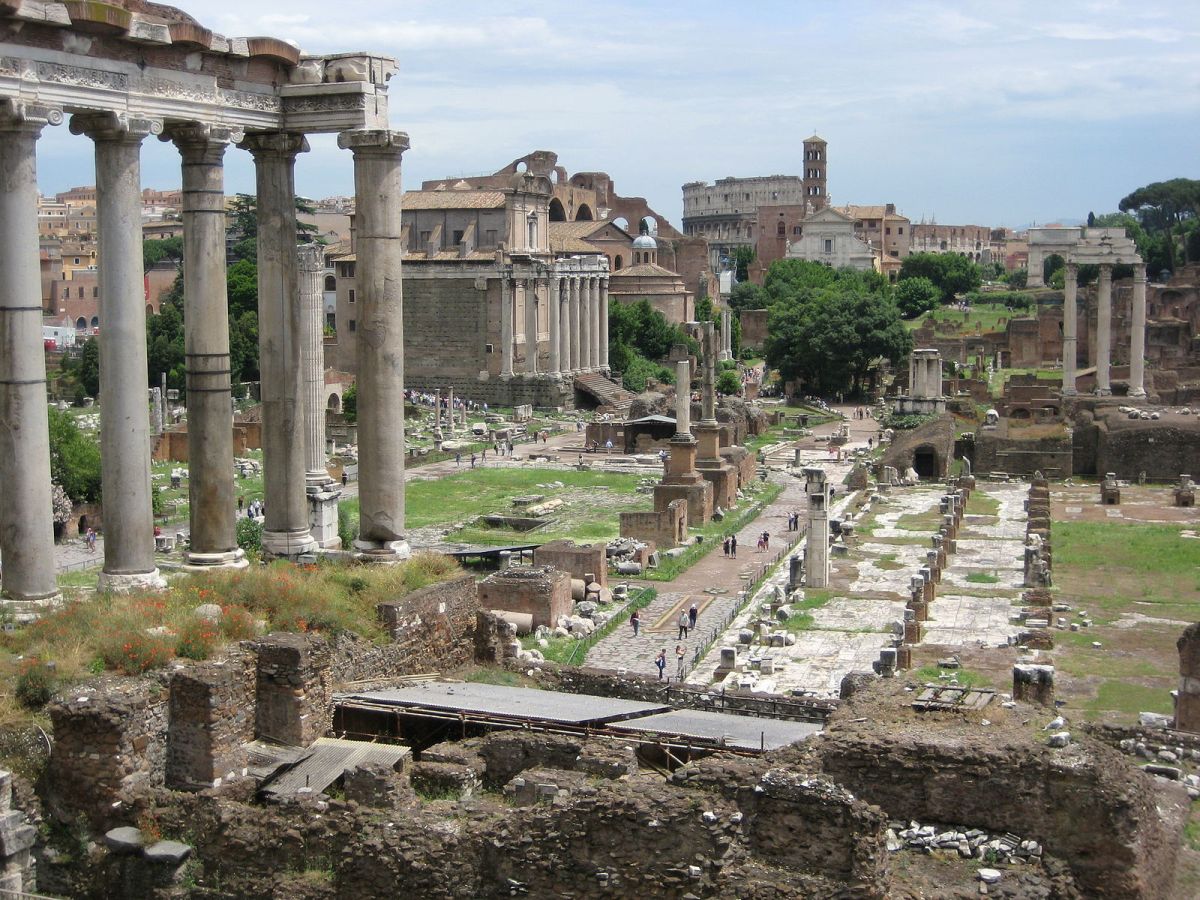
The Classics, the study of Ancient Greek and Roman civilisations, have long been considered the foundations of Western culture, with literature, art and architecture all adorned with marks of the Classics. Yet, since its renewed interest during the Renaissance the study of Ancient Greek and Roman literature has found itself amalgamated with pro-white notions of the time, riddled with misinterpretations and a prejudiced subject focus. Continued to the present, the Classics are still often weaponised to bolster racist ideologies of the far right who admire its cultural potency. Despite the pursuit of knowledge often being noble, the legacy of classical education threatens to be tarnished by those abusing its promise of being the foundation of Western society for no good. In this paper I will examine both Classics’ influence on white supremacy and societal efforts striving to reverse such influences.
To view Jasper’s full article, follow this link below:
This essay was written by Lower Sixth Form student Haris MacNiol as an Independent Learning Assignment (ILA). It was shortlisted for the 2023 ILA/ ORIS award. The following provides a short introduction to the full essay:
Paris is a city firmly detached from its surroundings. Beyond its ring road lies a ‘not Paris’, a parallel universe which exists in limbo, beyond the administrative boundaries of the city but part of its conurbation. Far from the idyllic American suburbia, the reality of the French Banlieues (or suburbs) is one of vast concrete housing complexes (known as cités) hosting poverty, crime and racial inequality. Although forcefully removed from the Parisian sphere of influence, the cités exist as scars of the failed modernist utopia, Paris would like to forget. The architectural dogma of Le Corbusier paired with governmental constraints resulted in a built environment that failed and continues to fail to this day, the residents who find themselves in these beton-brut poverty traps. To examine the failings of the Banlieues, is to examine the lack of oversight that the architects and the government displayed in conjunction with inequalities that have persisted since the downfall of the banlieues some 50 years ago.
To view Haris’s full article, follow this link below:
This essay was written by Lower Sixth Form student Finlay Sanders as an Original Research in Science (ORIS) project. It was shortlisted for the 2023 ILA/ ORIS award. The following provides a short introduction to the full report:
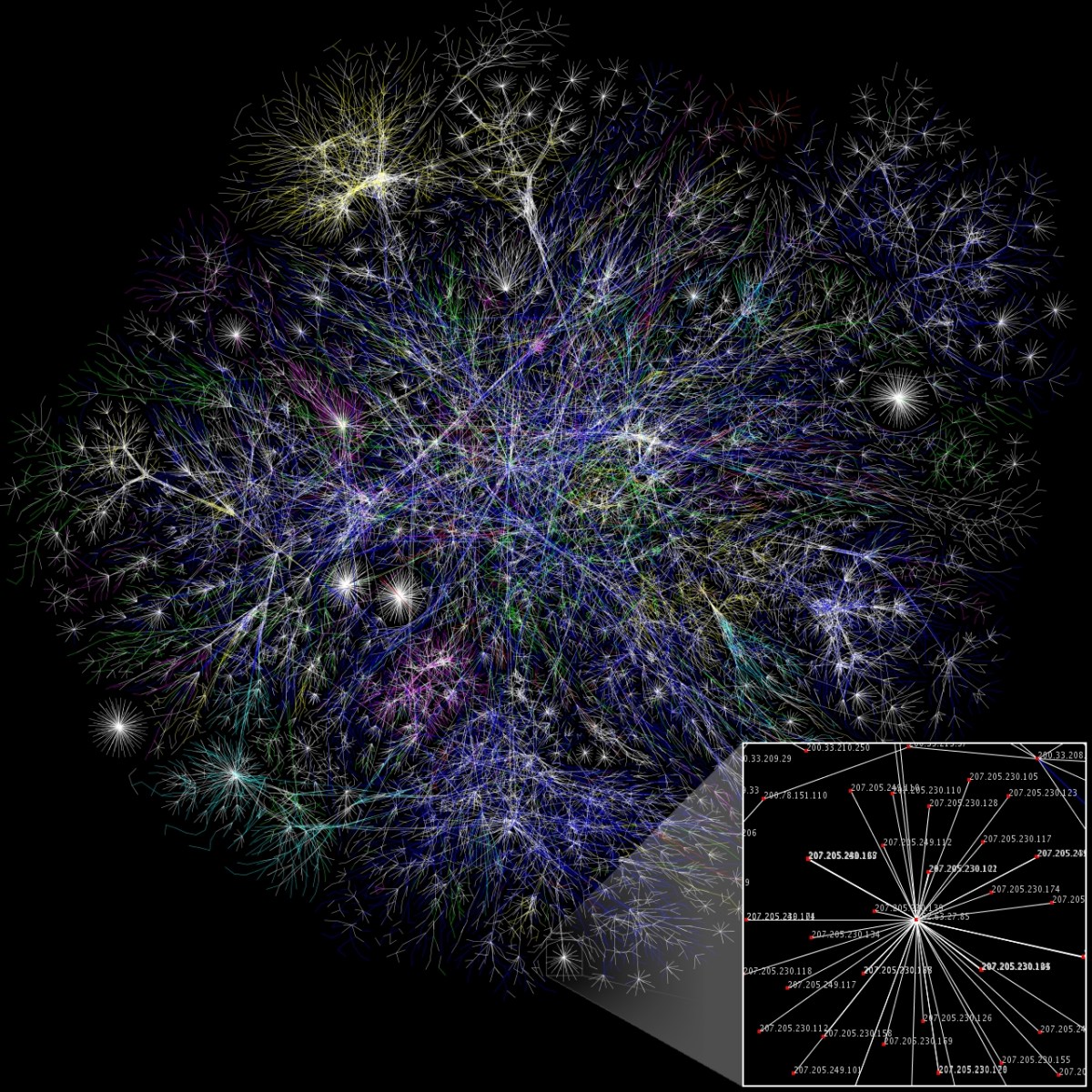
Many natural phenomena display properties or behaviours more than the mere aggregation of their parts. Humans, for instance, are capable of language, cognition and intricate social behaviours, none of which are properties of individual cells. Similarly, each cell’s functionality arises from the interactions between molecules, even though none possess the cell’s capabilities independently. This pattern, where macroscopic properties arise from interactions between microscopic components, termed ’emergence’, is a hallmark of complex systems. Emergence creates layers of abstraction within a system, where each behaves according to its own physical laws. Formal theories of emergence have already been introduced using information theory, such as in. The contribution of this paper is a novel method of identifying emergence using machine learning. By approximating the dynamics of a complex system at different spatiotemporal scales, I confirm numerically that these layers of abstraction exist, and that the dynamics of each can be learned by a data-driven approach. I evaluate this method using the Classical XY model, a lattice model of statistical mechanics relevant to phenomena such as the melting of crystals, magnetism and superconductivity, as an example. At the microscopic scale, the model consists of a collection of spins on a lattice that can point in any direction in the plane, which operate according to the dynamics of equation 4. At the macroscopic scale, the model is characterised by emergent structures termed ’vortices’ and ’anti-vortices’, which describe topological flaws where groups of spins make a 2π rotation either clockwise or anticlockwise, that follow Coulomb dynamics. To this end, I propose a dual pathway approach to predicting the trajectories of spins and vortices using graph neural networks. First, I trained a model to predict spin dynamics, from which the vortices could be extracted. Second, I trained a model that bypasses spins, instead directly predicting vortex movements. By drawing parallels to commutativity diagrams, I demonstrate that both pathways converge to accurate vortex predictions, even over extended rollouts.
To view Finlay’s full report, follow this link below:
This essay was written by Lower Sixth Form student Shrey Bijlani as an Original Research in Science (ORIS) project. It was the winning submission in the STEM category of the 2023 ILA/ ORIS award. The following provides a short abstract of the full report:
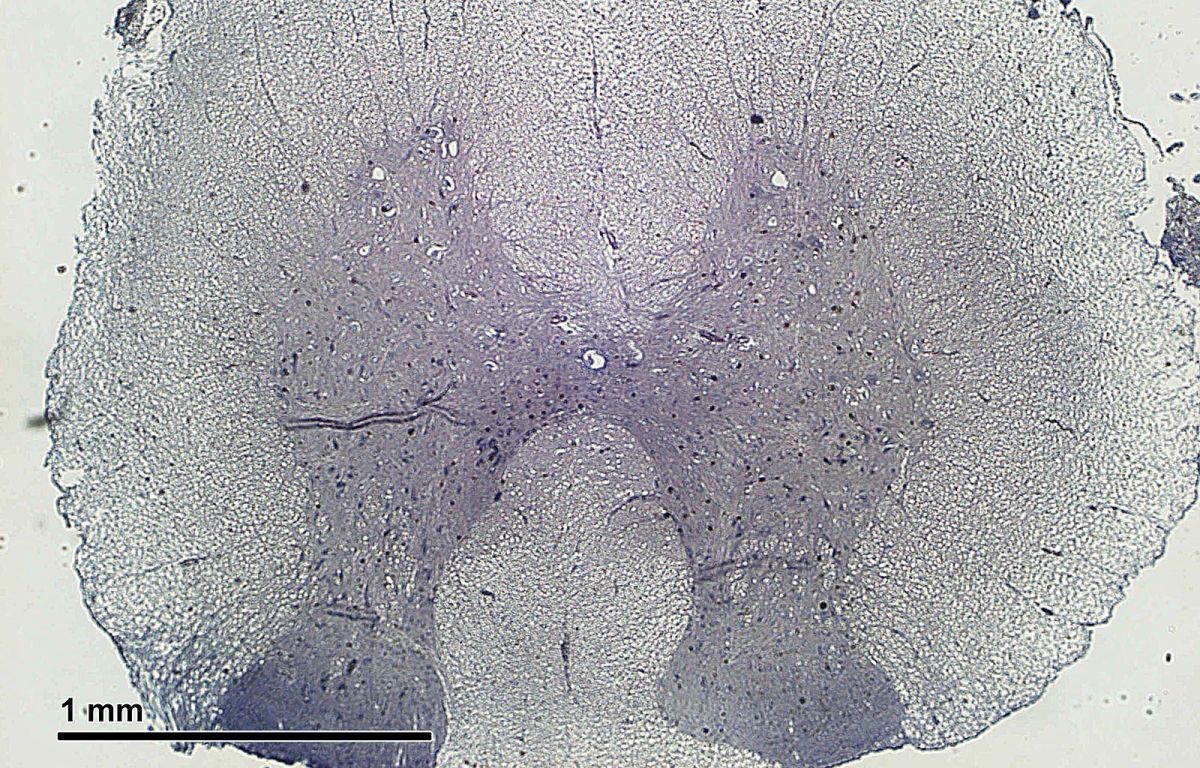
The N13 potential is a response in the spinal cord in humans that is thought to reflect post-synaptic activation of neurons. Recordings from rats show the N13 potential has an analogous N1 potential in the rat and might be useful for developing new drugs, however the precise location this potential originates from remains uncorroborated. Electrophysiological experiments were performed to analyse this, and subsequently, tissue was extracted from rats and stained accordingly. The results show that the probe was positioned approximately 1.2mm deep and 0.5mm laterally with the tip of the probe ending in lamina V. When compared to electrophysiological data, this confirms that the origin of the N13 potential is located within lamina V, supporting the conclusion that the initial response was mediated here.
To view Shrey’s full report, follow this link below:
This essay was written by Lower Sixth Form student Thomas McLean as an Independent Learning Assignment (ILA). It was shortlisted for the 2023 ILA/ ORIS award. The following provides a short introduction to the full essay:
How can we define Early Music?
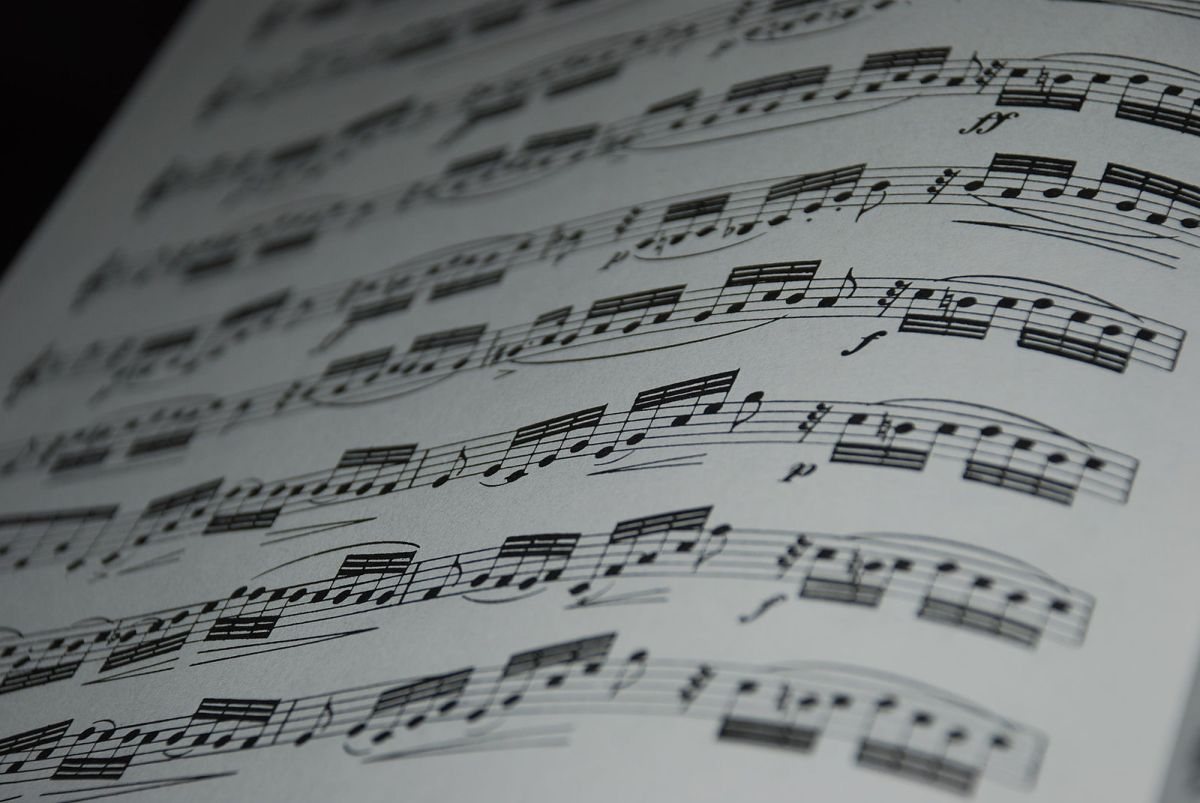
To understand the impetus of the 20th-century early music revival and the significance of Historically Informed Performance, ‘early’ demands definition. If one utilises a literal lens, the definition of ‘early’ surely gets later as time progresses, as exemplified by the description of the 1776 ‘Consort of Ancient’s repertory of music that was more than just 20 years old – clearly illustrating the slowing of the rate that music has developed over time. However, in the 21st century world of early musicians, early music is generally regarded to be a collective term for the music from the Medieval to the Baroque, encompassing the period from the late 8th century to 1750. This essay will examine the historically informed performance (HIP) of Renaissance and Baroque music in the 20th century.
To view Thomas’s full article, follow this link below:
This essay was written by Lower Sixth Form student Oliver Godkin as an Independent Learning Assignment (ILA). It was shortlisted for the 2023 ILA/ ORIS award. The following provides a short introduction to the full essay:
We’ve all heard the word smart added as a prefix to everything nowadays – smart speaker, smart businesses, smart plugs, smart air purifiers, and you can even buy a smart fridge.
There are also smart cities.
Smart cities are a relatively recent breakthrough in urban planning and design, and for the past few decades, have seen proponents far and wide from individual planners to governmental organisations, global tech firms, and billionaires.
With the current global population sitting at 8,036,344,468 at the time of writing, and with 4.4 billion people (56% of global population) living in urban areas as of April 2023, cities are at the forefront of tackling global issues, as a majority of the world’s population lives in urban areas. With rural to urban migration showing no signs of slowing, and with widening inequality in cities worldwide, the city of tomorrow is becoming more and more of a concern, arguably an issue, with which we need to deal with now, lest we forsake our descendants, and leave them a depleted, uninhabitable, planet.
Smart cities are one of the foremost defences against modern global issues, however currently they remain largely a theoretical concept, often confused with other urban design principles, and hence their application in the real world has been varied in success and support.
To view Oliver’s full article, follow this link below:
This essay was written by Lower Sixth Form student Ben Tabberner as an Independent Learning Assignment (ILA). It was shortlisted for the 2023 ILA/ ORIS award. The following provides a short introduction to the full essay:
“It’s a high time for Hypersonic Missiles”1 is a line from one of Sam Fender’s best-selling songs. Looking at the line in the context of the song, it is a plea to society to do something meaningful with their lives because hypersonic missiles have the potential to destroy life as we know it. For example, a hypersonic missile launched from Moscow now could strike London with a nuclear warhead in under 10 minutes. Such missiles are disrupting the relative security that the world has felt since the end of the Cold War. Since ex-United States Secretary of Defence Robert McNamara’s suggestion of Mutual Assured Destruction (MAD) in the 1960s the world has been living in relative comfort in the belief that no superpower will strike another for fear of ‘Mutual Destruction’. Hypersonic missiles may allow any country who has them to make a nuclear strike with more success. Mutual Assured Destruction relies on different countries’ military forces being equal – hypersonic missiles disrupt this balance because of the reduced response time and difficulty of defending against them. They have put the world in a precarious position; the ‘Destruction’ in Mutual Assured Destruction may not be ‘Mutual’ at all. Is it therefore time to look for a new way forward which will give the world a new era of relative peace?
To view Ben’s full article, follow this link below:
This essay was written by upper-sixth former Cameron Philp, and a finalist for the 2020 Independent Learning Assignment. The following provides a short abstract to the full essay, which can be found at the bottom.
Estimated read time of abstract: 1 minute Estimated read time of essay: 45 minutes
Unlike the Antarctic and many other parts of the world, the Arctic is a region of unclear territories, rapid change and emerging economic and strategic importance. The Arctic Circle is the northernmost line of latitude on the globe and consists of a deep ocean covered by a drifting expanse of frozen seawater. This ice cap is the major feature of the area and it expands in winter as the sea freezes and reduces in size in the summer as the ice melts. Iceland, Denmark (through Greenland), Norway, Sweden, Finland, Russia, Canada and the United States are the eight ‘Arctic States’ that are located within the Arctic Circle. Approximately 4 million people live and work in the Arctic.
The extent of the Arctic ice cap has been decreasing significantly in the past few decades due to increasing average global temperatures. This rise in average temperature of the Earth’s climate is known as global warming and the Arctic is warming at a rate of almost twice the global average. Global warming is caused by many factors including the release of heat-trapping gases, such as carbon dioxide from the burning of fossil fuels in power stations, that leads to a greater ‘greenhouse effect’. The ‘greenhouse effect’ is the warming that happens when certain gases in the atmosphere let light in and out but trap heat. Since the Industrial Revolution, the actions of humankind have had an increasingly damaging impact on the planet’s natural environment through an enhanced greenhouse effect. This has led the Arctic ice sheet to melt significantly and continues to at a terrifying rate due to increasing average temperatures. The last three winters in the Arctic have been 6ºC warmer than the average for the region and between 1982 and 2012, Arctic sea ice coverage decreased by over 40% from 8.3 to 4.7 million square kilometres. At the current receding rate, an ice-free Arctic is very likely in the next century and ice-free summers within the next few decades. This has many negative consequences. However, the decreasing ice coverage has meant resources previously inaccessible or too expensive to access are becoming available and commercially viable for exploitation.
To view Cameron’s full article, follow this link below.
This essay was written by upper-sixth former Archie Forsyth, and shortlisted for the 2020 Independent Learning Assignment. The following provides a short abstract to the full essay, which can be found at the bottom.
Estimated read time of abstract: 2 minutes Estimated read time of essay: 20 minutes
In my ILA I explain the premises and applications of a variation of Newtonian mechanics called ‘Lagrangian’ mechanics and then go on to derive a differential equation that describes the motion of a double-sprung pendulum in three dimensions and then obtain its path of motion through coding a fourth order Runge-Kutta numerical solver.
In short, Lagrangian mechanics uses Newton’s three laws of motion and slightly alters their form in order to make them more applicable to more complicated systems, including systems such as pendulums which are best described using polar coordinates. What makes this possible is the application of the Euler-Lagrange (E-L) equation, which involves differentiation, to the Lagrangian of the system. The Lagrange is simply the kinetic energy of the system minus the potential energies and when the E-L equation is applied to it, these energies are converted into an equation for the forces acting on the masses in the system and thus, dividing by the mass, a differential equation that describes the motion of the system.
The next section of my ILA is a brief explanation of what a chaotic system is and that it is not always necessarily a complex system, for instance, take a double pendulum, i.e. a pendulum attached to the base of another pendulum. This is a very simple system however it is extremely chaotic, which is to say that the slightest change in its initial conditions, in this case angles from the equilibrium positions of the pendula, length of pendula and the greatness of the masses, greatly affect the system’s path of motion.
From here the first major section of work begins as I derive a differential equation that describes the motion of first a double pendulum in polar coordinates (in 2-D) and then a double sprung pendulum in Cartesian coordinates (in 3-D). To demonstrate the effectiveness of Lagrangian mechanics, I derived the equation describing the sum of the forces acting on the masses in the double-sprung pendulum using both ordinary Newtonian mechanics, i.e. vector forces, and Lagrangian mechanics to show how much faster and more reliable it is to use the Lagrangian method.
The final part of my ILA is the code that I made to find the path of the double-sprung pendulum’s motion. It is, as described before, a fourth order Runge-Kutta numerical solver, which uses an iterative method based on setting a fixed time difference and calculating the acceleration and velocities at the end of each of those time differences, which can be substituted back into the equations for acceleration to give a new coordinate, repeating this process many times so that you can find the coordinates of the masses after a given time. The code achieves this and allows for the choosing of the initial conditions, which are the spring constants, the unstretched lengths of the springs, the initial coordinates of the masses and the magnitude of the masses attached to the springs.
To view Archie’s full article, follow this link below.
This essay was written by upper-sixth former Theo Lakin, and a finalist for the 2020 Independent Learning Assignment. The following provides a short abstract to the full essay, which can be found at the bottom.
Estimated read time of abstract: 3 minutes Estimated read time of essay: 30 minutes
In my ILA I investigate the various aspects of Down’s syndrome, looking into not only the genetics but also looking at its influence on life, for that of the person with Down’s syndrome and those around them.
Down’s Syndrome (DS) is a genetic condition which entails a set of physical, mental, and functional abnormalities as a result of an extra copy of chromosome 21 in the human genome, making 3 instead of the usual pair of two. This occurs during the creation of human sex cells (gametes) through meiotic division. It is a phenomenon known as trisomy 21, and it occurs in around 1 in 1,000 live births worldwide [THOMAS, 2019].
DS entails a set of very similar physical and mental characteristics for those who have it, albeit with some variation. Those with DS are also more likely to develop visual and aural impairments and are at an increased risk of leukaemia and Alzheimer’s disease. [NIA, 2017]. People with DS have an increased risk of cardiac disorders, most of which are congenital i.e. present from birth. Congenital cardiac disorders are present in around 40-60 percent of babies born with DS [PASCALL, 2015].
Individuals with DS notably have behavioural and mental features as a result of their genes. These learning disabilities mean that it takes longer for them to develop certain skills, however level of ability certainly varies from person to person. In the past the impairment of learning ability has been overemphasised, and full potentials have only been realised in recent years due to an access to adequate education, and widespread societal acceptance.
The genes of those with DS are the same as everyone else’s, just with an extra 1%. This is a very small amount in comparison to the whole human genome, meaning that all the rest of the genetic information is the same as it would be if the person did not have DS. [KESSLING, SAWTELL, 2002].
People with DS are known for being particularly affectionate and happy, with an excellent outlook on life.. Over time, most teens and adults are competent with self-help and daily living skills which often allows them to lead semi-independent lives. With correct support and ambition, those with DS can strive for personal achievements such as being able to ride a bike, cooking their own meals, going to college, getting married and having a full-time job.
A survey was completed in 1999 which concluded that teenagers with DS educated in mainstream schools are gaining considerable benefits in academic skills, communication skills and social independence [BUCKLEY, BIRD 99]. Information was collected on a wide range of issues including, health, behaviour, sexuality and social lives in addition to personal and social independence, communication skills and academic progress. The general trend showed that on average those with DS from a mainstream school were more competent with these tasks than those from the special schools. The other classmates also learn a great amount too, and it provides a valuable and eye-opening experience for everyone else within that school.
There is no doubt that there is a truly special benefit these people with DS give to life for those around them. In a large-scale, population-based study, significantly lower divorce rates were found among families of children with Down syndrome (7.6%) compared with those of children with no identified disability (11.2%). [URBANO, HODAPP 07] This is a remarkable statistic as it shows that something like a disability does not break families apart, but instead seems to bring them closer together.
When I was 5 years old, my younger sister, Lia, was born and diagnosed with Down’s syndrome. While Lia (now 11) is a little different to others her age in some ways, most ways she is just like any other child. She is funny, ambitious, curious and just as annoying as my older sister. We share the same sense of humour and watching her take pride in her own achievements and activities is incredibly special.
I hope you enjoy reading my ILA and seeing my conclusions I draw from various studies and scientific data.
Sienna (left), Lia (centre), Theo (right) at Bodiam Castle
To view Theo’s full article, follow this link below.








 The Unchained Library