Categories
Independent Learning Assignment STEM

Robot vs Surgeon: Who Will Operate on The Heart?

This essay was written by upper-sixth former Ollie Jansen, and shortlisted for the 2020 Independent Learning Assignment. The following provides a short abstract to the full essay, which can be found at the bottom.

Estimated read time of abstract: 4 minutes
Estimated read time of essay: 20 minutes

How Has the Development of The da Vinci ® Surgical System Transformed the Future of Mitral Valve Repair Surgery?  

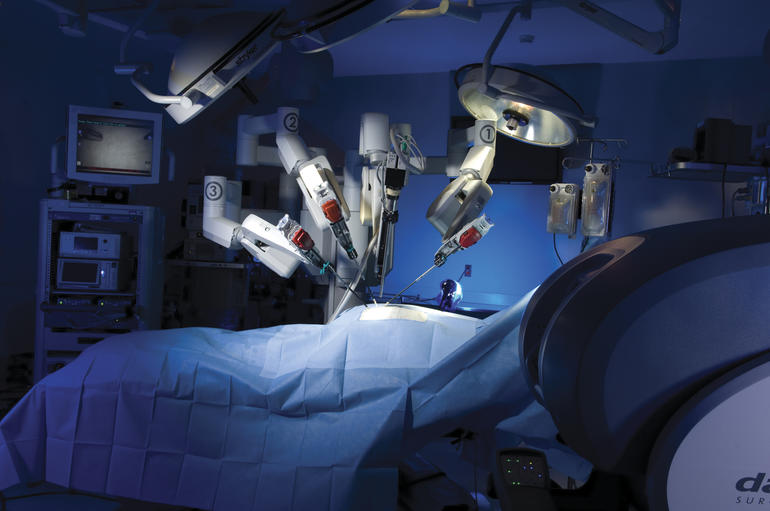
There have been monumental advancements in robotics over the last 20 years which have allowed for new and exciting innovation in the field of robotic surgery. The technology developed allows surgeons to perform a variety of complex procedures with more precision, flexibility and control than seen with conventional techniques. The surgeon is able to operate from a computer console next to the patient which provides a magnified 3D view of the surgical site and gives the surgeon complete control over the mechanical surgical instruments used to operate. The availability and potential of this technology poses a serious question: is it safe and effective for surgeons to operate on a patient’s heart with a surgical robot? Mitral valve repair (MVR) is the leading field of robotic heart surgery and this is the area of heart surgery that the da Vinci® surgical robot has had the biggest impact. This ILA evaluates the safety and efficacy of robotically assisted MVR, and how the development of this technology affects the future of MVR surgery.  

The procedure follows a similar technique to median sternotomy and right lateral minithoracotomy, with the major difference being the access ports and the instruments utilised. Access ports are placed through the right chest, including a 40mm minithoracotomy working port with a soft tissue retractor when a Chitwood clamp is used for aortic occlusion, and a 15 to 20mm working port when an intraortic balloon is used . The occlusion of the ascending aorta can be performed by either of these methods. Right internal jugular and femoral veins are cannulated for CPB . The left robotic arm is inserted through the third intercostal space in the anterior-axillary line and the right arm is inserted through the sixth intercostal space in the mid-axillary line . The chest cavity is flooded with CO2 to mitigate intracavity air. Standard mitral valve repair techniques are used in the same way as conventional surgery. Posterior leaflet prolapse is treated by triangular or quadrangular leaflet resection, sliding repair , folding valvuloplasty and insertion of polytetrafluoroethylene (PTFE) chords. Anterior leaflet prolapse is mainly treated by the insertion of PTFE chords , with some cases treated by chordal transfer. All valve repairs include an insertion of a flexible annuloplasty band with a 2-0 polyester suture. A technique developed in 2009 allows for the annuloplasty band to be inserted using running annuloplasty sutures that require fewer steps than individual mattress sutures. This effective method allows for the annuloplasty band to be inserted much more swiftly, reducing aortic cross clamp and CPB times. 

In a study conducted by Gillinov et al at the Cleveland clinic, published in 2017, the first 1000 cases of robotically assisted mitral valve repair were analysed. This study thus provides an unparalleled insight into the safety and effectiveness of this surgery. Mitral valve repair was achieved in 989/992 patients (99.5%), with 97.9% of these patients having no or mild mitral regurgitation at discharge. These outstanding results of the success rate of robotically assisted MVR are comparable to several other clinical trials with the same objective. In this trial, 20 patients were converted to a full sternotomy (mostly due to inadequate access due to excessive bleeding and inadequate repair). It is crucial that there should be a willingness to convert without hesitation from the robotic approach to a conventional approach if it appears to compromise surgical outcome.  

It is very clear that robotic mitral valve repair is a safe and effective alternative to conventional repair techniques. There are several key advantages that must be considered. Firstly, enhanced surgical dexterity is allowed, which results in increased precision in a tight area. A motion filter in the da Vinci® system prevents unintended movements caused by human tremor, which further enhances surgical precision. Secondly, high definition, 3D visualisation allows the surgeon to view the inside of the left atrium with line of vision parallel to the blood flow in the valve. This kind of visualisation is unattainable in other techniques and gives the surgeon an excellent roadmap to perform the repair. Thirdly, the cosmetic results are dramatically superior to alternative techniques due to discrete incisions used for access ports. Fourthly, because of the avoidance of median sternotomy and reduced surgical trauma, post-operative pain is much lower and recovery times are faster. The DaVinci® robot rotates around a pivot point near the patient’s ribs, minimizing physical pressure on sensitive nerves and tissues. Finally, the risks associated with postoperative infection are significantly decreased. When this is combined with standard practice broad spectrum antibiotics, the risk of infection is minimal. 

I believe that the introduction of the da Vinci® surgical system into mitral valve repair has completely transformed the field. It has led to a new standard of patient care amongst cardiothoracic surgeons: the thorough examination of the specific positive and negatives of each type of MVR surgery allows for surgeons to really evaluate what is best for their patients and discover how they can provide the highest standard of care. Furthermore, the confirmation that the da Vinci® surgical system is safe and effective bodes extremely well for the future. In the future, surgeons will become increasingly comfortable with using surgical robotics, which will allow for a seamless introduction of robotic techniques to other areas of cardiothoracic surgery. I think that if robotic mitral valve repair continues to persevere as an effective treatment, it absolutely sets the standard for the integration of surgical robotics into cardiothoracic surgery. Robotic mitral valve repair is so transformational to the future of mitral valve treatment: it creates a diverse armamentarium of surgical techniques allowing for the treatment of each patient to become even more individual to a patient’s needs. Robotic mitral valve repair completes an extraordinarily high-quality plethora of surgical options which enhances the ‘gold standard’ of mitral valve repair to an even higher level.  

To view Ollie’s full article, follow this link below.
Categories
Economics Independent Learning Assignment Social Sciences STEM

Analysing the Gacha Mechanism: The Truth behind the Rates

This essay was written by upper-sixth former Muhammed Hussain, and a finalist for the 2020 Independent Learning Assignment. The following provides a short abstract to the full essay, which can be found at the bottom.

Estimated read time of abstract: 4 minutes
Estimated read time of essay: 60 minutes

The following Preface is an extract from my ILA that serves as an overview of both what my ILA entails and of the process in writing it: 

Preface

It was nearing the deadline for submitting the title for my ILA and I had still not given the project much thought. Forcing myself to choose a topic on the final day of the extended deadline, I was deliberating going down one of two routes; the easy yet laborious, or the difficult but enjoyable. After taming down my ambitions I went with the former and submitted that in thinking the route would be less bumpy.  

Fast forward a couple of days and I am at my desk looking at my blank screen titled, “How Immigration affects the Local Economy.” Finally I come to the realization that this is going to be a reading fest, examining 30 odd articles and picking out what is relevant for me, only to come up with a conclusion that mirrors someone else’s with data that has been sourced from someone else. What would be my input? Besides, the title itself was bland and monotonous, exactly not what I wanted my ILA to encompass.  

So, I had to start from scratch with Mr Bradford (our ILA director) thinking I was some labour economist. This time I decided I would go down the other route titled: “Are in-app purchases a scam?” Being a frequent app gamer and statistics enthusiast, I thought this was the perfect idea until I became aware of its potential downfall: the countless different app genres and in-game purchase functions. For example, in one game “gems” might be spent trying to summon a character from a pool, in another “stones” may merely speed up time. Trying to make comparisons of the value of in-game currency between two distinct games (whose currency served different functions) would be very difficult, let alone quantifying the value of speeding up game time itself.   

With the help of Mr Xuan (my ILA supervisor), I managed to narrow down my appetite to a more specific genre, gacha: the controversial Japanese lootbox1 extraordinaire now common in western app stores and perhaps the biggest “socially approved” scam out there. Having played these games before and having previously meddled with statistics in the context of these games, I realized there was a much bigger section of this topic to be explored using more elements of statistics, I at the time did not know of.   

I wanted my ILA to be truly independent, in other words, I wanted most of the research to be my own, using my own unique methods and coming up with my own conclusions about these games. That’s why choosing such a niche topic that had not been previously explored, bar the odd superficial statistical analysis by players in the games’ communities, was perfect for my goal.  

However, there were two large problems that I immediately faced as I tried to change subject from in-app purchases as a whole to the specific genre of gacha. Firstly, gacha was too specific and foreign a genre that many people did not understand the complicated terminology associated with it. Being an avid gacha gamer myself did not help either, as it was difficult to gauge what a stranger to the game would not at first understand. In fact, after submitting my first draft for approval, those who had played such games prior to reading my draft had good things to say about it, as opposed to those who hadn’t who struggled to get past the first couple pages. To fix this, I decided to restructure my ILA so it was more easy to follow, add a definitions page for any foreign vocabulary, buff up the introductory explanation of gacha, and finally add footnotes to parts that may not be fully accessible to a lay reader. This came with a downside in that my essays’ word count ballooned to make up for the more detailed explanations. 

The second problem was perhaps the bigger of the two. Having already written a large amount for my old topic of in-app purchases it was painful to cut out the now irrelevant sections. Changing topics immediately made the vast proportion of my then ILA redundant. My over attachment to what I had previously written made it difficult to cut stuff out on the basis of forcefully made reasons explaining their relevance. This resulted in an ILA which lacked a coherent structure and clearly looked as if someone had changed ideas halfway through writing it. In the end I managed to overcome this issue with the help of Mr Xuan (…again), by planning my new essay and ruthlessly extracting only the relevant parts from my old ILA,  editing them slightly before inputting them into my new one.   

The end product was an ILA dipped in statistical analysis, coated with behavioral analysis with a sprinkle of scorn on top. I understand some of this analysis does not apply to the whole gacha genre, indeed there are some games which are not so much of a scam but more a delight to play. This essay was mainly aimed at targeting the so-called gacha mechanism in popular gacha games that have, in some cases, been criticized as “scam-like” or close to “gambling” by many game critics.  

To view Mo’s full article, follow this link below.
Categories
Independent Learning Assignment Law & Politics Social Sciences

Brown and Blue: An Assessment of British Indian Voting Behaviour

This essay was written by upper-sixth former Omeet Atara, and shortlisted for the 2020 Independent Learning Assignment. The following provides a short abstract to the full essay, which can be found at the bottom.

Estimated read time of abstract: 3 minutes
Estimated read time of essay: 90 minutes

In the last decade there have been radical changes in UK politics, with Brexit and Bojo becoming household names. However, behind the apparent shift towards the Conservative Party the role of the British Indian Community has been vastly understated. Since 2010, the British Indian vote has shifted rapidly towards the Conservative Party with over 30% of British Indians switching towards them. Hence, this psephology change has gone a long way to enabling the Conservative Parties success.  

However, we must ask ourselves why this change as occurred? In my ILA, I argue that fundamentally, the shift has occurred due to changing policy within the Conservative Party, historical deterioration, and active political strategy. Using personal heritage, a range of literature and media and first-hand interviews with leading political figures such as Lord Popat, Lord M Desai and Chris Grayling MP I construct an overall picture of British Indian Voting Behaviour.  

1.4 million British Indians are currently settled in Britain, and they all stem from historical immigration. Indians have to come to Britain since the 1700s and the formation of the East India Company. They began as sailors, however, then cooks and academics came over to supply the British with India cuisine. My ILA traces this heritage, through partition, immigration from Uganda and Kenya in the 1960s and 1970s then the Thatcher, Blair and Cameron years looking at immigration policy and how this affected the Indian diaspora. This combines with personal heritage, as my maternal grandfather travelled as an illegal immigrant in 1968, to escape the brutality of Jomo Kenyatta and then my father to escape Idi Amin in 1982. The hundreds of thousands of British Indians who have came to Britain in the period 1960-1990 are distinctly loyal to the political party which allowed them in country. I also explore how geographical location has affected generations to come, particularly South Indian workers coming to Britain in the 1940s, working in unionised jobs in the North.  

However, there have been generation loyalty decline, with later generations being far less loyal to the party which originally “let them in.” This when policy from the Conservative Party has begun to appeal to the British Indian voters. From the surveys I conducted it was clear that, firstly British Indian voters are overwhelmingly voting on rationality, and often the rational policy which benefits them is from the Conservative Party. Economically, British Indians are on average the wealthiest race which often means they support the low tax policies. Culturally and Socially, they believe in harsh punishment and law and order, something which also aligns with the Conservative Party. In my ILA, I explore Cultural, Social, Education, Economic, Political and Foreign policies and the vast majority of British Indian interests align with Conservative Party Policy.  

Finally, I explored the directives of both major political parties. Kashmir is a deeply contentious issue, and the Labour Party have moved away from the Indian Government stance of non-interference. This angered many British Indians; how felt they could not support the Labour Party. One the other hand, the Conservative party has represented British Indians at the top level of Government, with 4 Cabinet Ministers having Indian heritage. Alongside this, the formation of the Conservative Friends of India has also involved the Indian communities in Britain within the Conservative party.  

I end my piece with my own political theory I developed based upon this research. Targeted Seat Theory is the idea that appealing to cultural politics within a seat is the most effective way to win seats. By using the majority interests and representing this on a local level you gain a significant vote proportion. This was seen in my case study, Harrow East.  

Overall, my ILA combines Politics, Anthropology, Sociology, History, Geography and Economics to create the picture of a British Indian voter. From this, I begin to work out how parties in the modern era have appealed to voters and then develop a wider political theory. The change I explore has gone unnoticed behind the bluster of sensationalist politics for too long and has crucial role in determining who the Government is.

To view Omeet’s full article, follow this link below.

  

Categories
Independent Learning Assignment STEM

A Theoretical Conversion of a Boeing 737800 Jet to Battery Power

This essay was written by upper-sixth former Chris Ratcliffe, and a finalist for the 2020 Independent Learning Assignment. The following provides a short abstract to the full essay, which can be found at the bottom.

Estimated read time of abstract: 1 minute
Estimated read time of essay: 30 minutes

In this project I explored the possibilities of converting a Boeing 737800 Commercial Jet to battery power. Beginning with finding the minimum power requirements for flight by two methods; calculation and then modelling to improve the accuracy. Then finding the necessary battery requirements within a weight limit that would replace the fuel load directly to see if the conversion is feasible. In addition, an investigation into aerofoil design was undertaken as the electric plane was found to be most efficient at slower speeds. In order for this to be possible, a wing shape optimised for slower speeds was designed. 

To view Chris’ full article, follow this link below.

Categories
Independent Learning Assignment STEM

Encryption

This essay was written by upper-sixth former Ben Perryman, and shortlisted for the 2020 Independent Learning Assignment. The following provides a short abstract to the full essay, which can be found at the bottom.

Estimated read time of abstract: 2 minutes
Estimated read time of essay: 20 minutes

Encryption

Encryption is a vital tool in many different aspects of life both today and in the past. I wanted to do an ILA on the topic to expand my own knowledge of both the concepts involved and different historical events where encryption and decryption were vital, such as the execution of Mary Queen of Scots or the Battle of Britain. Additionally I wanted to use the opportunity to expand on my knowledge of computer science and I endeavoured to create most of the ciphers that I studied using python. 

First I looked into the different methods of keeping information secure, and narrowed the scope of my ILA to just look at forms of encryption that involved a key. The first of these was the Caesar Cipher, named because Julius Caesar used it in his private communication to keep his servants from reading his messages. This involves shifting the entire alphabet by a few spaces, and then changing each letter accordingly. This is an easy cipher to use, and just as easy to decipher as there are only 25 ways of hiding your message.  

Caesar Ciphers were not secure enough for formal communications as the need for secrecy increased and so the permutation cipher was developed. To encrypt a message with a permutation cipher you create a map which links all letters to other letters, for example A could be linked to Q. This makes it much harder to check all combinations, but each letter is still mapped to another letter, and so if you find out a few letters, you can quickly decipher the whole message. Permutation ciphers were used for thousands of years, with examples being seen in ancient times and up to the 1900s, however generally they became obsolete in the 16th century and were replaced by the Vigenère cipher. This used a combination of Caesar ciphers, but it used a key phrase to determine which alphabet to use and the phrase was only known to the users of the message. This could only be deciphered if you knew the message, however when it was used on a large scale, such as in the American Civil War, finding out the phrase could be done with a single captured soldier and changing the phrase took days. This was the hardest cipher for me to code as it involved a lot of linear algebra and matrices. 

Modern Encryption is built upon public-key and other forms of RSA encryption, because the internet relies upon fast transmission of data and this data must be kept secure. RSA is the perfect cipher for this as it is able to encrypt data efficiently. To decipher RSA one must factorise a number with thousands of digits, which cannot be done with computers in a reasonable timeframe. Quantum computing presents a threat to this, as it is able to factorise numbers very quickly, but for now quantum computers are not powerful enough to decipher RSA. A question I wanted to answer with my ILA was whether or not encryption was at risk of being widely broken; however looking at futuristic forms of encryption such as quantum encryption showed me that even though new methods of deciphering messages were being developed, encryption was developing at an even faster rate. Quantum encryption was the only form of encryption I didn’t write using code, as it relies on the quantum laws of uncertainty to work, and these are very difficult to model. Furthermore it has only sent messages a short distance, but quantum encryption is an amazing form of encryption, because it is built upon the laws of physics, so unless the laws are wrong, it is theoretically unbreakable. 

To view Ben’s full article, follow this link below.
Categories
FTRP Performing Arts

Tonally Confused


This essay was written by lower-sixth former Ronan Lenane, and shortlisted for the 2020 Fifth Form Transitional Research Project. The following provides a short abstract to the full essay, which can be found at the bottom.

Estimated read time of abstract: 1 minute
Estimated read time of essay: 45-60 minutes

In this piece I wrote a 60-minute comedy TV pilot for the Fifth Form Independent Research Project. 

The pilot is written in the style of an anthology, following four central characters whos paths all cross by the end of episode one, after a series of bizarre and interconnected events. The pilot takes cues from shows like ‘Between two ferns’, ‘That Mitchell and Webb Look’ and ‘What We Do in the Shadows’. 

As part of my preparation for this project, I read books on screenwriting and listened to interviews with accomplished screenwriters such as Aaron Sorkin. In addition to this, I investigated classical approaches to drama- such as Aristotle’s Poetics. My research for the content of each section of the pilot consisted largely of watching movies and TV that were thematically or tonally similar to the scenes I was writing. For example, for the Noire section I rewatched films like Chinatown and Sunset Boulevard, taking note of the genre conventions and key stylistic effects in order to imitate them.  

I wrote this Pilot due to a personal interest in creative writing, specifically for Film and TV, and thought it would be an interesting challenge to attempt during quarantine. 

To view Ronan’s full script and documentation of process, follow this links below.

Categories
FTRP STEM

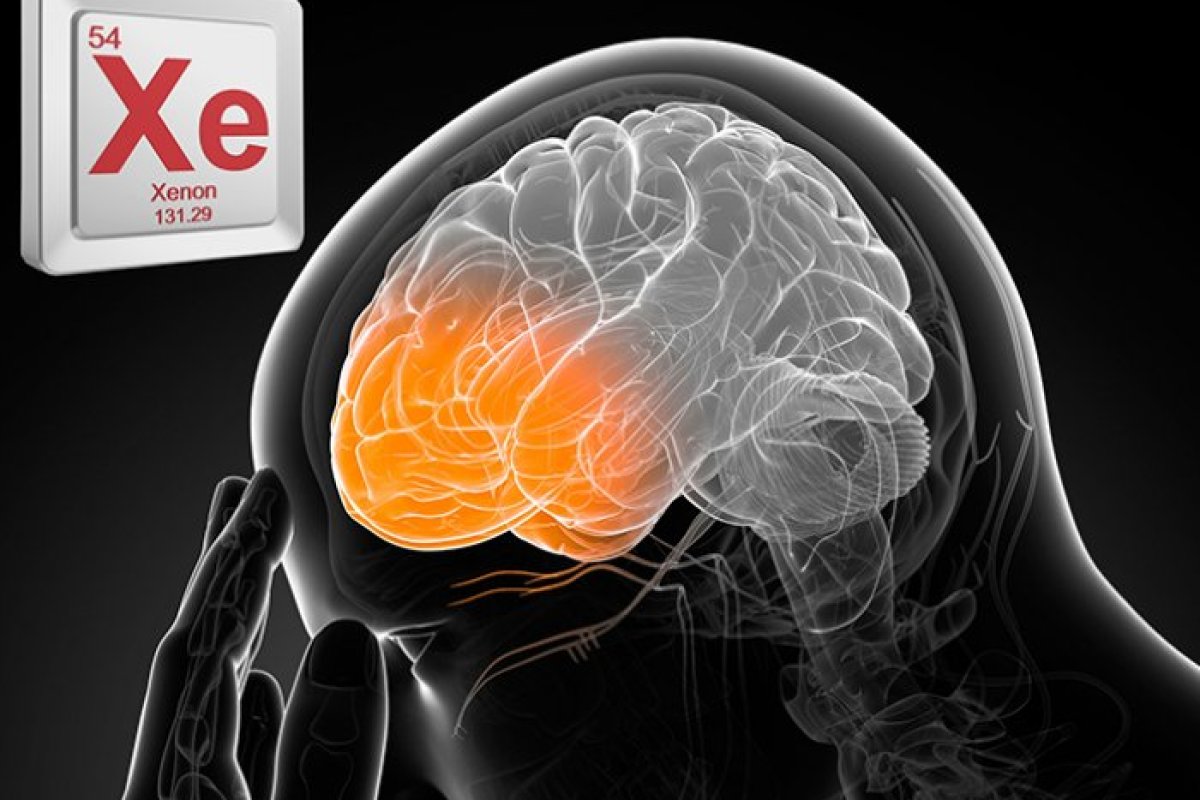
Assessing the suitability of Xenon treatment for mass use in cases of Neonatal Hypoxic Ischemic Encephalopathy


This essay was written by lower-sixth former Jack Doyle, and shortlisted for the 2020 Fifth Form Transitional Research Project. The following provides a short abstract to the full essay, which can be found at the bottom.

Estimated read time of abstract: 3 minutes
Estimated read time of essay: 15 minutes

In 2019 the University of Liverpool published their findings, in the British medical journal, on the unusual and unprecedented rise in infant mortalities within the UK. [1]This conclusion made goes entirely against the tide of lowering infant mortality rates in high income countries. In contraray to common belief, we are not yet at the stage where every child born will be healthy or even survive, and this is amplified across lower income countries around the world. There are many causes to new-born death and disability, with one of them being the lack of blood flow to brain leading to brain tissue being damaged, this is called neonatal hypoxic encephalopathy (HIE’s) [2]. There are numerous research groups worldwide that are looking into ways of treating and preventing this condition, minimising its impact on babies globally. One of the exciting and promising treatments that has shown potential in early trials is Xenon, an inert gas found in our atmosphere.

Xenon is easy to administer which means can be used in pre-existing and low cost delivery settings, with the onset of effects on the baby being rapid and controllable [3]. Xenon has a high tendency to combine with lipids, meaning that it can cross across the placenta to the baby. This tendency to combine with lipids also leads it to it being able to bypass some of the hurdles the brain puts up to prevent substances getting into it [4]. Side effects to the mother, due to delivery occurring through the mother by inhalation, seem to be minimal with the effects on the baby also being similarly minute [5]. The gas itself is expensive, caused by the arduous extraction of this gas, however multiple systems are being developed that could recycle this gas from patients. This would make Xenon treatment much more feasible and economically viable, even for use in lower income countries [6]. More work has to be done to rule out harmful interactions with other treatments, however current understanding suggests there aren’t significant interactions known.

Most importantly there have been numerous studies shown that suggest that it has beneficial effects on the outcomes of new-borns in treatment pre and post delivery. Furthermore, it has been shown that not only does it halt the progression of damage but it also potentially reverses tissue damage to a certain degree, however the way in which it does this nor the reliability of these findings are known. [7] [8] [9]

Currently the treatments for this HIE’s in newborns are very limited with the only widespread treatment is cooling. This has been shown to have an effect on limiting damage, but does not have that high of a success rate nor the ability to reverse damage. Therefore new treatments need to be developed, and the use of treatments alongside cooling could be an effective method of treatment. Studies showing Xenon in conjunction with cooling have also shown a potential benefit above Xenon solely. [10]

Despite all this there have also been a number of studies that show it does not have a noteworthy beneficial effect, therefore the evidence for it working is conflicting. Theoretically and on paper it should work effectively with a number of academics and researchers that I have talked to suggesting that it could have some benefit. More research would need to be done on this and its effects before Xenon could be used in confidence, but it is a promising drug for a fatal condition that desperately needs effective treatments.

With thanks to Dr Richard Daneman (Department of Neurosciences and Pharmacology at University of California, San Diego) and to Dr Robert Dickinson (Department of Surgery and Cancer at Imperial College, London)

To view Jack’s full article, follow this link below.

Works Cited

1U. o. Liverpool, “An ‘unprecedented’ rise in infant mortality in England linked to poverty,” Science Daily, 5 October 2019. [Online]. Available: https://www.sciencedaily.com/releases/2019/10/191005134007.htm. [Accessed 28 October 2020].
2ucsfbenioffchildrens, “Neonatal Hypoxic Ischemic Encephalopathy,” [Online]. Available: https://www.ucsfbenioffchildrens.org/conditions/neonatal_hypoxic_ischemic_encephalopathy/. [Accessed 8 6 2020].
3E. Ferrari, G. Natale, F. Giunta and A. Paparelli, “Usefulness of i.v. administration of gas during xenon anaesthesia,” European Journal of Anaesthesiology, 2000. [Online]. Available: https://journals.lww.com/ejanaesthesiology/Fulltext/2000/00003/Usefulness_of_i_v__administration_of_gas_during.6.aspx. [Accessed 28 October 2020].
4H. S. M. S. Y. N. F. I. S. M. T Goto 1, “Xenon provides faster emergence from anesthesia than does nitrous oxide-sevoflurane or nitrous oxide-isoflurane,” June 1997. [Online]. Available: https://pubmed.ncbi.nlm.nih.gov/9197295/. [Accessed 28 October 2020].
5D. Chakkarapani, “Can xenon help protect against neonatal brain damage?,” 8 January 2020. [Online]. Available: http://www.bristol.ac.uk/blackwell/funding/case-studies/2020/xenon-and-neonatal-brain-damage.html. [Accessed 28 October 2020].
6F. John Dingley, F. George P. Findlay, F. Bernard A. Foëx, P. John Mecklenburgh, F. Mohammed Esmail and P. F. Roderick A. Little, “A Closed Xenon Anesthesia Delivery System,” Anesthesiology , January 2001. [Online]. Available: https://anesthesiology.pubs.asahq.org/article.aspx?articleid=1945203. [Accessed 28 October 2020].
7*. T. L. J. X. H. T. Y. W. H. Z. M. H. P. H. M. a. M. M. Daqing Ma, “Xenon Preconditioning Protects against Renal Ischemic-Reperfusion Injury via HIF-1α Activation,” April 2009. [Online]. Available: https://www.ncbi.nlm.nih.gov/pmc/articles/PMC2663824/. [Accessed 28 October 2020].
8M. P. a. D. M. F. M. Sandra E. Juul, “Pharmacological neuroprotective strategies in neonatal brain injury,” 1 March 2015. [Online]. Available: https://www.ncbi.nlm.nih.gov/pmc/articles/PMC3929237/. [Accessed 28 October 2020].
 9Y. Zhang, “Xenon exerts anti-seizure and neuroprotective effects in kainic acid-induced status epilepticus and neonatal hypoxia-induced seizure,” September 2019. [Online]. Available: https://www.researchgate.net/publication/335672856_Xenon_exerts_anti-seizure_and_neuroprotective_effects_in_kainic_acid-induced_status_epilepticus_and_neonatal_hypoxia-induced_seizure. [Accessed 28 October 2020].
10p. R. E.Oorschot, “Xenon Combined With Hypothermia in Perinatal Hypoxic-Ischemic Encephalopathy: A Noble Gas, a Noble Mission,” July 2018. [Online]. Available: https://www.sciencedirect.com/science/article/abs/pii/S0887899417312389#:~:text=Combining%20both%20hypothermia%20and%20xenon,another%20NMDA%20glutamate%20receptor%20antagonist.&text=Xenon%20at%2050%25%20in%20conjunction,three%20hours%20after%20severe%20HI. [Accessed 28 October 2020].

Categories
STEM

How Synthetic Biology Could Save the World and Simultaneously Destroy It

Winner of the University of Gloucestershire Biosciences Essay Competition 2020 with a £1000 cash prize, this short read article was written by sixth-former Matt Gray.

Estimated read time: 5 minutes

Imagine a world where meat is environmentally friendly, where plastic is green and microbes suck all those pesky greenhouse gases out of the sky. I concede that it is a ridiculously far-fetched scenario. Or is it? The relatively new field of synthetic biology has outlandishly claimed that all of this is not just possible, but probable.  

The lines between synthetic biology and other closely related fields such as genetic engineering are truly blurred which means defining synthetic biology is challenging. However, for the purposes of this essay I will use a definition drafted by a consensus of European experts which states that “Synthetic biology is the engineering of biology: the synthesis of complex, biologically based (or inspired) systems, which display functions that do not exist in nature” (1). Effectively, synthetic biology seeks to design new systems and life processes that provide a valuable function to humans.  

One of the biggest problems facing the world today is food security. By 2050 the UN predicts food production will need to increase 70% from 2013 levels to feed the growing population (2). But with 90% of fish stocks having been used up (3), land degradation and the unsustainable demand for meat (4) how is this possible without devastating ecological impact? Synthetic biology may hold the answer. Fish feed is the biggest cost of the $232 billion dollar fish farming industry and one of the biggest causes of overfishing for small fish such as anchovies which are ground up to make the feed (5). What if you could engineer microbes that would make the fish feed  from greenhouse gases rather than fish. Novonutrients, a Californian company, has used synthetic biology to do exactly that. They have successfully engineered microbes to absorb carbon dioxide and create protein as their product (6). Does synthetic biology also hold the answer to the unsustainable demand for meat (7)? Synthetic biology allowed the now ubiquitous impossible burger to achieve its “meaty” taste by taking the DNA from soy plants and inserting it into modified yeast cells (8). These yeast cells then serve as mini factories producing heme, the magic molecule responsible for the taste. With lab grown eggs (9) and foie-gras (10) already in production synthetic biology is a genuine way to keep “meat” as part of our diets long into the future.  

What about pollution? In 2016 researchers discovered two enzymes that allowed bacteria to feed on PET plastic (11) – most commonly used for plastic water bottles – and since then researchers have been feverishly working to improve their effectiveness. In 2020 researchers at a synthetic biology lab at the University of Plymouth identified that when two separate enzymes PEThase and METhase were combined they could degrade PET 6 times faster than before (12). Currently PET is recycled by heating it to a whopping 270C which – aside from being expensive – releases volatile organic compounds which exacerbate air pollution.  Although enzymes like these are not yet commercially viable in the near future they could provide a cleaner, safer and less energy intensive solution to recycling plastic. But why stop there? Currently plastics are manufactured from crude oil – a substance so environmentally notorious it needs no introduction – but what if we could create them from a different material. Newlight Technologies has created an enzyme which combines methane – the 2nd most abundant greenhouse gas (13) – and air to form a plastic-like biomaterial (14). With plastics made from greenhouse gases and recycled by supercharged enzymes a whole new industry of green materials could form. 

That’s how I believe synthetic biology could save the world by repurposing greenhouse gases, creating green materials and ensuring food security, but how might it destroy it? 

In 2002 researchers created the first ever synthetic virus, based on polio (15) and in 2017 Canadian researchers published a study about how they had used mail order genetic components to synthesise horsepox, one of smallpox’s closest cousins (16). The potential for smallpox to be synthesised and unleashed upon the unvaccinated modern world is horrifyingly real and although organizations have taken action to minimise the risk of bioterrorism, for example the CDC in America retains copies of smallpox vaccines, its potential in the hands of a rogue state is frightening. Synthetic biology’s ethical quandaries don’t end with bioterrorism. Fears of scientists playing god, designer babies and the potential for too much power to fall into far too few hands also loom over the field. 

Yet it is irrefutable that the age of synthetic biology is here and it will affect all of our lives. I therefore believe there has never been a more important time to be a biologist to ensure that the opportunities presented by synthetic biology are used for prosperity and progress rather than pandemics and predatory politics. 

References

1. Synthetic biology: promises and challenges. Serrano, Luis. 1, s.l. : Molecular Systems Biology, 2007, Vol. 3. 

2. World must sustainably produce 70 per cent more food by mid-century – UN report. UN News. [Online] [Cited: 12 06, 2020.] https://news.un.org/en/story/2013/12/456912. 

3. Kituyi, Mukhisa. UNCTAD. https://unctad.org/news/90-fish-stocks-are-used-fisheries-subsidies-must-stop. [Online] [Cited: 12 06, 2020.] https://unctad.org/news/90-fish-stocks-are-used-fisheries-subsidies-must-stop. 

4. Saving the Planet The Market for Sustainable Meat Alternatives. Joshi, Indira, et al. 2, s.l. : Applied Innovation Review, 2016. 

5. Scottish Fish Farming and Aquaculture Industry. British Sea Fishing. [Online] [Cited: 12 06, 2020.] https://britishseafishing.co.uk/fish-farming-and-processing/. 

6. https://www.novonutrients.com/. Inc. [Online] [Cited: 12 06, 2020.] https://www.inc.com/magazine/201905/jeff-bercovici/synbio-novonutrients-bioeconomy-sustainable-food-industry-carbon-bioengineering.html. 

7. The Meat Industry is Unsustainable. IDTechEx. [Online] [Cited: 12 06, 2020.] https://www.idtechex.com/en/research-article/the-meat-industry-is-unsustainable/20231. 

8. HEME + THE SCIENCE BEHIND IMPOSSIBLE. Impossible Foods. [Online] [Cited: 06 12, 2020.] https://impossiblefoods.com/heme/. 

9. Clara Foods. [Online] [Cited: 12 06, 2020.] https://www.clarafoods.com/. 

10. Mission. Gourmey. [Online] [Cited: 12 06, 2020.] http://gourmey.com/en/#mission. 

11. A bacterium that degrades and assimilates poly(ethylene terephthalate). Yoshida, Shosuke, et al. 6278, s.l. : Science, 2016, Vol. 351. 

12. Characterization and engineering of a two-enzyme system for plastics depolymerization. s.l. : Proceedings of the National Academy of Sciences of the United States of America, 2020. 

13. Importance of Methane. United States Environmental Protection Agency. [Online] [Cited: 12 06, 2020.] https://www.epa.gov/gmi/importance-methane. 

14. AIRCARBON. Newlight. [Online] [Cited: 12 06, 2020.] https://www.newlight.com/aircarbon. 

15. Active Poliovirus Baked From Scratch. Couzin, Jennifer. 5579, s.l. : Science, 2002, Vol. 297. 

16. How Canadian researchers reconstituted an extinct poxvirus for $100,000 using mail-order DNA . Science. [Online] [Cited: 12 06, 2020.] https://www.sciencemag.org/news/2017/07/how-canadian-researchers-reconstituted-extinct-poxvirus-100000-using-mail-order-dna. 

Categories
Independent Learning Assignment STEM

Creating Colour: The Chemistry of Dyes

This essay was written by upper-sixth former Alex Thow, and a finalist for the 2020 Independent Learning Assignment. The following provides a short abstract to the full essay, which can be found at the bottom.

Estimated read time of abstract: 5 minutes
Estimated read time of essay: 45 minutes

Quantum mechanics is difficult. It is confusing. It is illogical. Albert Einstein himself hated the concept, stating, “If it is correct, it signifies the end of physics as a science”. Erwin Schrödinger, one of the great names in early quantum mechanics, said, “I do not like it, and I am sorry I ever had anything to do with it”. Even Richard Feynman, one of the greatest teachers physics has ever seen, went so far as to say, “I think I can safely say nobody understands quantum mechanics.” Despite all this, it manages to answer some of the most interesting questions out there in a beautiful way. In my ILA I explored the answer to the question of how it is certain molecules have colour.

To begin we must mention molecular orbitals (MOs). Some of the mathematics behind these MOs is discussed in the main text, but unfortunately it is too complicated to go into here, so the results will have to speak for themselves. Electrons in molecules are never in one place – we have quantum mechanics to thank for that. They are spread out unevenly around the molecule and the regions that they occupy are the MOs. There are many MOs in each molecule to accommodate all the electrons, as only two electrons can occupy any given orbital due to an effect called the Pauli exclusion principle. The different distribution of electron density within each MO leads to the MOs having different energies. The highest energy MO with an electron in it is called the HOMO (highest energy occupied molecular orbital) and the lowest energy MO that does not contain an electron is called the LUMO (lowest energy unoccupied molecular orbital). These orbitals are key in so many areas of chemistry, including the chemistry of colour, as it turns out that an electron in the HOMO can absorb the energy in a photon and jump up the LUMO. The energy of a photon of light is directly proportional to the frequency of the light, and so the energy gap between the HOMO and the LUMO determines the colour of light that is absorbed. The colour we see is simply the complementary colour to what is absorbed, as the rest of the spectrum is reflected.

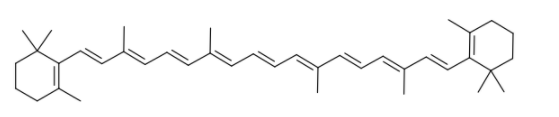
Now, my ILA would have been a lot shorter if it were simple for the HOMO-LUMO energy gap to be in the right range for visible light to be absorbed, but unfortunately this is not the case for most molecules as they generally absorb UV light. The main structural feature that coloured molecules require is something called a conjugated system, which is a chain of alternating double and single bonds (these are generally bonds between carbon atoms as the molecules we are interested in are organic). A clear example of this is in beta-carotene, the molecule that gives carrots their orange colour.

A structure like this results in an important phenomenon called delocalisation, which spreads out the MOs over the chain, allowing the electrons to move freely across it. It is actually possible to come up with an expression relating the length of the chain to the absorbed wavelength, which was done in my ILA. The result is that a molecule needs a conjugated system with at least five or six double bonds before it can absorb visible light, and hence we see why most molecules are in fact colourless.

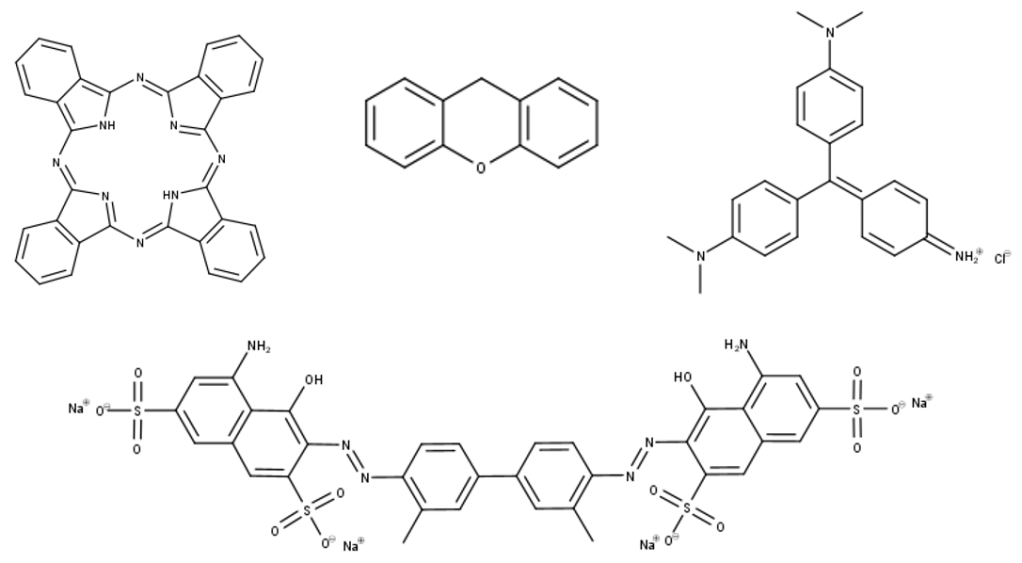
The synthesis of dyes requires an understanding of their structure. We already know that they must contain a conjugated system, and this part of the dye is called the chromophore. Any additional groups attached slightly alter the colour of the dye and are called auxochromes. The variety of structures this vary broad description allows is immense. A number of the chromophores explored in my ILA are shown below to show just how varied the dyes can be.

It is all well and good being able to create dyes, but they are useless if we have no way of attaching them to materials. Material structure is very diverse, but often the materials we dye have polymer structures. For example, plant fibres are composed of cellulose, a polymer of glucose. Animal fibres are made of proteins which are chains of amino acids. Even synthetic materials such as nylon are polymers. These polymers can stack together and align, creating a fibrous structure with pores running through it. The dye molecules are able to travel through these pores and attach themselves to the material through different kinds of bonding.

Direct dyes are the simplest to apply as these form strong enough interactions, often ionic or strong dispersion forces, to hold the dye in place without any other input. Another type of dyes called reactive dyes can quite literally react with the material, forming strong covalent bonds to it. An example of this is shown below.

There are, however, situations when the dye cannot hold itself onto the material well enough, and a mordant must be used. Mordants are inorganic metal salts that help fix a dye to a material. The metal ion in the mordant forms something called a chelation with both the dye molecule and the material, acting as a bridge between them, holding them together. The structure of one of these chelations is shown here.

Dyes are not just useful in the chemical world; they occur all the time in nature too. Two interesting examples I covered in my ILA were retinal and chlorophyll. Retinal is able to harness its ability to absorb visible light to help us see colour by altering its structure when it absorbs light. Chlorophyll is able to use the energy it absorbs from visible light to help plants photosynthesise. So, it really is impossible to go anywhere without seeing, wearing, or using dyes in some shape or form and it is impossible to deny their importance in our world.

To view Alex’s full article, follow this link below.

Categories
Arts & Humanities Independent Learning Assignment Music

The Twelve Note Conspiracy: Exploring Methods of Comparison Between Various Equal Divisions of the Octave

This essay was written by upper-sixth former Stan Lawrence, and was the winner of the Arts category for the 2020 Independent Learning Assignment. The following provides a short abstract to the full essay, which can be found at the bottom.

Estimated read time of abstract: 4 minutes
Estimated read time of essay: 18 minutes

For the last few hundred years, Western music has mainly used a system called 12 tone equal temperament. This means it has 12 equally spaced tones before it reaches the same pitch as the first again, an octave up. This system is ingrained in our musical culture and isn’t often questioned, at least in mainstream music. However, some musicians maintain that there isn’t any particular reason why this status quo should be continued. The microtonal composer Harry Partch even goes as far as to say that 12EDO (Equal Division of the Octave) is a “musical conspiracy.” 

When I started thinking about what to do for my ILA, I realised that there were uncountable EDOs – you can split an octave into however many divisions you want – so I wanted a method of comparison to work out which EDOs I might like to compose with. In my full project, I compared different EDOs in three different ways: to see how close each EDO is to a tuning system that exists in nature (to create a temperament); a mathematical approach which attempted to work out whether each EDO would be useful or unusual for a composer; and finally, a more qualitative approach. I rejected the first two approaches for being a suitable way to compare them. I abandoned the first because it assumes sovereignty of natural scales built on the harmonic series, so therefore seems to commit the naturalistic fallacy. Then I rejected the second approach as the main reason for using different EDOs is to find new sounds – so I agree with the ancient Greek philosopher Aristoxenus when he wrote “Intervals should be judged by the ear alone, not by arithmetical relations.” 

So, I decided the third qualitative method was the most suitable for comparison of EDOs. For this method I decided I would do an arrangement of the same piece (a very famous Mozart Sonata) in different EDOs then try and describe and compare the overall sound of each arrangement. However, if there were more than 12 divisions in the EDO the arrangement would have to be variations on a themeThis was because as if I simply chose the notes that were closest to the original melody in our familiar 12-tone system then this wouldn’t be using all the notes in that EDO and so wouldn’t get an overall sense of the sound of that EDO. 

All these recordings are on my Soundcloud – soundcloud.com/stanlawrence – there is a playlist called the 12 Note Conspiracy with these (and a few more that I mentioned in my full project): 

  • 7EDO: this sounds most similar to Mozart’s original composition as it has the same number of notes as a major (not chromatic) scale. But it is noticeably “out of tune.” 
  • 19EDO – this is a noticeably busier version than the 7EDO as I had to put more ornaments and reharmonisations (when one changes the original harmony of a piece) in to cover all 19 notes.  
  • 23EDO – this is further away from 12EDO (the normal system) than 19EDO so has quite an other-worldly feel (also known as xenharmony) 

Conclusions 

As the arrangements were specifically variations on a theme (as this gets past the problem of not using that EDO to its fullest extent), this means that I couldn’t say exactly how the EDOs are different. But comparing my three arrangements to the original 12EDO version, it is clear for me that they all have different moods – in general terms I can say that 19EDO has a richer sound than the transparent sound of 23EDO. However, it is hard to put my finger on exactly how to describe them (and therefore compare them effectively) as they all seem so alien and piercingly out of tune for someone like me, who has been entrenched in 12EDO my whole life. It may be hard to break out of unconsciously hearing things in relation to 12EDO therefore a comparison of different EDOs may be predicated on a lifetime of listening to alternative EDOs and Xenharmony.  

Furthermore, when I made the arrangements of the Mozart Sonata I was effectively squeezing a 12-tone piece with 12-tone harmony into non-12 tone systems. Therefore, while EDOs can to a certain extent accommodate normative harmony, this can be hardly said to be using these systems to their fullest extent – arguably having new harmonies is one of the biggest advantages of these systems. 

However, having said that, I do feel like I have learnt what the overarching sound of a few different EDOs is, albeit in very vague terms. Importantly, I think I have learnt which EDOs I might like to compose with out of the ones I compared – and as this was my primary aim, I think it was a moderate success. I wrote a composition in 19EDO called Stars in the Sea (also on Soundcloud), which sums up what I have learnt about the sort of sounds that can be made in this particular EDO. It was quite an eye-opening experience to compose in a system that barely fits at all with my understanding of harmony. I find it incredibly fascinating and inspiring that there are whole other systems of music that have barely been explored – the possibilities are endless!  

To view Stan’s full article, follow this link below.