Categories
FTRP Performing Arts

Tonally Confused


This essay was written by lower-sixth former Ronan Lenane, and shortlisted for the 2020 Fifth Form Transitional Research Project. The following provides a short abstract to the full essay, which can be found at the bottom.

Estimated read time of abstract: 1 minute
Estimated read time of essay: 45-60 minutes

In this piece I wrote a 60-minute comedy TV pilot for the Fifth Form Independent Research Project. 

The pilot is written in the style of an anthology, following four central characters whos paths all cross by the end of episode one, after a series of bizarre and interconnected events. The pilot takes cues from shows like ‘Between two ferns’, ‘That Mitchell and Webb Look’ and ‘What We Do in the Shadows’. 

As part of my preparation for this project, I read books on screenwriting and listened to interviews with accomplished screenwriters such as Aaron Sorkin. In addition to this, I investigated classical approaches to drama- such as Aristotle’s Poetics. My research for the content of each section of the pilot consisted largely of watching movies and TV that were thematically or tonally similar to the scenes I was writing. For example, for the Noire section I rewatched films like Chinatown and Sunset Boulevard, taking note of the genre conventions and key stylistic effects in order to imitate them.  

I wrote this Pilot due to a personal interest in creative writing, specifically for Film and TV, and thought it would be an interesting challenge to attempt during quarantine. 

To view Ronan’s full script and documentation of process, follow this links below.

Categories
FTRP STEM

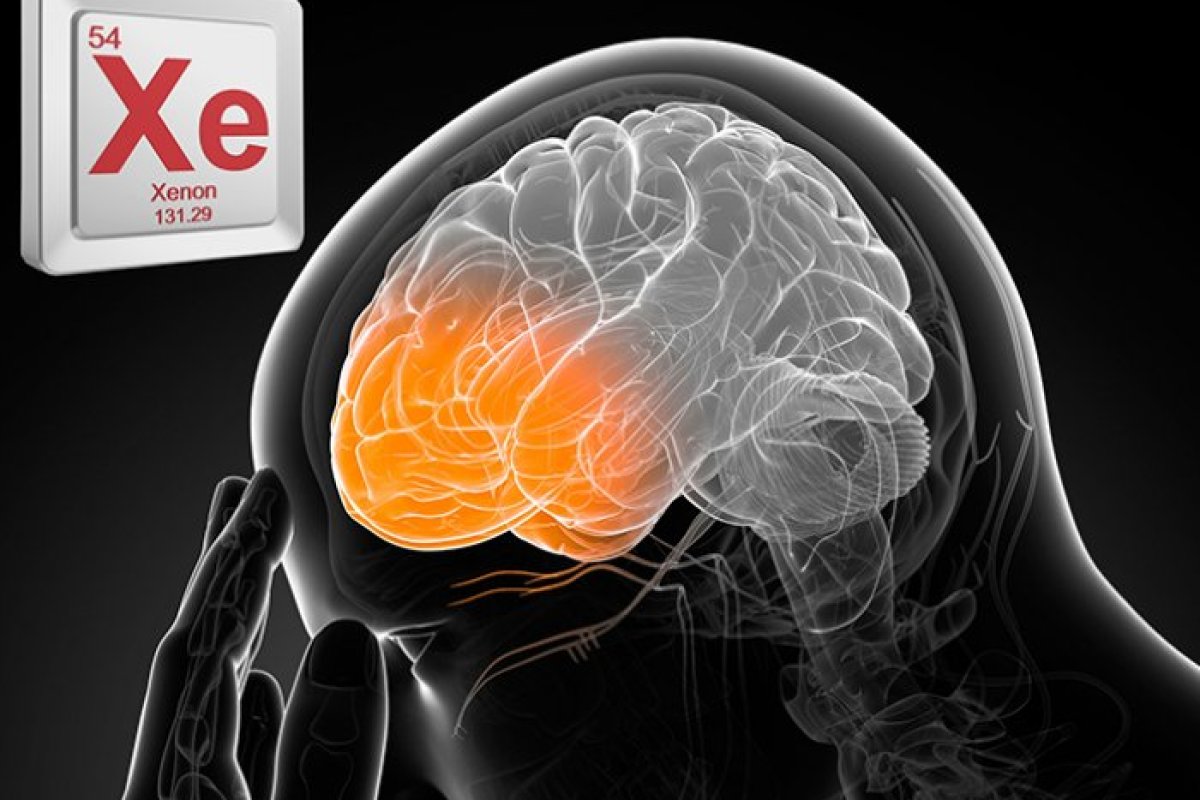
Assessing the suitability of Xenon treatment for mass use in cases of Neonatal Hypoxic Ischemic Encephalopathy


This essay was written by lower-sixth former Jack Doyle, and shortlisted for the 2020 Fifth Form Transitional Research Project. The following provides a short abstract to the full essay, which can be found at the bottom.

Estimated read time of abstract: 3 minutes
Estimated read time of essay: 15 minutes

In 2019 the University of Liverpool published their findings, in the British medical journal, on the unusual and unprecedented rise in infant mortalities within the UK. [1]This conclusion made goes entirely against the tide of lowering infant mortality rates in high income countries. In contraray to common belief, we are not yet at the stage where every child born will be healthy or even survive, and this is amplified across lower income countries around the world. There are many causes to new-born death and disability, with one of them being the lack of blood flow to brain leading to brain tissue being damaged, this is called neonatal hypoxic encephalopathy (HIE’s) [2]. There are numerous research groups worldwide that are looking into ways of treating and preventing this condition, minimising its impact on babies globally. One of the exciting and promising treatments that has shown potential in early trials is Xenon, an inert gas found in our atmosphere.

Xenon is easy to administer which means can be used in pre-existing and low cost delivery settings, with the onset of effects on the baby being rapid and controllable [3]. Xenon has a high tendency to combine with lipids, meaning that it can cross across the placenta to the baby. This tendency to combine with lipids also leads it to it being able to bypass some of the hurdles the brain puts up to prevent substances getting into it [4]. Side effects to the mother, due to delivery occurring through the mother by inhalation, seem to be minimal with the effects on the baby also being similarly minute [5]. The gas itself is expensive, caused by the arduous extraction of this gas, however multiple systems are being developed that could recycle this gas from patients. This would make Xenon treatment much more feasible and economically viable, even for use in lower income countries [6]. More work has to be done to rule out harmful interactions with other treatments, however current understanding suggests there aren’t significant interactions known.

Most importantly there have been numerous studies shown that suggest that it has beneficial effects on the outcomes of new-borns in treatment pre and post delivery. Furthermore, it has been shown that not only does it halt the progression of damage but it also potentially reverses tissue damage to a certain degree, however the way in which it does this nor the reliability of these findings are known. [7] [8] [9]

Currently the treatments for this HIE’s in newborns are very limited with the only widespread treatment is cooling. This has been shown to have an effect on limiting damage, but does not have that high of a success rate nor the ability to reverse damage. Therefore new treatments need to be developed, and the use of treatments alongside cooling could be an effective method of treatment. Studies showing Xenon in conjunction with cooling have also shown a potential benefit above Xenon solely. [10]

Despite all this there have also been a number of studies that show it does not have a noteworthy beneficial effect, therefore the evidence for it working is conflicting. Theoretically and on paper it should work effectively with a number of academics and researchers that I have talked to suggesting that it could have some benefit. More research would need to be done on this and its effects before Xenon could be used in confidence, but it is a promising drug for a fatal condition that desperately needs effective treatments.

With thanks to Dr Richard Daneman (Department of Neurosciences and Pharmacology at University of California, San Diego) and to Dr Robert Dickinson (Department of Surgery and Cancer at Imperial College, London)

To view Jack’s full article, follow this link below.

Works Cited

1U. o. Liverpool, “An ‘unprecedented’ rise in infant mortality in England linked to poverty,” Science Daily, 5 October 2019. [Online]. Available: https://www.sciencedaily.com/releases/2019/10/191005134007.htm. [Accessed 28 October 2020].
2ucsfbenioffchildrens, “Neonatal Hypoxic Ischemic Encephalopathy,” [Online]. Available: https://www.ucsfbenioffchildrens.org/conditions/neonatal_hypoxic_ischemic_encephalopathy/. [Accessed 8 6 2020].
3E. Ferrari, G. Natale, F. Giunta and A. Paparelli, “Usefulness of i.v. administration of gas during xenon anaesthesia,” European Journal of Anaesthesiology, 2000. [Online]. Available: https://journals.lww.com/ejanaesthesiology/Fulltext/2000/00003/Usefulness_of_i_v__administration_of_gas_during.6.aspx. [Accessed 28 October 2020].
4H. S. M. S. Y. N. F. I. S. M. T Goto 1, “Xenon provides faster emergence from anesthesia than does nitrous oxide-sevoflurane or nitrous oxide-isoflurane,” June 1997. [Online]. Available: https://pubmed.ncbi.nlm.nih.gov/9197295/. [Accessed 28 October 2020].
5D. Chakkarapani, “Can xenon help protect against neonatal brain damage?,” 8 January 2020. [Online]. Available: http://www.bristol.ac.uk/blackwell/funding/case-studies/2020/xenon-and-neonatal-brain-damage.html. [Accessed 28 October 2020].
6F. John Dingley, F. George P. Findlay, F. Bernard A. Foëx, P. John Mecklenburgh, F. Mohammed Esmail and P. F. Roderick A. Little, “A Closed Xenon Anesthesia Delivery System,” Anesthesiology , January 2001. [Online]. Available: https://anesthesiology.pubs.asahq.org/article.aspx?articleid=1945203. [Accessed 28 October 2020].
7*. T. L. J. X. H. T. Y. W. H. Z. M. H. P. H. M. a. M. M. Daqing Ma, “Xenon Preconditioning Protects against Renal Ischemic-Reperfusion Injury via HIF-1α Activation,” April 2009. [Online]. Available: https://www.ncbi.nlm.nih.gov/pmc/articles/PMC2663824/. [Accessed 28 October 2020].
8M. P. a. D. M. F. M. Sandra E. Juul, “Pharmacological neuroprotective strategies in neonatal brain injury,” 1 March 2015. [Online]. Available: https://www.ncbi.nlm.nih.gov/pmc/articles/PMC3929237/. [Accessed 28 October 2020].
 9Y. Zhang, “Xenon exerts anti-seizure and neuroprotective effects in kainic acid-induced status epilepticus and neonatal hypoxia-induced seizure,” September 2019. [Online]. Available: https://www.researchgate.net/publication/335672856_Xenon_exerts_anti-seizure_and_neuroprotective_effects_in_kainic_acid-induced_status_epilepticus_and_neonatal_hypoxia-induced_seizure. [Accessed 28 October 2020].
10p. R. E.Oorschot, “Xenon Combined With Hypothermia in Perinatal Hypoxic-Ischemic Encephalopathy: A Noble Gas, a Noble Mission,” July 2018. [Online]. Available: https://www.sciencedirect.com/science/article/abs/pii/S0887899417312389#:~:text=Combining%20both%20hypothermia%20and%20xenon,another%20NMDA%20glutamate%20receptor%20antagonist.&text=Xenon%20at%2050%25%20in%20conjunction,three%20hours%20after%20severe%20HI. [Accessed 28 October 2020].

Categories
STEM

How Synthetic Biology Could Save the World and Simultaneously Destroy It

Winner of the University of Gloucestershire Biosciences Essay Competition 2020 with a £1000 cash prize, this short read article was written by sixth-former Matt Gray.

Estimated read time: 5 minutes

Imagine a world where meat is environmentally friendly, where plastic is green and microbes suck all those pesky greenhouse gases out of the sky. I concede that it is a ridiculously far-fetched scenario. Or is it? The relatively new field of synthetic biology has outlandishly claimed that all of this is not just possible, but probable.  

The lines between synthetic biology and other closely related fields such as genetic engineering are truly blurred which means defining synthetic biology is challenging. However, for the purposes of this essay I will use a definition drafted by a consensus of European experts which states that “Synthetic biology is the engineering of biology: the synthesis of complex, biologically based (or inspired) systems, which display functions that do not exist in nature” (1). Effectively, synthetic biology seeks to design new systems and life processes that provide a valuable function to humans.  

One of the biggest problems facing the world today is food security. By 2050 the UN predicts food production will need to increase 70% from 2013 levels to feed the growing population (2). But with 90% of fish stocks having been used up (3), land degradation and the unsustainable demand for meat (4) how is this possible without devastating ecological impact? Synthetic biology may hold the answer. Fish feed is the biggest cost of the $232 billion dollar fish farming industry and one of the biggest causes of overfishing for small fish such as anchovies which are ground up to make the feed (5). What if you could engineer microbes that would make the fish feed  from greenhouse gases rather than fish. Novonutrients, a Californian company, has used synthetic biology to do exactly that. They have successfully engineered microbes to absorb carbon dioxide and create protein as their product (6). Does synthetic biology also hold the answer to the unsustainable demand for meat (7)? Synthetic biology allowed the now ubiquitous impossible burger to achieve its “meaty” taste by taking the DNA from soy plants and inserting it into modified yeast cells (8). These yeast cells then serve as mini factories producing heme, the magic molecule responsible for the taste. With lab grown eggs (9) and foie-gras (10) already in production synthetic biology is a genuine way to keep “meat” as part of our diets long into the future.  

What about pollution? In 2016 researchers discovered two enzymes that allowed bacteria to feed on PET plastic (11) – most commonly used for plastic water bottles – and since then researchers have been feverishly working to improve their effectiveness. In 2020 researchers at a synthetic biology lab at the University of Plymouth identified that when two separate enzymes PEThase and METhase were combined they could degrade PET 6 times faster than before (12). Currently PET is recycled by heating it to a whopping 270C which – aside from being expensive – releases volatile organic compounds which exacerbate air pollution.  Although enzymes like these are not yet commercially viable in the near future they could provide a cleaner, safer and less energy intensive solution to recycling plastic. But why stop there? Currently plastics are manufactured from crude oil – a substance so environmentally notorious it needs no introduction – but what if we could create them from a different material. Newlight Technologies has created an enzyme which combines methane – the 2nd most abundant greenhouse gas (13) – and air to form a plastic-like biomaterial (14). With plastics made from greenhouse gases and recycled by supercharged enzymes a whole new industry of green materials could form. 

That’s how I believe synthetic biology could save the world by repurposing greenhouse gases, creating green materials and ensuring food security, but how might it destroy it? 

In 2002 researchers created the first ever synthetic virus, based on polio (15) and in 2017 Canadian researchers published a study about how they had used mail order genetic components to synthesise horsepox, one of smallpox’s closest cousins (16). The potential for smallpox to be synthesised and unleashed upon the unvaccinated modern world is horrifyingly real and although organizations have taken action to minimise the risk of bioterrorism, for example the CDC in America retains copies of smallpox vaccines, its potential in the hands of a rogue state is frightening. Synthetic biology’s ethical quandaries don’t end with bioterrorism. Fears of scientists playing god, designer babies and the potential for too much power to fall into far too few hands also loom over the field. 

Yet it is irrefutable that the age of synthetic biology is here and it will affect all of our lives. I therefore believe there has never been a more important time to be a biologist to ensure that the opportunities presented by synthetic biology are used for prosperity and progress rather than pandemics and predatory politics. 

References

1. Synthetic biology: promises and challenges. Serrano, Luis. 1, s.l. : Molecular Systems Biology, 2007, Vol. 3. 

2. World must sustainably produce 70 per cent more food by mid-century – UN report. UN News. [Online] [Cited: 12 06, 2020.] https://news.un.org/en/story/2013/12/456912. 

3. Kituyi, Mukhisa. UNCTAD. https://unctad.org/news/90-fish-stocks-are-used-fisheries-subsidies-must-stop. [Online] [Cited: 12 06, 2020.] https://unctad.org/news/90-fish-stocks-are-used-fisheries-subsidies-must-stop. 

4. Saving the Planet The Market for Sustainable Meat Alternatives. Joshi, Indira, et al. 2, s.l. : Applied Innovation Review, 2016. 

5. Scottish Fish Farming and Aquaculture Industry. British Sea Fishing. [Online] [Cited: 12 06, 2020.] https://britishseafishing.co.uk/fish-farming-and-processing/. 

6. https://www.novonutrients.com/. Inc. [Online] [Cited: 12 06, 2020.] https://www.inc.com/magazine/201905/jeff-bercovici/synbio-novonutrients-bioeconomy-sustainable-food-industry-carbon-bioengineering.html. 

7. The Meat Industry is Unsustainable. IDTechEx. [Online] [Cited: 12 06, 2020.] https://www.idtechex.com/en/research-article/the-meat-industry-is-unsustainable/20231. 

8. HEME + THE SCIENCE BEHIND IMPOSSIBLE. Impossible Foods. [Online] [Cited: 06 12, 2020.] https://impossiblefoods.com/heme/. 

9. Clara Foods. [Online] [Cited: 12 06, 2020.] https://www.clarafoods.com/. 

10. Mission. Gourmey. [Online] [Cited: 12 06, 2020.] http://gourmey.com/en/#mission. 

11. A bacterium that degrades and assimilates poly(ethylene terephthalate). Yoshida, Shosuke, et al. 6278, s.l. : Science, 2016, Vol. 351. 

12. Characterization and engineering of a two-enzyme system for plastics depolymerization. s.l. : Proceedings of the National Academy of Sciences of the United States of America, 2020. 

13. Importance of Methane. United States Environmental Protection Agency. [Online] [Cited: 12 06, 2020.] https://www.epa.gov/gmi/importance-methane. 

14. AIRCARBON. Newlight. [Online] [Cited: 12 06, 2020.] https://www.newlight.com/aircarbon. 

15. Active Poliovirus Baked From Scratch. Couzin, Jennifer. 5579, s.l. : Science, 2002, Vol. 297. 

16. How Canadian researchers reconstituted an extinct poxvirus for $100,000 using mail-order DNA . Science. [Online] [Cited: 12 06, 2020.] https://www.sciencemag.org/news/2017/07/how-canadian-researchers-reconstituted-extinct-poxvirus-100000-using-mail-order-dna. 

Categories
Independent Learning Assignment STEM

Creating Colour: The Chemistry of Dyes

This essay was written by upper-sixth former Alex Thow, and a finalist for the 2020 Independent Learning Assignment. The following provides a short abstract to the full essay, which can be found at the bottom.

Estimated read time of abstract: 5 minutes
Estimated read time of essay: 45 minutes

Quantum mechanics is difficult. It is confusing. It is illogical. Albert Einstein himself hated the concept, stating, “If it is correct, it signifies the end of physics as a science”. Erwin Schrödinger, one of the great names in early quantum mechanics, said, “I do not like it, and I am sorry I ever had anything to do with it”. Even Richard Feynman, one of the greatest teachers physics has ever seen, went so far as to say, “I think I can safely say nobody understands quantum mechanics.” Despite all this, it manages to answer some of the most interesting questions out there in a beautiful way. In my ILA I explored the answer to the question of how it is certain molecules have colour.

To begin we must mention molecular orbitals (MOs). Some of the mathematics behind these MOs is discussed in the main text, but unfortunately it is too complicated to go into here, so the results will have to speak for themselves. Electrons in molecules are never in one place – we have quantum mechanics to thank for that. They are spread out unevenly around the molecule and the regions that they occupy are the MOs. There are many MOs in each molecule to accommodate all the electrons, as only two electrons can occupy any given orbital due to an effect called the Pauli exclusion principle. The different distribution of electron density within each MO leads to the MOs having different energies. The highest energy MO with an electron in it is called the HOMO (highest energy occupied molecular orbital) and the lowest energy MO that does not contain an electron is called the LUMO (lowest energy unoccupied molecular orbital). These orbitals are key in so many areas of chemistry, including the chemistry of colour, as it turns out that an electron in the HOMO can absorb the energy in a photon and jump up the LUMO. The energy of a photon of light is directly proportional to the frequency of the light, and so the energy gap between the HOMO and the LUMO determines the colour of light that is absorbed. The colour we see is simply the complementary colour to what is absorbed, as the rest of the spectrum is reflected.

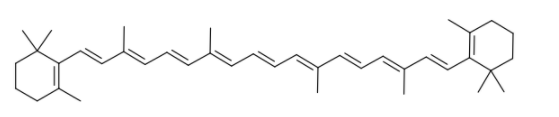
Now, my ILA would have been a lot shorter if it were simple for the HOMO-LUMO energy gap to be in the right range for visible light to be absorbed, but unfortunately this is not the case for most molecules as they generally absorb UV light. The main structural feature that coloured molecules require is something called a conjugated system, which is a chain of alternating double and single bonds (these are generally bonds between carbon atoms as the molecules we are interested in are organic). A clear example of this is in beta-carotene, the molecule that gives carrots their orange colour.

A structure like this results in an important phenomenon called delocalisation, which spreads out the MOs over the chain, allowing the electrons to move freely across it. It is actually possible to come up with an expression relating the length of the chain to the absorbed wavelength, which was done in my ILA. The result is that a molecule needs a conjugated system with at least five or six double bonds before it can absorb visible light, and hence we see why most molecules are in fact colourless.

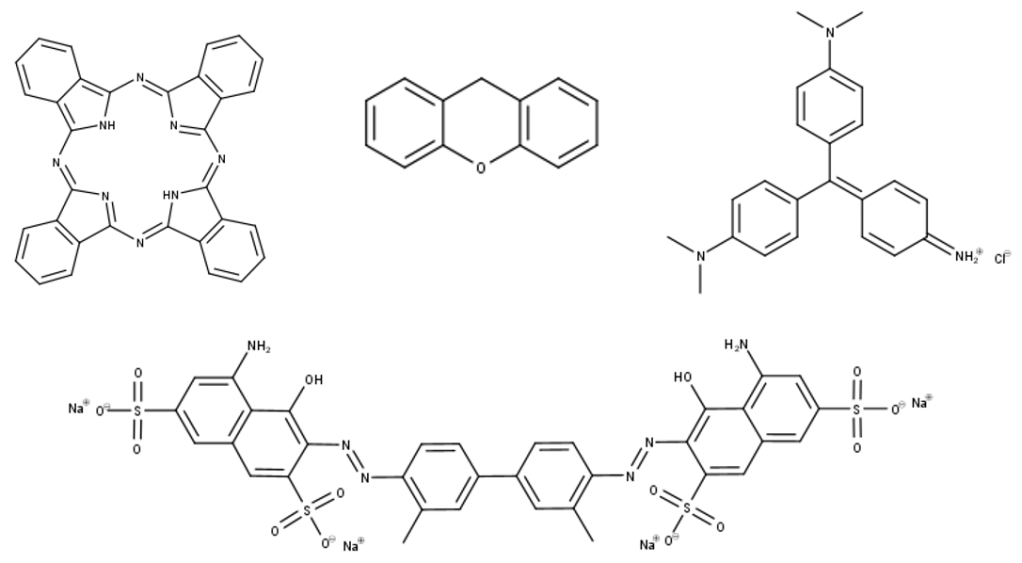
The synthesis of dyes requires an understanding of their structure. We already know that they must contain a conjugated system, and this part of the dye is called the chromophore. Any additional groups attached slightly alter the colour of the dye and are called auxochromes. The variety of structures this vary broad description allows is immense. A number of the chromophores explored in my ILA are shown below to show just how varied the dyes can be.

It is all well and good being able to create dyes, but they are useless if we have no way of attaching them to materials. Material structure is very diverse, but often the materials we dye have polymer structures. For example, plant fibres are composed of cellulose, a polymer of glucose. Animal fibres are made of proteins which are chains of amino acids. Even synthetic materials such as nylon are polymers. These polymers can stack together and align, creating a fibrous structure with pores running through it. The dye molecules are able to travel through these pores and attach themselves to the material through different kinds of bonding.

Direct dyes are the simplest to apply as these form strong enough interactions, often ionic or strong dispersion forces, to hold the dye in place without any other input. Another type of dyes called reactive dyes can quite literally react with the material, forming strong covalent bonds to it. An example of this is shown below.

There are, however, situations when the dye cannot hold itself onto the material well enough, and a mordant must be used. Mordants are inorganic metal salts that help fix a dye to a material. The metal ion in the mordant forms something called a chelation with both the dye molecule and the material, acting as a bridge between them, holding them together. The structure of one of these chelations is shown here.

Dyes are not just useful in the chemical world; they occur all the time in nature too. Two interesting examples I covered in my ILA were retinal and chlorophyll. Retinal is able to harness its ability to absorb visible light to help us see colour by altering its structure when it absorbs light. Chlorophyll is able to use the energy it absorbs from visible light to help plants photosynthesise. So, it really is impossible to go anywhere without seeing, wearing, or using dyes in some shape or form and it is impossible to deny their importance in our world.

To view Alex’s full article, follow this link below.

Categories
Arts & Humanities Independent Learning Assignment Music

The Twelve Note Conspiracy: Exploring Methods of Comparison Between Various Equal Divisions of the Octave

This essay was written by upper-sixth former Stan Lawrence, and was the winner of the Arts category for the 2020 Independent Learning Assignment. The following provides a short abstract to the full essay, which can be found at the bottom.

Estimated read time of abstract: 4 minutes
Estimated read time of essay: 18 minutes

For the last few hundred years, Western music has mainly used a system called 12 tone equal temperament. This means it has 12 equally spaced tones before it reaches the same pitch as the first again, an octave up. This system is ingrained in our musical culture and isn’t often questioned, at least in mainstream music. However, some musicians maintain that there isn’t any particular reason why this status quo should be continued. The microtonal composer Harry Partch even goes as far as to say that 12EDO (Equal Division of the Octave) is a “musical conspiracy.” 

When I started thinking about what to do for my ILA, I realised that there were uncountable EDOs – you can split an octave into however many divisions you want – so I wanted a method of comparison to work out which EDOs I might like to compose with. In my full project, I compared different EDOs in three different ways: to see how close each EDO is to a tuning system that exists in nature (to create a temperament); a mathematical approach which attempted to work out whether each EDO would be useful or unusual for a composer; and finally, a more qualitative approach. I rejected the first two approaches for being a suitable way to compare them. I abandoned the first because it assumes sovereignty of natural scales built on the harmonic series, so therefore seems to commit the naturalistic fallacy. Then I rejected the second approach as the main reason for using different EDOs is to find new sounds – so I agree with the ancient Greek philosopher Aristoxenus when he wrote “Intervals should be judged by the ear alone, not by arithmetical relations.” 

So, I decided the third qualitative method was the most suitable for comparison of EDOs. For this method I decided I would do an arrangement of the same piece (a very famous Mozart Sonata) in different EDOs then try and describe and compare the overall sound of each arrangement. However, if there were more than 12 divisions in the EDO the arrangement would have to be variations on a themeThis was because as if I simply chose the notes that were closest to the original melody in our familiar 12-tone system then this wouldn’t be using all the notes in that EDO and so wouldn’t get an overall sense of the sound of that EDO. 

All these recordings are on my Soundcloud – soundcloud.com/stanlawrence – there is a playlist called the 12 Note Conspiracy with these (and a few more that I mentioned in my full project): 

  • 7EDO: this sounds most similar to Mozart’s original composition as it has the same number of notes as a major (not chromatic) scale. But it is noticeably “out of tune.” 
  • 19EDO – this is a noticeably busier version than the 7EDO as I had to put more ornaments and reharmonisations (when one changes the original harmony of a piece) in to cover all 19 notes.  
  • 23EDO – this is further away from 12EDO (the normal system) than 19EDO so has quite an other-worldly feel (also known as xenharmony) 

Conclusions 

As the arrangements were specifically variations on a theme (as this gets past the problem of not using that EDO to its fullest extent), this means that I couldn’t say exactly how the EDOs are different. But comparing my three arrangements to the original 12EDO version, it is clear for me that they all have different moods – in general terms I can say that 19EDO has a richer sound than the transparent sound of 23EDO. However, it is hard to put my finger on exactly how to describe them (and therefore compare them effectively) as they all seem so alien and piercingly out of tune for someone like me, who has been entrenched in 12EDO my whole life. It may be hard to break out of unconsciously hearing things in relation to 12EDO therefore a comparison of different EDOs may be predicated on a lifetime of listening to alternative EDOs and Xenharmony.  

Furthermore, when I made the arrangements of the Mozart Sonata I was effectively squeezing a 12-tone piece with 12-tone harmony into non-12 tone systems. Therefore, while EDOs can to a certain extent accommodate normative harmony, this can be hardly said to be using these systems to their fullest extent – arguably having new harmonies is one of the biggest advantages of these systems. 

However, having said that, I do feel like I have learnt what the overarching sound of a few different EDOs is, albeit in very vague terms. Importantly, I think I have learnt which EDOs I might like to compose with out of the ones I compared – and as this was my primary aim, I think it was a moderate success. I wrote a composition in 19EDO called Stars in the Sea (also on Soundcloud), which sums up what I have learnt about the sort of sounds that can be made in this particular EDO. It was quite an eye-opening experience to compose in a system that barely fits at all with my understanding of harmony. I find it incredibly fascinating and inspiring that there are whole other systems of music that have barely been explored – the possibilities are endless!  

To view Stan’s full article, follow this link below.

Categories
FTRP STEM

The implications of Prime numbers and the Riemann hypothesis on Asymmetric Cryptography


This essay was written by lower-sixth former Ishan Nathan, and shortlisted for the 2020 Fifth Form Transitional Research Project. The following provides a short abstract to the full essay, which can be found at the bottom.

Estimated read time of abstract: 2 minutes
Estimated read time of essay: 15 minutes

The academic study of prime numbers has been of mathematical interest for centuries and over time remarkable progress has been made in understanding the unique properties and patterns of these numbers. Over the last fifty years, the discovery of mathematical models has aided the progression of computer science. Whilst encryption, previously used for communication in the wars, has now been adopted into quotidian life. Mathematicians have discovered new methods for the secure transmission of information and have augmented them by introducing new messaging platforms using encryption algorithms based on prime numbers.  

It is widely accepted that Prime numbers are important in the field of number theory as they act as the “atoms of arithmetic”. They are defined as natural numbers greater than one, that are only divisible by exactly two numbers, one and itself. Mathematicians first studied primes explicitly in 300BC in Ancient Greek Mathematics, where Euclid proved that there was an infinitude of primes. Since then the understanding of primes has developed and the characteristics of primes enable it to have profound applications in security codes, blockchain analysis, cicada’s cycles, and Cryptography. Nevertheless, mathematicians do not understand the primes fully, due to their enigmatic behaviour whereby they appear to act randomly despite having some aspects of their behaviour which are predictable.  

Prime numbers and their application to modern-day life is not always apparent, as is their properties and patterns. Yet prime numbers play a fundamental part in our lives and act as a cornerstone for both: day to day messaging on encrypted platforms such as WhatsApp, and for consumers’ online e-commerce activities. The emergence of the internet has led to an increase in the number of online transactions taking place all over the internet on sites like eBay and Amazon, and modern-day cryptographic methods establish a mechanism for a secure form of communication. 

The RSA algorithm relies upon the quick speed for performing operations to determine large primes, and the computer-intensive reverse process in factorising large integers, in turn assuring the security of public-key cryptography. It is this high level of encryption that ensures the world of e-commerce to function protecting our sensitive information such as credit cards from the global market place. Yet what if there was a way to overcome this? 

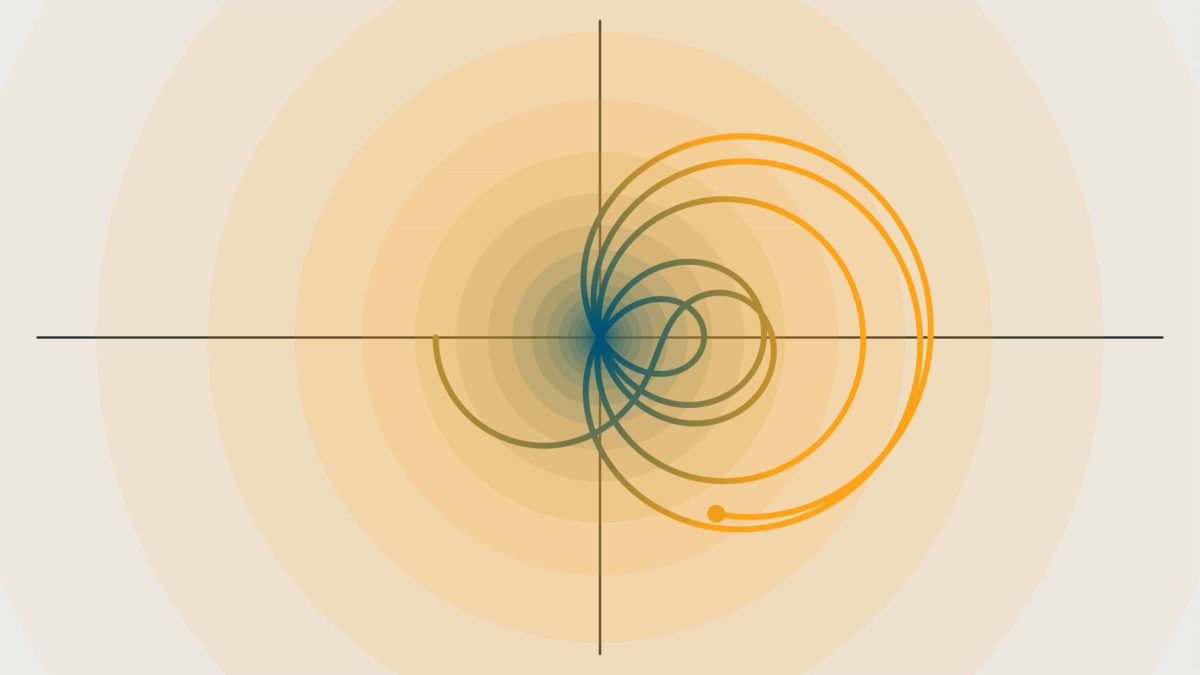
The Riemann Hypothesis is widely accepted as one of the biggest mathematical unproven conjectures of our millennium. It is argued that the Riemann Hypothesis predicts the distribution of the primes and their unpredictable behaviour better than any other theorem. An abstract proof of the Riemann Hypothesis will undoubtedly enhance our understanding of primes and thus could lead to vulnerabilities within asymmetric cryptography. However, primes are special and they are like no other group of numbers. Despite mathematicians limited understanding of these numbers, a secure online communication network across the world has been created; just imagine the possibilities that could unravel when understanding the true enigmatic behaviour of prime numbers. 

To view Ishan’s full article, follow this link below.

Categories
FTRP Law & Politics Social Sciences

Why did ‘Workington Man’ vote Conservative? An analysis of the factors contributing to the fall of the ‘Red Wall’


This essay was written by lower-sixth former Dominic
Stagg, and shortlisted for the 2020 Fifth Form Transitional Research Project. The following provides a short abstract to the full essay, which can be found at the bottom.

Estimated read time of abstract: 1 minute
Estimated read time of essay: 16 minutes

Throughout modern British electoral history, the useof political stereotypes to identify potentially decisive voters has become increasingly common within the mainstream media, and influential in dictating the way in which political parties’campaign. In the 2019 UK General Election, this trend manifested itself as ‘Workington Man’-an older, white man who traditionally supported the Labour Party but voted ‘Leave’ in the EU Referendum in 2016. The Conservative Party’s substantial victory was characterised by the supposed fall of the Labour Party’s ‘Red Wall’, a term used to describe traditionallyLabour-supporting constituencies based in North Wales, Northern England,and the Midlands, regions in which ‘Workington Man’ is concentrated. This would therefore suggestthat‘Workington Man’was extremely significant in shaping the outcome of the election.

However, whilst the significance of ‘Workington Man’ was undoubtable, the reasons that caused this momentous shift from Labour to Conservative remain less obvious. It is true that the 2019 election was dominated and polarised by Brexit, yet the root causes of the breaking down of inherent social, political, and economic barriers between ‘Workington Man’ and the Conservatives would appear to be more complex and deep-rooted. Therefore, in this essay, I sought to gain a greater insight into the various short-term and long-term factors that contributed to ‘Workington Man’s’ disenfranchisement from the Labour Party, that ultimately caused the majority of such an electorate to vote Conservative in 2019. These are divided into three similarly important sub-sections: Brexit, in both its exaggeration of growing social polarisation and, more profoundly, in the way it offered political empowerment, as well as cultural issues and economic issues. I concluded that 2019 marked the culmination of the interaction between these separate but overlapping factors, a point in which ‘Workington Man’ and the Conservatives became politically aligned. Furthermore, I argued that ‘Workington Man’s’ reasons for voting Conservative were rooted not just in the Conservative’s appeal, amore recent phenomenon arising from both Brexit and the Conservative’s cultural shift, but also in a feeling of marginalisation from the Labour Party that can be traced much further back.

To view Dominic’s full article, follow this link below.

Categories
Arts & Humanities FTRP Geography Law & Politics Social Sciences

Why did the UK withdraw from Singapore and Malaysia and what were the consequences for the region?


This essay was written by lower-sixth former Alexander Downey, and shortlisted for the 2020 Fifth Form Transitional Research Project. The following provides a short abstract to the full essay, which can be found at the bottom.

Estimated read time of abstract: 2 minutes
Estimated read time of essay: 12 minutes

When Harold Wilson took over as Prime Minister in 1964 from Alec Douglas-Home, he inherited a country riddled with financial difficulties. Macmillan’s supposed “Age of Affluence” left a remarkable balance of payments deficit of £400 million. The economic downturn was the trigger for calls for a review and a change in the way money was being spent and invested in foreign affairs and the military when the number of Brits at home who needed financial support grew.
Ever since the end of the Second World War Britain’s influence on the world stage had been in decline along with her empire. This led to Wilson taking the decision to continue with the post-war consensus idea of focusing on becoming a political power in Europe and adapting a role there rather than a worldwide role. Part of this meant reducing military commitments around the world, the term “East of Suez” was coined to refer to all British military bases and territories in the Eastern hemisphere, this included Malaysia and Singapore.

This region had a rather unique political situation due to the unique way in which Malaysia and Singapore were linked as well as Malaysia’s internal divisions. Following the decision to give independence to Malaya, Singapore, Sarawak, and Borneo forming the Federation of Malaysia, the internal politics of this new country were chaotic to say the least. The Malaysian-Chinese population were discriminated against by the Islamophilic regime leading to violent protests, Britain then feared they would be drawn into a Vietnam style conflict, especially when Singapore separated itself from the Federation forming its own sovereign state. The political tensions along with Britain’s changing international role were important factors in the decision to withdraw from Malaysia and Singapore. 

However, one can argue that the role of pressure groups in the UK were more important as they emphasised Britain’s changing role and the dangerous political atmosphere of the region at the time. Whilst the importance of the pressure groups is often overlooked, the main point they pushed was the economic situation and the cost of having military bases in the Eastern hemisphere, Wilson was aware of this, so the importance of the pressure groups was much less than the economic situation at home at the time. The consequences for the region have been, in the long run, intrinsically positive. Malaysia’s economy in particular initially suffered an economic downturn but both countries are now amongst the most powerful Southeast Asian economies and continue to grow. 

To view Alexander’s full article, follow this link below.

Categories
Arts & Humanities FTRP History Law & Politics

To what extent does Mao Zedong deserve his reputation as one of history’s most notorious dictators?


This essay was written by lower-sixth former Austin Humphrey, and shortlisted for the 2020 Fifth Form Transitional Research Project. The following provides a short abstract to the full essay, which can be found at the bottom.

Estimated read time of abstract: 2 minutes
Estimated read time of essay: 11 minutes

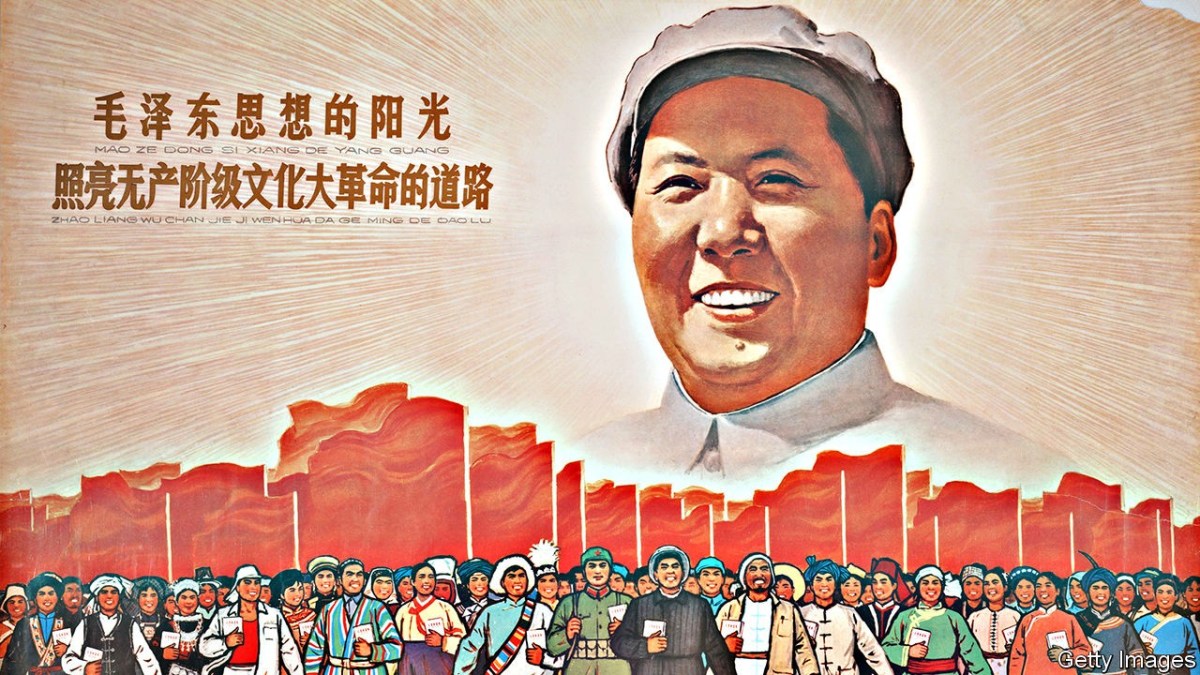
Mao Zedong was Chairman of the People’s Republic of China from 1949 to his death in 1976. Mao was a Communist revolutionary, described as having an ‘emphatic aura’ and ‘exuding overwhelming power’. He is known globally as an infamous killer, responsible for the deaths of millions, but can he be compared to the likes of Hitler or Stalin? Another question to consider is what makes a notorious dictator, and due to these factors we can determine whether or not Mao deserves his reputation. 

Firstly, we can examine the death toll of Mao. In 1958, Mao’s ‘Great leap forward’ killed approximately forty million people, by forcing peasants to stop work on farms and begin production of steel. Mao took over all agriculture in China, with no farming experience. He demanded that farmers kill sparrows, to stop them eating the crops. However, the sparrows were only eating pests, thus improving crop yields. Hence Mao’s arrogance and ignorance caused one of the most devastating famines in history.  

To compare Mao’s numbers here, we should look at Pol Pot, the former dictator of Cambodia. Pol Pot killed only two million people, which seems inconsequential compared to Mao. However with perspective, Pol Pot is responsible for the death of a quarter of his while country, while Mao only 6%. Therefore one reason for the extraordinarily high number of deaths is just because China’s population was so much greater than other nations’: 670million.  

Just examining the number of deaths may not be as important as analysing the intent behind them. Whilst the number of people Mao killed was almost double what Hitler and Stalin killed together, his primary intention was to increase China’s industry to make it a world superpower. This highlights Mao’s noble intentions whilst in power. 

On the other hand most would agree that Adolf Hitler’s intentions were horrific. When he murdered eleven million people in death camps, he singled out groups in society as second class humans, then purposely slaughtered them. Therefore, as death by ill-judgement is not the same as death by ill-intent, Mao doesn’t deserve to be compared with the likes of Hitler, who set out with the aim of genocide.  

Mao wasn’t completely innocent of malicious aspirations. In 1956 he launched ‘The Hundred Flowers Campaign’, which was an opportunity for everyone to present ideas on how to improve China. After a few months, the campaign stopped and anyone who criticised the government was persecuted. Many people, including former deputy chief of MI6 and British diplomat in China at that time: Sir Gerry Warner, believe that ‘The campaign was a deliberate attempt to flush out those who opposed Mao and Communism’. 

In conclusion, there are many ways to judge notoriety, the most important of which I believe is intent. Therefore due to Mao’s mass number of killings, but honourable intention on the whole, he deserves his reputation as one of history’s most notorious dictators, but falls short of the notoriety of those who intended to harm others. 

To view Austin’s full article, follow this link below.

Categories
Arts & Humanities FTRP Geography

How can the Lego Group adapt to a world more focused on environmental sustainability?

This essay was written by lower-sixth former Sam Rooke, and shortlisted for the 2020 Fifth Form Transitional Research Project. The following provides a short abstract to the full essay, which can be found at the bottom.

Estimated read time of abstract: 1 minute
Estimated read time of essay: 11 minutes

The world is becoming increasingly aware of the impact that plastic has on the environment and its role in climate change. Therefore companies like Lego who’s brand relies on ABS Plastic could face major issues in the future if they do not find an environmentally sustainable method of operating. This research project investigates the impact of The Lego Group on the environment and its aims to become more economically sustainable. In order to do this it was important to understand the meaning and significance of environmental sustainability; why The Lego Group weren’t currently achieving this; how successful previous initiatives have been; and finally how achievable their future goals are.

To view Sam’s full article, follow this link below.