Categories
Arts & Humanities FTRP History

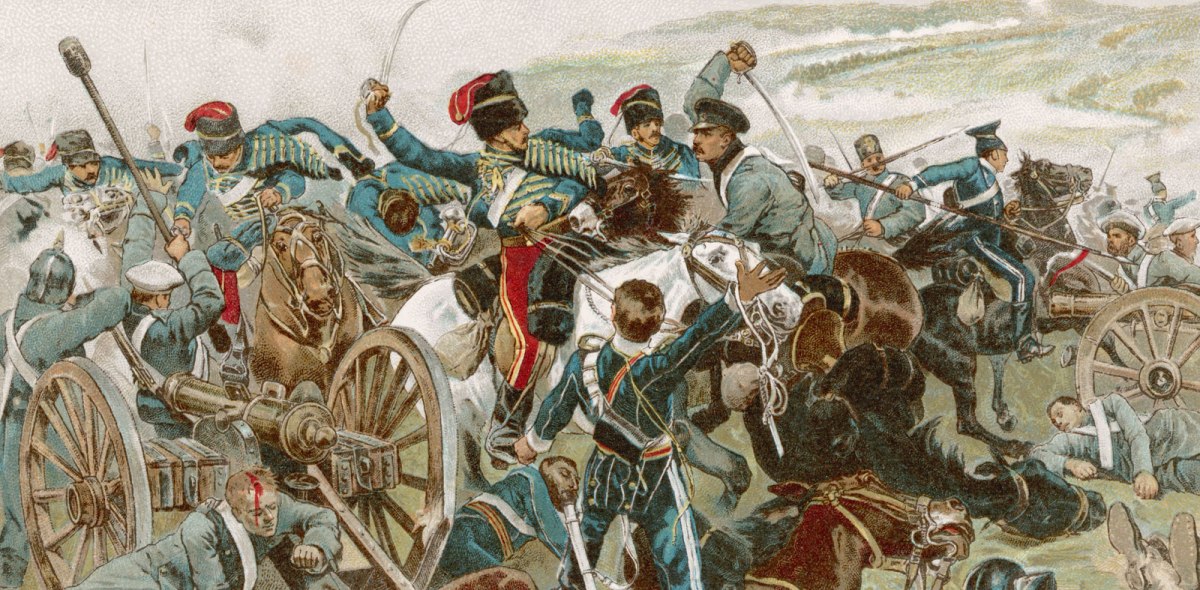
What was the most important initiative carried out in response to problems posed by the Crimean War in improving healthcare for infantry soldiers?

This essay was written by lower-sixth former Sebastian Evans, and shortlisted for the 2020 Fifth Form Transitional Research Project. The following provides a short abstract to the full essay, which can be found at the bottom.

Estimated read time of abstract: 1 minute
Estimated read time of essay: 9 minutes

This FTRP is about the main medical advances in healthcare for British infantry units during the Crimean war, which lasted from 1853 – 1856, and how these advances helped the British infantry in future wars fought by the British empire. The document talks about advances and improvements in hospitals, improvements in the soldiers’ diets, the introduction of ambulance trains and ambulance ships, and improving the medical staff working to save wounded soldiers. The document looks at not only the achievements of Florence Nightingale, but also other factors and initiatives that helped improve the chances of survival for sick or wounded infantry during the war. While all the initiatives mentioned were important in helping the infantry and improving healthcare, the single biggest one was undoubtedly the improvements to hospitals during the course of the war.

To view Sebastian’s full article, follow this link below.

Categories
Economics FTRP History STEM

How Gambling in the 17th Century has shaped insurance markets in the 21st century

This essay was written by lower-sixth former Moog Clyde, and shortlisted for the 2020 Fifth Form Transitional Research Project. The following provides a short abstract to the full essay, which can be found at the bottom.

Estimated read time of abstract: 1 minute
Estimated read time of essay: 11 minutes

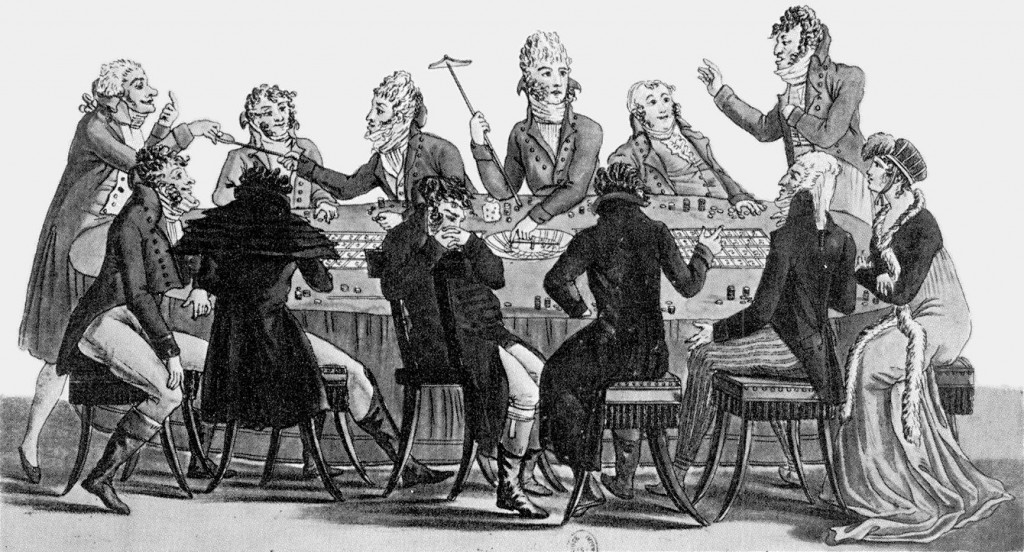
In 1654, the Chevalier de Mere, a French nobleman, posed the notorious ‘Problem of the Points’ to Blaise Pascal, an esteemed mathematician. The Problem of the Points concerned a game of chance containing two players with equal chances of winning any given round, and posed the question of how to split the stakes if one gambler has to leave the game prematurely. Despite several attempts, finding a definitive solution stumped even the greatest minds of the previous two hundred years, most notably Luca Pacioli (the ‘Father of Accounting’ ) in 1494 and Niccolò Tartaglia (solver of cubic equations and the first to apply maths to the paths of cannonballs, otherwise known as ballistics) in 1556. Even the great Galileo failed to discover a reasonable solution to the problem. Pascal was determined to find a logical and fair solution, and thus reached out to Pierre de Fermat, a brilliant mathematician himself. In their resulting correspondence, the pair developed the first explicit reasoning about what today is known as ‘expected value’ and laid the groundwork of probability, earning them both joint title of ‘the Fathers of Probability.’

Although it is easy to underplay the significance of this breakthrough as merely a clever, tidy solution, to appease opposing gamblers, in reality, it was truly revolutionary. It is difficult to understate how vast and significant the cognitive shift across Europe that occurred following this solution was. The notion that you can hang numbers into the future was alien to mathematicians merely years before this solution was proposed. Soon, others began to see the possibilities that this concept generated.

Within three years Christiaan Huygens adapted Fermat’s theory into a coherent pamphlet entitled ‘De Ratiociniis in ludo aleae,’ which was used as the standard text on probability for the next 50 years. Huygens attributed his developments to “some of the best mathematicians of France” (i.e. Pascal and Fermat). This text spread like wildfire among the academic community as it was evident that the new science of probability had the potential to transform the world. In the next few years, Huygens’ text was ripped out of the context of gambling and thrust into several aspects of life, including law and maths. In particular it was applied to a very different, brand new data set: mortality tables. Almost immediately, by using specific intricate data, insurance shifted from a form of blind gambling, based on hunches and guessing, to a remarkably accurate science.

It now is clear that this rapid chain reaction of discovery underpins all notions of mathematical ‘expected value’ and insurance came not from savvy merchants but from avid gamblers, eager to improve their craft.

To view Moog’s full article, follow this link below.

Categories
Arts & Humanities Classics English FTRP Poetry

To what extent can ‘The Tale of the Heike’ and ‘The Iliad’ be considered similar poems?

This essay was written by lower-sixth former Mattie Sutton, and shortlisted for the 2020 Fifth Form Transitional Research Project. The following provides a short abstract to the full essay, which can be found at the bottom.

Estimated read time of abstract: 1 minute
Estimated read time of essay: 13 minutes

‘The Tale of the Heike’, a Japanese tale of the fall of the Taira clan to the Minamoto, and ‘The Iliad’, the enchanting story of Achilles’ and the Greeks’ struggles against Troy, are two of the greatest epic poems to ever be written, yet from opposite sides of the globe. However, their geographical distance doesn’t necessarily mean they can’t share similarities and form a fascinating piece of literary discussion.

In this essay we look at both poems’ themes use of language and the tradition that surrounds them. We’ll delve to into the specifics of the Japanese and Greek, as well as taking a more holistic view of how the themes such as impermanence, glory, and the view of individuals work together to create the epics. Finally, sweeping from the Aeneid to Tolstoy, from the Hagakure to Bushido: The Soul of Japan we’ll consider the cultural impact of both epics and come to a conclusion over how similar these two pieces of awe-inspiring literature are.

To view Mattie’s full article, follow this link below.

Categories
Independent Learning Assignment STEM

Can you Ever Truly Mix a Cuppa? – Spilling the Tea on Brouwer’s Fixed Point Theorem

This essay was written by upper-sixth former Ben Watkins, and a finalist for the 2020 Independent Learning Assignment. The following provides a short abstract to the full essay, which can be found at the bottom.

Estimated read time of abstract: 1 minute
Estimated read time of essay: 15 minutes

Is it possible that there are always two places on earth with the same temperature and pressure? How does the game show Blockbusters have any implications on algebraic topology? Can a general equilibrium ever be reached in an economy? Perhaps most crucially of all, can you ever truly mix a cup of tea? 

My ILA provides insight into Brouwer’s fixed point theorem, a theorem found in the field of algebraic topology. It uncovers how a remarkable and seemingly counterintuitive result in what is often considered to be an abstract field of mathematics can have such broad and pertinent results in the real world. However, this isn’t to say that this ILA doesn’t uncover the result of this theorem for the sake of the beauty of it as much as uncovering it for the sake of its applications. Indeed, Luitzen Egbertus Jan Brouwer himself (the discoverer of this theorem as well as often being called ‘the Father of Topology’) was very much an upholder of this mentality: that maths has great importance for the sake of maths itself. Philosophically, Brouwer was a neo-intuitionist, which means that he thought of mathematics as purely a mental phenomenon, the result of constructive mental activity rather than uncovering any principles of an objective reality. He is often quoted in saying that “The construction itself is an art, its application to the world an evil parasite.” 

To view Ben’s full article, follow this link below.

Categories
Independent Learning Assignment Law & Politics Social Sciences

Pot-Luck Politicians, A Parliamentary Chamber from Sortition

This essay was written by upper-sixth former Tom Welsh, and a finalist for the 2020 Independent Learning Assignment. The following provides a short abstract to the full essay, which can be found at the bottom.

Estimated read time of abstract: 2 minutes
Estimated read time of essay: 1 hour

Sortition is the random selection of individuals, and in this paper I sought to understand its political application in legislatures before providing a potential application in the United Kingdom via a third House of Parliament. The motive being sortition’s inherent equality and true representativeness. 

In order to do so, an investigation of sortition’s use in history was made, before its role in political theory was considered. I then briefly looked at its current application in both juries and citizens’ assemblies, before considering sortition’s hypothetical applications and existing use outside of the United Kingdom. 

Once the theory was covered, I then took to explaining the functioning of the existing UK government before looking at current UK political participation in both formal methods (elections and referenda) and informal (social movements and pressure groups). 

Having discussing the underlying theory, and the use-case it was being applied to, a substantial portion of my paper attempted to outline a comprehensive description of why I believe sortition’s best application would be as an addition to the existing Parliament given the important role that both the existing Houses of Parliament play. That is not to say that I felt the chamber from sortition would have a small role to play – far from it. 

I then ended the paper with an overview of some of the potential issues that such an implementation might entail, with an attempt also being made to explain how they might be dealt with and why if they cannot, on balance, that is of little concern in any case given the many positives associated with sortition. Furthermore, if you have an interest in either Plato or Jean-Jacques Rousseau, the absolute ending of the paper comes in the form of a synthesis of both, achievable, in my opinion, through sortition. 

If I gone some way to perhaps intriguing you about my, perhaps controversial, proposition then do consider giving my ILA a read. In fact, even if I haven’t – undoubtedly it is not easy in a short abstract to fully convey the true nature of a piece of work – maybe consider giving it a read in any case. A word of warning though, perhaps read the paper one chapter at a time, as I apologise it is not exactly short. Nonetheless, if you do choose to read the full work, thank you. Yet more importantly, I hope I cause you, even if you disagree with my conclusions, to reconsider your own political views – indeed if you don’t already have any, that is fine too! 

To view Tom’s full article, follow this link below.

Categories
Arts & Humanities Independent Learning Assignment Linguistics

Why have there been changes in the phonetics and phonology of Khmer since the existence of Proto-Austroasiatic?

This essay was written by upper-sixth former Tom Hemsworth, and shortlisted for the 2020 Independent Learning Assignment. The following provides a short abstract to the full essay, which can be found at the bottom.

Estimated read time of abstract: 4 minutes
Estimated read time of essay: 30 minutes

Khmer is the language spoken mainly in the Kingdom of Cambodia, in South-East Asia. Khmer is part of the Austroasiatic language family, which encompasses 168 languages spoken across South-East Asia. The origin of this family is the language Proto-Austroasiatic which is believed to have originated in southern China. From this proto-language, several other language branches began to evolve from around 5000 BC. Modern Khmer is derived from the Khmeric branch, which appeared around 2000 BC. This too is a proto-language, called Proto-Khmeric. 

Around 600, the first stone inscriptions were recorded at the time that a group of kingdoms called the Chenla Empire occupied what is now Cambodia. This marked the birth of a new period in the Khmeric branch: Old Khmer. After the fall of the Khmer Empire in 1431, the language once again shifted to Middle Khmer, which spanned until around 1800, when Modern Khmer emerged. 

Upon examining the phonetics of Proto-Austroasiatic and Proto-Khmeric, I began to notice that there were not too many differences between them. This was surprising, as when you inspect the Swadesh 100 list, a list of one hundred basic words used for historical and comparative linguistics, the transition between the two columns is visibly the largest between any two consecutive word lists. The question is: why do the phonetics differ only slightly whereas the vocabulary is in many cases quite dissimilar? 

When reconstructing pAA, Paul Sidwell and Felix Rau used 21 consonants which were all carried through to pK. On the other hand, there are several vowel changes including the appearance of the long vowel sound [*ɛː], a particularly odd case. On the Swadesh list, most pK words in which [*ɛː] is present are unrelated to their pAA predecessors, which leads me to think that these are either new terms coined by people as they migrated from the Austroasiatic homeland in China into Cambodia and other South-East Asian countries, or if they are related, merely slight differences in pronunciation, such as between the pAA *cgəj and the pK *ckɛː (‘dog’). This point about migration brings me back to the question I posed. As Figure 1 indicates, when the Austroasiatic language family broke off into branches, its speakers either travelled west towards India or south into Cambodia and its neighbours. Many general terms will have only gone in one direction. Examples of this can particularly be found in words relating to flora and fauna. Take the pAA word *draŋ (‘horn’), which does not relate to the pK *sneːŋ. Words that derive from the pAA term can be found in Munda languages, for example dereŋ in Santali, spoken in Northeast India. 

Next in the timeline is the transition out of proto-language to Old Khmer. The basic consonant phonemes do not change from pK to OK; however, the voiceless stops [t], [p], [c] and [k] also began to occur with aspiration in OK, purely because it is a lot easier to say a word like *pkaːj with aspiration as pʰkaːj. As well as the phoneme [ɗ] and its bilabial equivalent [ɓ] appearing due to the glottis in the vocal cords being lowered and narrowed, vowel sounds became simpler in Angkorian society. The diphthong [*ie] evolved into [iə] or [iː] and [*uo] underwent similar alterations: either to [uə] or [uː]. 

However, there are certainly more apparent evolutions in language from OK to the modern day. Firstly, devoicing occurred. This is the term describing when the voiced stops in a language become voiceless. The reasons behind devoicing can be discovered by examining other languages in South-East Asia, such as the Tai family. The Chinese linguist Li Fang-Kuei wrote that “voiced consonants have become devoiced in practically all dialects” of Tai languages. Since the fall of Angkor was at the hands of the Ayutthaya, a kingdom which was located in modern day Thailand, I have deduced that the influence of this kingdom is a key reason behind devoicing. Devoicing did not occur in Thai until after the 15th century, so I believe that this process started thereafter and thus influenced the Khmer language.  

Another change was registrogenesis, the development of separate ways of speaking in a language. Two levels of lexical register occur in Khmer: ‘Head Register’ for formal language and ‘Chest Register’ for informal language. Chest Register, characterised by a breathier voice caused by the lower pitch from the larynx, was present in OK and MK. The low voice characteristic remains in standard Khmer, but it has lost its breathiness. 

Devoicing and the registrogenesis of Khmer are the reasons why, between OK and modern Khmer, new vowel sounds developed. For the first time, the vowels [ɨ], [ɨː], [ɑ], and [ɑː] appeared regularly in Khmer, as well as new short diphthongs. There are three of these: [ĕə], [ŏə] and [ŭə] (the diacritic ˘ represents an “extra-short” vowel). The open front unrounded vowel [a] is unable to be lowered any further therefore when people speak with a lower pitch, short diphthongs are born. 

During the French control of Cambodia, Khmer picked up loan words, which included new phonemes which had never been part of the language before, including [f] as in tiːfoŋ (‘typhoon’), and [z] as in zaːmaːʔiːk (‘Jamaican’). After the departure of the French, the future of Khmer looked set: the language was in the safe hands of Buddhist monks, including Chuon Nath, who compiled the first Khmer Dictionary. They removed many French and Siamese words from Khmer, a reason why French is no longer used as much in Cambodia. The Khmer Rouge halted this ‘Khmerisation’ process, particularly in education, which was greatly suppressed. Chuon Nath’s dictionary was only brought back in 2009, but at this point, Cambodian society had been partially taken over by English – virtually every sign in Cambodia now has both Khmer and English writing on it. 

The future may seem menacing for Khmer, but despite the worry of Khmer being dominated by English, I see no reason that it will disappear entirely. The influence of the modern, business- and technology-rich world will surely produce many new phonetical and phonological changes in the future, and it will undoubtedly prove to be a fascinating area of study. 

(Appendices showing timeline, phonemic inventories and Swadesh 100 list can be found in the full version of the ILA)  

Abbreviations 

pAA – Proto-Austroasiatic 

pK – Proto-Khmeric 

OK – Old Khmer 

MK – Middle Khmer 

To view Tom’s full article, follow this link below.

Bibliography

Diffloth, G., 2005. The Contribution of Linguistic Paleontology to the Homeland of Austro-Asiatic. In: L. Sagart, R. Blench & A. Sanchez-Mazas, eds. The Peopling of East Asia. Oxford: RoutledgeCurzon. 

Ray, N. & Lee, J., 2016. Cambodia. 10th ed. Singapore: Lonely Planet Publications Pty Ltd. 

Sidwell, P., 2018. Austroasiatic Studies. Hsinchu, National Tsing Hua University. 

Ferlus, M., 1992. Essai de phonétique historique du khmer. Mon-Khmer Studies, Volume 20. (French). 

Li, F.-K., 1977. A handbook of comparative Tai. Manoa: University Press of Hawaii. 

Shorto, H. L., 1962. A Dictionary of Modern Spoken Mon. London: Oxford University Press. 

Henderson, E. J., 1952. The Main Features of Cambodian Pronunciation. Bulletin of the School of Oriental and African Studies, 14(1). 

Wayland, R. P. & Jongman, A., 2002. Registrogenesis in Khmer: A phonetic account. The Mon-Khmer Studies Journal, Volume 32. 

International Phonetic Association, 1999. Handbook of the International Phonetic Association. 1st ed. Cambridge: Cambridge University Press. 

Sasagawa, H., 2015. The Establishment of the National Language in Twentieth-Century Cambodia: Debates on Orthography and Coinage. Southeast Asian Studies. 

Sok, K., 1999. La khmérisation de l’enseignement et l’indépendance culturelle au Cambodge. Bulletin de l’École française d’Extrême-Orient, Volume 86. 

SEAlang, n.d. Khmer Dictionary and Dictionary of Old Khmer[Online] 

Headley, R. K., 1998. Cham Evidence for Khmer Sound Changes. Papers in Southeast Asian Linguistics, Volume 15. 

Jenner, P. N., 1974. The Development of the Registers in Standard Khmer. South-east Asian Linguistic Studies, Volume 1. 

Categories
Independent Learning Assignment STEM

Supramolecular Cages: Their Design, Chemistry and Applications

This essay was written by upper-sixth former Salvatore Nigrelli, and was the winner of the STEM category for the 2020 Independent Learning Assignment. The following provides a short abstract to the full essay, which can be found at the bottom.

Estimated read time of abstract: 4 minutes
Estimated read time of essay: 1 hour 15 minutes

Supramolecular chemistry is all about making functional molecular assemblies without chemically bonding the component molecules together. Take the reaction scheme below: 

Figure 1 The Formation of a Tennis Ball Capsule

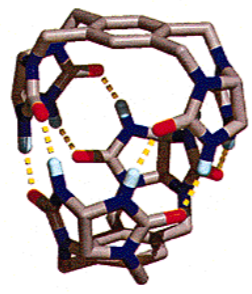
In this scheme, two molecules are held together only using hydrogen bonds, to form a tennis ball shaped capsule. So it is the art of the supramolecular chemist to try and find innovative ways of making complex assemblies, with only a handful of intermolecular forces at their disposal. This is particularly shown in a type of structure called supramolecular cages. 

Cages are ubiquitous throughout the world of chemistry. The Buckyball (Figure 2, is a simple type of molecular cage, consisting of 60 carbon atoms in a spherical shell arrangement.  

Figure 2 The Structure of a Buckyball

Supramolecular cages take this idea one step further and ask the question: Can we design assemblies that allow us to put a small molecule ‘prisoner’ inside the cage?  

Take the Buckyball again. Using a type of complex reaction sequence called a molecular surgery reaction, it is possible to open the Buckyball up and place a water molecule inside, held in by the London forces it can form with the cage walls, transforming the Buckyball into an exciting supramolecular cage (Figure 3).  

Figure 3 A Buckyball with an Encapsulated Water Molecule Inside

But you may ask, is there actually any point in making these tiny molecular prisons, or is it purely to indulge a few curious supramolecular chemists? The answer is that, although the field is relatively new, it is becoming paramount that the applications of supramolecular cages are innumerable, from security to chemical analysis, and even cancer therapy.  

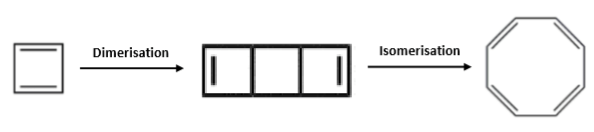
Cyclobutadiene is a pesky, annoying molecule – mainly because it reacts with itself extremely quickly in a dimerisation/isomerisation reaction to produce cyclooctatetraene: 

Figure 4 The Dimerisation/Isomerisation Reaction of Cyclobutadiene

This self-reacting property of cyclobutadiene makes it extremely difficult to probe its chemical structure. Until only a few years ago, the only way that it had been achieved was by holding the molecules in an argon matrix close to absolute zero. However, with the advent of supramolecular cages, all of this changed. If you make a single cyclobutadiene molecule inside a type of supramolecular cage called a carcerand (Figure 5), no other molecules can get to it, so it stays in its original, undimerised form, and can be analysed using NMR spectroscopy. This is a classic example of how supramolecular cages are already revolutionising the field of chemistry.  


Figure 5 An Example of a Carcerand

However, not all of the uses of supramolecular cages lie in a lab. The cage below is one such cage with extremely promising applications. In the presence of picric acid molecules, the cage can encapsulate one of them. Once the picric acid is inside the cage, it is close enough for a type of photochemical process called a Förster Resonance Energy Transfer to take place, which causes the cage to completely change colour. This is incredibly useful because picric acid is one of the most common explosives, so cages like these could be used in the next generation of fast, accurate explosives detectors and save countless lives.  


Figure 6 A Supramolecular Cage to be Used in Explosives Detection

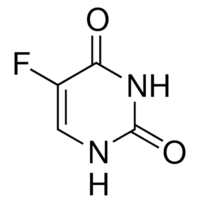
Looking into the monumental applications of supramolecular cages got me thinking – could I use the skills in supramolecular chemistry that I picked up over the course of my ILA and design a novel type of supramolecular cage to solve a real world problem? I decided to try and solve the problem of fluorouracil as a chemotherapy drug. The essence of the issue is that fluorouracil is an extremely promising cancer drug, but it also readily attacks brain tissue, and so its use is limited to very extreme cases. This appealed to me as a problem to solve because of the great positive impact that it would have, and the fact that fluorouracil (Figure 7) has a number of structural features that make it very attractive to supramolecular chemists.  


Figure 7 The Structure of Fluorouracil

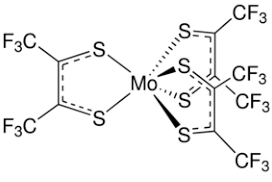
Fluorouracil can form three strong interactions with its fluorine and two nitrogen atoms that would allow it to be readily encapsulated. So if a cage with three parallel bars could be designed, it would strongly bind the fluorouracil molecule. However, finding a chemical arrangement that allows this to take place proved to be difficult, as it is a rare occurrence in chemistry. In the end, I managed to work out that if the cage used molybdenum centres with thiophene ligands, a trigonal prismatic arrangement around the molybdenum atom would be obtained (Figure 8) , making the three parallel bars possible. 


Figure 8 A Molybdenum-Thiophene Complex Showing a Trigonal Prismatic Geometry

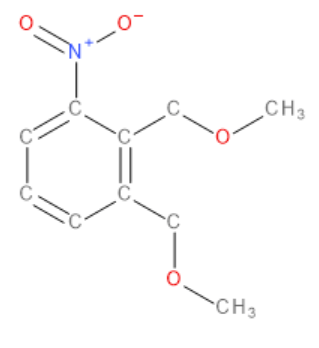
The key principle behind the cage is that the fluorouracil molecule stays inside the cage, so it cannot react with anything, until it enters the cancer cells, where the cages are opened, thereby allowing the fluorouracil to kill only the intended cancer cells. This targeted opening is a rather unusual feature of molecules, and so in the end I used the fact that, if nitrophenyl ether groups (Figure 9) were placed on each bar, in the presence of a targeted beam of UV light, the cage could be successfully opened once inside the intended cancer cells.  


Figure 9 A Nitrophenyl Ether Group

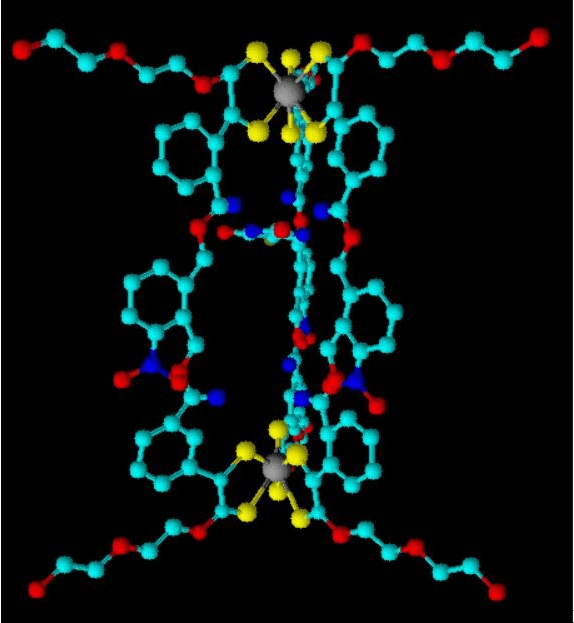
My final cage design is shown below: 


Figure 10 My Final Cage Design

To summarise how my design works: Outside of the body, fluorouracil is encapsulated inside the cage, then a solution containing the encapsulated fluorouracil is injected into the patient’s bloodstream. Whilst inside the cage, no other molecules can get to the fluorouracil so it cannot react with anything and cause its bad side effects. Once the cage reaches the cancerous cells, using UV light, the cages in the cancer cells are opened, releasing the fluorouracil and killing only the intended cells. Therefore, this scheme allows for fluorouracil to be used to treat cancer patients, without causing any negative side effects.  

To view Salv’s full article, follow this link below.

Categories
Independent Learning Assignment Psychology Social Sciences

How does the inescapable conclusion of death influence people’s lives?

This essay was written by upper-sixth former Joseph Gibson, and shortlisted for the 2020 Independent Learning Assignment. The following provides a short abstract to the full essay, which can be found at the bottom.

Estimated read time of abstract: <1 minute
Estimated read time of essay: 10 minutes

In this essay, I seek to understand how knowledge of mortality impacts the way people lead their lives. From a psychological perspective, I engage with our biological, societal, cultural, social and professional response to this question. I look at when and why people come to grips with the reality of their inevitable conclusion and at what point in people’s lives they should begin to think about mortality and how to be able to do so in a constructive and healthy manner.

Mortality affects our mentality, behaviour, decision making and overall mental health in both positive and negative ways, but by teaching future generations how to approach contemplating this issue at an early and suitable age in an appropriate environment, we can prompt positive responses such as motivating people to accomplish their aspirations and leave a legacy and lasting impact on the world. Through referenced research, various studies and published psychological papers, it has become clear that living in denial of one’s own mortality is ultimately what leads to negative responses such as various forms of trauma, anxiety and depression.

To view Joe’s full article, follow this link below.

Categories
Law & Politics Social Sciences

How far should the Supreme Court be bound by its previous decisions on what the law is?

This article was the 2nd Prize winner of the Lord Toulson Essay Prize in Law competition, written by upper-sixth former Tom Welsh.

Estimated read time: 6 minutes

‘How far, if at all, should the Supreme Court be bound by its own previous decisions on what the law is?’

In the UK the principle of ‘stare decisis’ is key to our legal system. As the birthplace of common law, huge weight is placed upon judgements as they form precedent which sets the future direction of the law. Precedent is also firmly rooted in our hierarchy of courts with the Supreme Court the only court to be capable of overturning it. This is vitally important to the development of the law because, as the final court of appeal, often it must decide whether to continue the existing tradition of law or to flag it as outdated and/or inequitable when applied to the case before them and change it. It should though be recognised that as the final court of appeal for Scotland, a country with a hybrid legal system, the Supreme Court must also occasionally consider points from civil law too.

From the turn of the 20th Century until 1966 the predecessor of the Supreme Court, the House of Lords, did not have the ability to overturn precedent it had previously set. However the Practice Statement was then issued in order to provide for the adaption of English law to meet changing social conditions. This was a broader aim of Harold Wilson’s government, shown also through their widespread liberal reforming legislation. In effect, they wished for both the statutory and case law to be brought in line with their ‘civilised society’ and the associated moral values.

The statement also served as a recognition of various competing aims within the law: predictability through simplicity; its proper development, and the desire for fair outcomes. Essentially admitting that it may not be possible to serve all three in every case it thus pithily struck at the heart of the difficulties the Supreme Court faces.

In the forty years following its introduction, the power to overturn previous precedent was used sparingly. The crucial dilemma being when was it to be deemed that the law was outdated and that the precedent needed changing. Many judges, with their tendency towards being cautious and conservative, would posit that this need for reform of the law must entirely outweigh the benefit of sticking to clearly defined principles. This does however lead to cases where the Supreme Court may believe an outcome to be unfair, but that the judgement should not be overturned due to the damaging effect on core principles of law.

Moving to the question of why overturning of precedent should be avoided. The law in its origins, exists in order to benefit those subject to it. In order to achieve this it must be clear to people what is and what is not legal.

This has obvious merits. A product of the modern legal system is that there are many definites in the eyes of the law. If one person kills another they are liable to be charged with and tried for murder. Even young children are aware that some actions have legal consequences. It is not just criminal law that this certainty applies to though. Within contract law there are rules and principles that can be taken for granted. In fact, it is entirely logical to suggest that the modern economy is predicated on the Rule of Law. Predictability of the law is of huge benefit to society. It must however be remembered though that the law only reached its current state incrementally over time; if we wish it to evolve further it must change to do so.

In addition, as new technology emerges the law must adapt. It often falls to case law to determine what the law will be in cases lacking relevant legislation. Looking strictly at past precedent, which by nature is based on past fact, would make this task hard to achieve.

Another benefit of precedent is its capability of minimising judicial tyranny. Humans lack moral and mental perfection and thus it is of benefit that modern judges must outline a ‘ratio decidendi’ for a decision; it prevents arbitrariness. Further there can be renegade judges who propose radical legal reform through judgements in line with their opinion rather than relevant prior precedent. For the Supreme Court to have a last say on things is crucial in preventing power being too centralised on individuals. Not in the least because it sits in larger panels of judges.

The many apparent benefits of precedent lead one to the conclusion that in the main it is a good thing. There must, in my view, exist a strong reason to change the legal precedent if it is to be done. The Supreme Court agrees, with the original wording of the Practice Statement suggesting that precedent should only be overturned ‘when it appears right to do so’.

One strong argument to be made in favour of overturning precedent is that the Supreme Court should be capable of rectifying its own recent mistakes. The law frequently assumes that the existing precedent is infallible, and whilst this seems more reasonable for long-standing principles that laid the foundations, recent decisions cannot be argued to be so. If the Supreme Court believes it made a mistake, it should be dealt with now before it plagues centuries of subsequent cases due to binding precedent.

Further, if the law is to work for the people it cannot exist in a vacuum. Opinions on human behaviour change, and social and cultural norms frequently expire. There exist many cases where miscarriages of justice occurred resulting from views we hold to be incompatible with modern life. A counterargument to be made is that moral questions belong in the realm of politics and its elected representatives and should not be addressed by case law but by legislation. This view is, in my opinion, too doggedly apologetic for previous custom to hold much weight. This is especially true since it is not the role of the Supreme Court but the Law Commission to actively review the state of the law and suggest improvement through legislation. The Supreme Court can only address an issue of law as and when a relevant case comes before it; as such it has a relatively low impact on the changing of controversial issues in the law.

There can also be seismic events that change the legal groundwork. For example, the long-established supremacy of EU law is soon to be abolished and consequently the Supreme Court will face cases were its previous rulings will be incompatible with the cases before it. The inflexibility of a final court of appeal being strictly bound by its own decisions would severely hamper that second aim of the law, namely its proper development.

In conclusion then, one could make a claim that the legal orthodoxy should always be maintained in order to safeguard the integrity of the principles of the common law. Under such a scenario the Supreme Court could, as it already does in certain situations, merely highlight areas of the law that the government should re-consider in legislation.

This, I believe, would be the wrong course of action though. Partially due to its castrating of the development of the common law but also due to the unintended consequences such as increased legislative slowdown and issues regarding statutory interpretation. Additionally, when counsel draft legal argument, the exception to precedent would become crucially important. What might happen upon the reinstatement of prior precedent from the Supreme Court being binding on itself is that the court would frequently find that the particulars of a given case are an exception to the rule of a precedent. This would lead to a state where, rather than consolidating and clarifying the principles underpinning the common law, there would exist an intricate web of exceptions to rules.

It is worth noting at this point that when the Supreme Court was founded from the House of Lords it adopted the Practice Statement because it believed the right to overturn its own precedent was essential to its ability to function as the court of final appeal.

Where I believe the fine line exists that balances the aims of the common law in perfect harmony is for the Supreme Court to be allowed to overturn its own previous precedent only when it believes it was previously incorrect to such an extent that: not only is it the wrong stance for the common law to take on an issue; but that it was, all importantly, unfair retrospectively and also unfair if it is applied to the case before the court. English law has always found ways to improve itself, often by recognising its own pitfalls and providing solutions; the emergence of equity for example. And just like the motive behind equity, the issue of a final court of appeal being able to overturn its own previous decisions on what the law is revolves upon avoiding unnecessary inflexibility. Law should be assessed by the ends it achieves, and clear and principled law, whilst elegant, is only good law to the extent that it leads to justice in the majority of cases, not solely by virtue of its nature.

Categories
Arts & Humanities Economics Geography Social Sciences

Should the world open all borders to immigration?

This article was written by upper-sixth former Anish Goel.

Estimated read time: 6 minutes

Since World War Two, countries have reduced trade barriers and have tended to move towards free trade. Should the world follow a similar path with respect to immigration and open all borders?

Most economists tend to agree with both the policies of free trade and free movement of people.[1] To a free market economist, restricting immigration prevents the free market from allocating labour most efficiently. Free movement of people, in theory, should increase world GDP, with The Economist estimating that it could make the world $78 trillion richer.[2] However, there are other important factors including the effect on the natives and the large cultural and social effects. The definition of ‘open borders’ also may vary, although it could, it does not necessarily mean we become a nationless world with no borders between country. Countries could maintain their borders and vet everyone who enters their country but would allow everyone in, except in extremely extenuating circumstances e.g. a security risk.

Open border immigration has the potential to lower the wages of native workers. Immigration increases the supply of available labourers so (ceteris paribus) one might expect wages to fall for native workers as they now have more competition in the labour market. This problem is exacerbated by the fact that migrants often take low-skilled work, e.g. in the UK in 2013 of the 13 million low-skilled jobs, 2.1 million were occupied by migrants.[3] Low-skilled workers earn lower wages and so if their wages are lowered even more by immigration, it could lead to some not being able to afford the necessities e.g. food, utilities, rent etc and so would be an undesirable policy for governments to follow as a government’s job is to protect its own people first.

In reality however, immigrants don’t necessarily reduce native wages, especially in the long run.

Immigrants are also consumers and so will need to buy more products to sustain themselves. Therefore, increasing the demand for goods and services which increases the derived demand for labour to provide these products. This may then help to offset the reduction in native wages. The Mariel Boatlift case study illustrates the reality that the influx of immigrants may have little effect on native wages. In 1980 there was a sudden influx of Cuban immigrants into Miami, the size of the labour force increased by 7%. There seemed to be virtually no effect on the wages of natives, nor on the unemployment rate even for African American minority groups.[4] Immigrant’s don’t necessarily

compete for the same jobs as natives, often companies rearrange their structure and delay their automation due to the available supply of immigrant workers. This allows native workers to move onto more complex roles with more technical ability and communication required. In the short term a certain minority of low-skilled workers may see wage reduction however overall, in the long term, wages will likely go up.[5]

Open borders may make it possible for workers to commute from one country to another which could lead to native wages decreasing, especially in regions near the border. Commuting immigrants may spend their wages in their native country rather than the country in which they are working. So, the derived demand for labour will not increase. With the increased supply of labour from the commuting immigrants we could see a reduction in wages for natives. The native country may not feel the benefits of immigration if the ‘demand channel’ is shut down and the wages of the immigrants are repatriated.[6] A similar effect could be seen if the immigrants send a significant amount of their earnings back home. So, for an open border policy to fully benefit the natives, some regulation would need to be enforced which restricts the ability of individuals to reside in one country and work in another.

Another potential problem associated with open border immigration is the existence of state welfare. As Friedman suggested, in a welfare state, “the supply of immigrants would be infinite”7. Taking the UK for example, the NHS is already under immense pressure and all immigrants can make full use of the service. Hitherto Britain’s departure from the EU, EU citizens were able to claim jobseekers allowance.[7] Open borders could lead to a high number of immigrants immigrating to use these services and therefore reducing its quality for all. However, this problem is not as big as one would expect. Firstly, in the OECD European countries, it was found immigrants contribute more in social and tax contributions than they receive in individual benefits.[8] Secondly, even if immigrants did take more than they give, if borders were opened, governments could write legislation limiting immigrants’ ability to gain free access to public services until they have worked in the country for some time.

The immigrants themselves have much to gain; that’s why they move. When they move to a new country, they move somewhere they can be more productive by making use of their new countries’ capital, efficient firms, stability, and strong legal system.[9] They are therefore compensated more with a higher wage. Unskilled Nigerians can increase their earnings by 1000% by moving to the USA.11 Thus, opening borders has the potential to decrease global poverty and inequality more than foreign aid ever could; it would improve the immigrant’s standard of living.

By increasing their productivity, immigrants can also provide more value to their new country and the world. Michael Clemens claims that the complete opening of borders could double global GDP.

Shutting borders traps human talent in low productivity countries.[10] Countries who receive immigrants increase the number of their factors of production and so increasing their potential output. Immigrants increase the proportion of the country, which is of working-age population, they bring new skills to a country and contribute to human capital development of receiving countries.[11] Immigrants will provide more than the sum of their labour as they are enterprising and often start  businesses and organise the factors of production. Through creating jobs and increasing GDP, migrants grow a nation’s economy. 

Immigration has the potential to promote more gender equality amongst natives. Immigrants often enter jobs such as childcare, cleaning and catering[12] and so the increased supply of these types of workers decreases their cost.15 In the UK 19% of cleaning jobs are taken up by immigrants.[13] Domestic jobs like cleaning and childcare are often taken up by women as unpaid labour. By decreasing the cost of such services, they become more affordable for families and so they may free women up to join the workforce. The price of childcare may be reduced enough to make it worthwhile for a woman to get a job, and then pay for someone to help with childcare.  This would allow women to have more fulfilling careers and when they join the workforce, they can take up more productive jobs and provide more benefit to society in terms of tangible economic value.

It could be argued that the influx of new culture has a positive effect on a country. Take the UK for example, whose curry houses in 2016, employed 100,000 people and had annual sales of £4.2 billion.[14] This income and these jobs are a direct result of immigration from South Asia and the culture which followed. The cultural benefits of immigration are not limited to culinary choices. Immigrants are often hard-working, risk-takers and entrepreneurial. Out of the USA’s top 500 companies, 43% were founded or co-founded by immigrants or their children[15]; immigrants bring a more innovating culture to a country and can make use of their ‘cross-cultural experiences’ to create better products.[16]

There is also the notion that immigrants bring a culture of crime with them; however, the data does not necessarily support this, e.g. in the USA foreign-born residents are only a fifth as likely to be incarcerated.[17] Some may also argue that open borders allow terrorists to enter the country, however, there is that risk with our current immigration system. Having open borders does not forfeit a countries right to vet those entering their borders. Additionally, due to the economic

growth that results from immigration, there is evidence to suggest that terrorist activity is reduced by immigration.[18]

The biggest loser of immigration is probably the nation from which immigrants leave. If the risktaking and resilient citizens leave a country, that country is bound to suffer. A smaller population will cause decreases in GDP, and due to the nature of those leaving, it may see fewer businesses set up. In Haiti 85% of their educated youth leave and thus the average education of the Haitian population decreases.[19] However, this problem can be limited. Firstly, open borders would allow individuals to make use of richer countries’ universities, if they study there, they may return to their country more educated and therefore more productive. Secondly, immigrants often send money back to their family, this extra money is therefore pumped back into the local economy. Thirdly, many immigrants return to their home country having gained valuable work experience abroad and perhaps a broader cultural outlook, e.g. 45% of Mexicans who immigrated to the US eventually return.23

Overall, I strongly believe borders should be opened far more than they already are, the potential economic value of immigrants living in low productivity countries is too great for countries to not take advantage of. Given current immigration levels, the sudden opening of borders could see too many people entering and countries could face overpopulation problems e.g. housing shortages. However, in the long run, I believe borders should eventually be opened up. Despite the fears of cultural clash and native culture getting ‘washed away’ and overwhelmed, many of these thoughts lay in racist and colonial attitudes[20]; natives often vastly overestimate the presence of immigrants in their own country.[21] Not only would immigration be beneficial economically, but in my opinion, it isn’t ethically right to restrict an individual’s standard of living based on the location of their birth, something of which they have no control over. In order to progress to an economically efficient world, where individuals’ talents are used to their potential, we must move towards opening our borders.

Bibliography

Abhijit V. Banerjee, Esther Duflo. 2019. Good Economics for Hard Times. London: Allen Lane.

Bowman, Sam. 2013. Adam Smith Institute. 03 07. Accessed 08 22, 2020.

https://www.adamsmith.org/blog/economics/milton-friedman-s-objection-to-immigration.

Brandom, Russel. 2018. The Verge. 05 09. Accessed 07 06, 2018.

https://www.theverge.com/2018/9/5/17805162/monopoly-antitrust-regulation-googleamazon-uber-facebook.

Caplan, Bryan. 2019. Foreign Policy. 1 11. Accessed 08 23, 2020. https://foreignpolicy.com/2019/11/01/immigration-wall-open-borders-trillion-dollar-idea/.

Collier, Paul. 2013. The New York Times. 29 11. Accessed 08 25, 2020.

https://www.nytimes.com/2013/11/30/opinion/migration-hurts-the-homeland.html.

Course, Crash. 2016. Youtube. 18 05. Accessed 08 18, 2020. https://www.youtube.com/watch?v=4XQXiCLzyAw.

2020. European Cleaning Journal. 21 02. Accessed 08 22, 2020.

http://www.europeancleaningjournal.com/magazine/web-articles/latest-news/britishcleaning-council-worried-by-uk-government-immigration-proposals.

2020. Kellog Insight. 02 03. Accessed 08 19, 2020.

https://insight.kellogg.northwestern.edu/article/immigration-economic-impact-costsbenefits-open-borders.

Matthews-King, Alex. 2018. The Independant. 24 12. Accessed 08 25, 2020.

https://www.independent.co.uk/news/world/politics/migration-refugee-syria-conflicteurope-mexico-conflict-study-a8698451.html.

2014. Migrants in low-skilled work. Government Report, London: Migration Advisory Committee.

2014. “Migration Policy Debates.” OECD. 05. Accessed 08 25, 2020.

https://www.oecd.org/migration/OECD%20Migration%20Policy%20Debates%20Numero%2

02.pdf.

Moore, Malcom. 2016. “The great British curry crisis.” Financial Times, 08 01.

Peron, James. 2018. The Radical Centre. 22 04. Accessed 08 23, 2020. https://medium.com/theradical-center/what-milton-friedman-actually-said-about-illegal-immigration-6b19efaf7a5.

Peter Vandor, Nikolaus Franke. 2016. Harvard Business Review. 27 10. Accessed 08 23, 2020.

https://hbr.org/2016/10/why-are-immigrants-more-

entrepreneurial#:~:text=In%20the%20U.S.%2C%20immigrants%20are,as%20native%2Dborn %20U.S.%20citizens.&text=It%20appears%20plausible%20that%20entrepreneurial,highly%2 0motivated%20and%20capable%20individuals.

The Economist. 2017. “The $78 trillion free lunch.” 13 07. Accessed 08 25, 2020.

https://www.economist.com/the-world-if/2017/07/13/a-world-of-free-movement-wouldbe-78-trillion-richer.

2017. United Nations Development. 19 10. Accessed 08 19, 2020.

https://www.un.org/development/desa/en/news/intergovernmental-coordination/newglobalization-

report.html#:~:text=These%20trends%20have%20presented%20a,75%20trillion%20USD%20 in%202016.

Uta Schönberg, Christian Dustmann ,Jan Stuhler. 2016. “Labor Supply Shocks, Native Wages, and the Adjustment of Local Employment.” 08. Accessed 08 23, 2020.

https://poseidon01.ssrn.com/delivery.php?ID=240069002121076009081001124116069075 04907305403203309207411211103602304409102406609102810310102300503900802412 7067119093112120105004081081085105088127006024110093109114122017086027&EXT

=pdf.

Vincenzo Bove, Tobias Bohmelt,. 2015. “Does Immigration Induce Terrorism.” 29 10. Accessed 08 23, 2020. http://wrap.warwick.ac.uk/77011/1/WRAP_Bove%20Bohmelt%20JoP.pdf.

Wearing, David. 2017. The Guardian. 09 05. Accessed 08 25, 2020.

https://www.theguardian.com/commentisfree/2017/may/09/immigration-toxic-britaincolonial-past-emmanuel-macron-france-algeria.


[1] Kellog Insight, When Do Open Borders Make Economic Sense?,

https://insight.kellogg.northwestern.edu/article/immigrationeconomicimpactcostsbenefitsopenborders, (Accessed 18 Aug. 2020)

[2] The Economist, A world of free movement would be $78 trillion richer, https://www.economist.com/theworldif/2017/07/13/aworldoffreemovementwouldbe78trillionricher ,(Accessed 19 Aug. 2020)

[3] Migration Advisory Committee, Summary Report,(July 2014) , Migrants in low-skilled, work https://assets.publishing.service.gov.uk/government/uploads/system/uploads/attachment_data/file/333084/

MAC_Migrants_in_lowskilled_work_Summary_2014.pdf , (Accessed 19 Aug. 2020)

[4] David Card, The Impact of The Mariel Boatlift on The Miami Labour Market, NBER Working Paper Series, No.3069, 1989

[5] Crash Course, The Economics of Immigration: Crash Course Econ #33, Youtube Video, May 2016,https://www.youtube.com/watch?v=4XQXiCLzyAw, (Accessed 25 Aug. 2020)

[6] Abhijit V. Banerjee, Esther Duflo, Good Economics for Hard Times, (London: Allen Lane, 2019) 7 Sam Bowman, Adam Smith Institute, https://www.adamsmith.org/blog/economics/miltonfriedmansobjectiontoimmigration, (Accessed 22 Aug. 2020)

[7] FullFact, https://fullfact.org/immigration/migrationandwelfarebenefits/ , (Accessed 22 Aug. 2020)

[8] OECD, Is migration good for the economy?, https://www.oecd.org/migration/OECD%20Migration%20Policy%20Debates%20Numero%202.pdf, (Accessed 25 Aug. 2020)

[9] The Economist, A world of free movement would be $78 trillion richer 11 Lbid.

[10] Bryan Caplan, Foreign Policy, Open Borders Are a Trillion-Dollar Idea, https://foreignpolicy.com/2019/11/01/immigrationwallopenborderstrilliondollaridea/, (Accessed 23 Aug.

2020)

[11] OECD, Is migration good for the economy?,

https://www.oecd.org/migration/OECD%20Migration%20Policy%20Debates%20Numero%202.pdf, (Accessed 25 Aug. 2020)

[12] Banerjee, Duflo, Good Economics for hard times 15 Lbid.

[13] ECJ, British Cleaning Council worried by UK government immigration proposals,

http://www.europeancleaningjournal.com/magazine/webarticles/latestnews/britishcleaningcouncilworriedbyukgovernmentimmigrationproposals (Accessed 22 Aug. 2020)

[14] Malcom Moore, Financial Times, The great British curry crisis, https://www.ft.com/content/2165379eb4b211e583589a82b43f6b2f , (Accessed 20 Aug. 2020)

[15] Banerjee, Duflo, Good Economics for hard times
[16] Peter Vandor, Nicholaus Franke. Harvard Business Review, https://hbr.org/2016/10/whyareimmigrantsmoreentrepreneurial , (Accessed 23 Aug. 2020)

[17] The Economist, A world of free movement would be $78 trillion richer

[18] Vincenzo Bove, Tobias Bohmelt, Does Immigration Induce Terrorism?, October 2015,

http://wrap.warwick.ac.uk/77011/1/WRAP_Bove%20Bohmelt%20JoP.pdf, (Accessed 23 Aug. 2020)

[19] Paul Collier, The New York Times, Migration Hurts the Homeland, https://www.nytimes.com/2013/11/30/opinion/migrationhurtsthehomeland.html ( Accessed 25 Aug. 2020) 23 Alex Matthews King, The Independent, Proportion of migrants who return to country of birth significantly higher than first thought, study suggests, https://www.independent.co.uk/news/world/politics/migrationrefugeesyriaconflicteuropemexicoconflictstudya8698451.html (Accessed Aug. 2020)

[20] David Wearing, The Guardian, Immigration will remain a toxic issue until Britain faces up to its colonial past, May 2017, https://www.theguardian.com/commentisfree/2017/may/09/immigrationtoxicbritaincolonialpastemmanuelmacronfrancealgeria, (Accessed 25 Aug. 2020)

[21] Banerjee, Duflo, Good Economics for hard times