This essay was written by lower-sixth former Moog Clyde, and shortlisted for the 2020 Fifth Form Transitional Research Project. The following provides a short abstract to the full essay, which can be found at the bottom.
Estimated read time of abstract: 1 minute Estimated read time of essay: 11 minutes
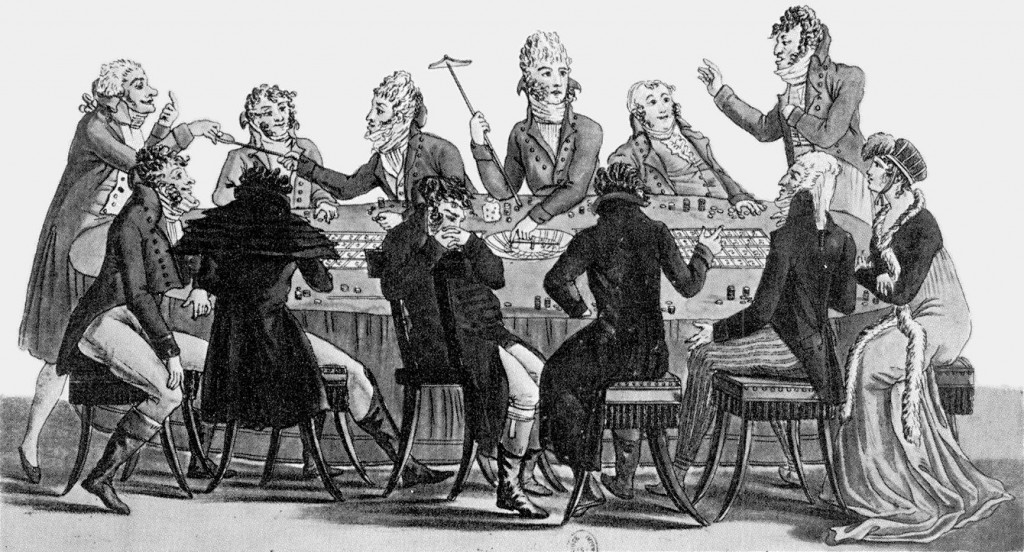
In 1654, the Chevalier de Mere, a French nobleman, posed the notorious ‘Problem of the Points’ to Blaise Pascal, an esteemed mathematician. The Problem of the Points concerned a game of chance containing two players with equal chances of winning any given round, and posed the question of how to split the stakes if one gambler has to leave the game prematurely. Despite several attempts, finding a definitive solution stumped even the greatest minds of the previous two hundred years, most notably Luca Pacioli (the ‘Father of Accounting’ ) in 1494 and Niccolò Tartaglia (solver of cubic equations and the first to apply maths to the paths of cannonballs, otherwise known as ballistics) in 1556. Even the great Galileo failed to discover a reasonable solution to the problem. Pascal was determined to find a logical and fair solution, and thus reached out to Pierre de Fermat, a brilliant mathematician himself. In their resulting correspondence, the pair developed the first explicit reasoning about what today is known as ‘expected value’ and laid the groundwork of probability, earning them both joint title of ‘the Fathers of Probability.’
Although it is easy to underplay the significance of this breakthrough as merely a clever, tidy solution, to appease opposing gamblers, in reality, it was truly revolutionary. It is difficult to understate how vast and significant the cognitive shift across Europe that occurred following this solution was. The notion that you can hang numbers into the future was alien to mathematicians merely years before this solution was proposed. Soon, others began to see the possibilities that this concept generated.
Within three years Christiaan Huygens adapted Fermat’s theory into a coherent pamphlet entitled ‘De Ratiociniis in ludo aleae,’ which was used as the standard text on probability for the next 50 years. Huygens attributed his developments to “some of the best mathematicians of France” (i.e. Pascal and Fermat). This text spread like wildfire among the academic community as it was evident that the new science of probability had the potential to transform the world. In the next few years, Huygens’ text was ripped out of the context of gambling and thrust into several aspects of life, including law and maths. In particular it was applied to a very different, brand new data set: mortality tables. Almost immediately, by using specific intricate data, insurance shifted from a form of blind gambling, based on hunches and guessing, to a remarkably accurate science.
It now is clear that this rapid chain reaction of discovery underpins all notions of mathematical ‘expected value’ and insurance came not from savvy merchants but from avid gamblers, eager to improve their craft.
To view Moog’s full article, follow this link below.
This essay was written by upper-sixth former Ben Watkins, and a finalist for the 2020 Independent Learning Assignment. The following provides a short abstract to the full essay, which can be found at the bottom.
Estimated read time of abstract: 1 minute Estimated read time of essay: 15 minutes
Is it possible that there are always two places on earth with the same temperature and pressure? How does the game show Blockbusters have any implications on algebraic topology? Can a general equilibrium ever be reached in an economy? Perhaps most crucially of all, can you ever truly mix a cup of tea?
My ILA provides insight into Brouwer’s fixed point theorem, a theorem found in the field of algebraic topology. It uncovers how a remarkable and seemingly counterintuitive result in what is often considered to be an abstract field of mathematics can have such broad and pertinent results in the real world. However, this isn’t to say that this ILA doesn’t uncover the result of this theorem for the sake of the beauty of it as much as uncovering it for the sake of its applications. Indeed, Luitzen Egbertus Jan Brouwer himself (the discoverer of this theorem as well as often being called ‘the Father of Topology’) was very much an upholder of this mentality: that maths has great importance for the sake of maths itself. Philosophically, Brouwer was a neo-intuitionist, which means that he thought of mathematics as purely a mental phenomenon, the result of constructive mental activity rather than uncovering any principles of an objective reality. He is often quoted in saying that “The construction itself is an art, its application to the world an evil parasite.”
To view Ben’s full article, follow this link below.
This essay was written by upper-sixth former Salvatore Nigrelli, and was the winner of the STEM category for the 2020 Independent Learning Assignment. The following provides a short abstract to the full essay, which can be found at the bottom.
Estimated read time of abstract: 4 minutes Estimated read time of essay: 1 hour 15 minutes
Supramolecular chemistry is all about making functional molecular assemblies without chemically bonding the component molecules together. Take the reaction scheme below:
Figure 1 The Formation of a Tennis Ball Capsule
In this scheme, two molecules are held together only using hydrogen bonds, to form a tennis ball shaped capsule. So it is the art of the supramolecular chemist to try and find innovative ways of making complex assemblies, with only a handful of intermolecular forces at their disposal. This is particularly shown in a type of structure called supramolecular cages.
Cages are ubiquitous throughout the world of chemistry. The Buckyball (Figure 2, is a simple type of molecular cage, consisting of 60 carbon atoms in a spherical shell arrangement.
Figure 2 The Structure of a Buckyball
Supramolecular cages take this idea one step further and ask the question: Can we design assemblies that allow us to put a small molecule ‘prisoner’ inside the cage?
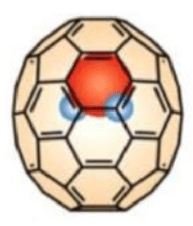
Take the Buckyball again. Using a type of complex reaction sequence called a molecular surgery reaction, it is possible to open the Buckyball up and place a water molecule inside, held in by the London forces it can form with the cage walls, transforming the Buckyball into an exciting supramolecular cage (Figure 3).
Figure 3 A Buckyball with an Encapsulated Water Molecule Inside
But you may ask, is there actually any point in making these tiny molecular prisons, or is it purely to indulge a few curious supramolecular chemists? The answer is that, although the field is relatively new, it is becoming paramount that the applications of supramolecular cages are innumerable, from security to chemical analysis, and even cancer therapy.
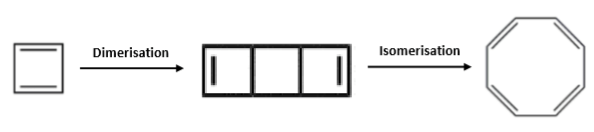
Cyclobutadiene is a pesky, annoying molecule – mainly because it reacts with itself extremely quickly in a dimerisation/isomerisation reaction to produce cyclooctatetraene:
Figure 4 The Dimerisation/Isomerisation Reaction of Cyclobutadiene
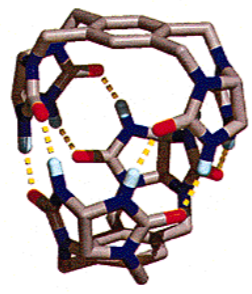
This self-reacting property of cyclobutadiene makes it extremely difficult to probe its chemical structure. Until only a few years ago, the only way that it had been achieved was by holding the molecules in an argon matrix close to absolute zero. However, with the advent of supramolecular cages, all of this changed. If you make a single cyclobutadiene molecule inside a type of supramolecular cage called a carcerand (Figure 5), no other molecules can get to it, so it stays in its original, undimerised form, and can be analysed using NMR spectroscopy. This is a classic example of how supramolecular cages are already revolutionising the field of chemistry.
Figure 5 An Example of a Carcerand
However, not all of the uses of supramolecular cages lie in a lab. The cage below is one such cage with extremely promising applications. In the presence of picric acid molecules, the cage can encapsulate one of them. Once the picric acid is inside the cage, it is close enough for a type of photochemical process called a Förster Resonance Energy Transfer to take place, which causes the cage to completely change colour. This is incredibly useful because picric acid is one of the most common explosives, so cages like these could be used in the next generation of fast, accurate explosives detectors and save countless lives.
Figure 6 A Supramolecular Cage to be Used in Explosives Detection
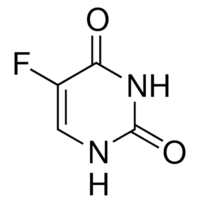
Looking into the monumental applications of supramolecular cages got me thinking – could I use the skills in supramolecular chemistry that I picked up over the course of my ILA and design a novel type of supramolecular cage to solve a real world problem? I decided to try and solve the problem of fluorouracil as a chemotherapy drug. The essence of the issue is that fluorouracil is an extremely promising cancer drug, but it also readily attacks brain tissue, and so its use is limited to very extreme cases. This appealed to me as a problem to solve because of the great positive impact that it would have, and the fact that fluorouracil (Figure 7) has a number of structural features that make it very attractive to supramolecular chemists.
Figure 7 The Structure of Fluorouracil
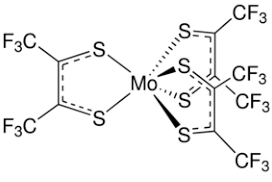
Fluorouracil can form three strong interactions with its fluorine and two nitrogen atoms that would allow it to be readily encapsulated. So if a cage with three parallel bars could be designed, it would strongly bind the fluorouracil molecule. However, finding a chemical arrangement that allows this to take place proved to be difficult, as it is a rare occurrence in chemistry. In the end, I managed to work out that if the cage used molybdenum centres with thiophene ligands, a trigonal prismatic arrangement around the molybdenum atom would be obtained (Figure 8) , making the three parallel bars possible.
Figure 8 A Molybdenum-Thiophene Complex Showing a Trigonal Prismatic Geometry
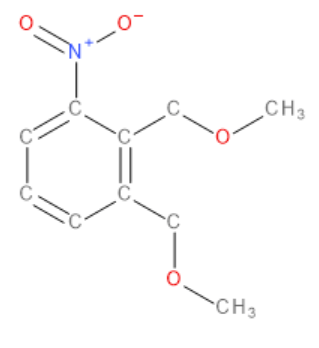
The key principle behind the cage is that the fluorouracil molecule stays inside the cage, so it cannot react with anything, until it enters the cancer cells, where the cages are opened, thereby allowing the fluorouracil to kill only the intended cancer cells. This targeted opening is a rather unusual feature of molecules, and so in the end I used the fact that, if nitrophenyl ether groups (Figure 9) were placed on each bar, in the presence of a targeted beam of UV light, the cage could be successfully opened once inside the intended cancer cells.
Figure 9 A Nitrophenyl Ether Group
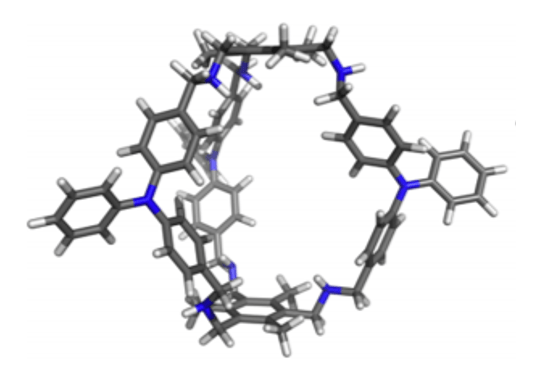
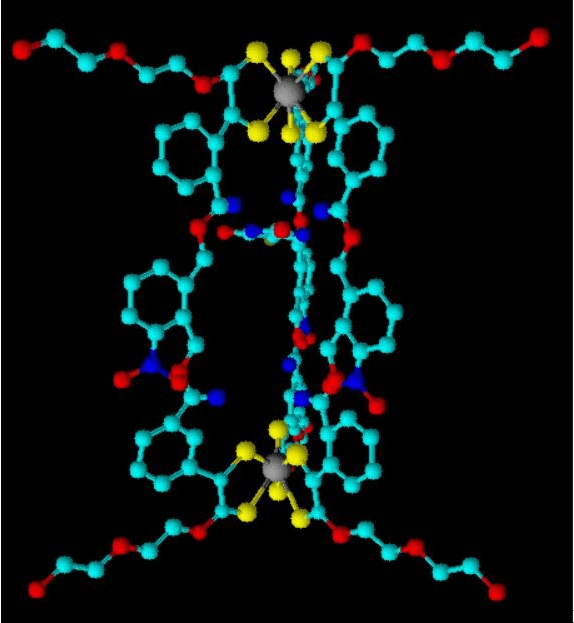
My final cage design is shown below:
Figure 10 My Final Cage Design
To summarise how my design works: Outside of the body, fluorouracil is encapsulated inside the cage, then a solution containing the encapsulated fluorouracil is injected into the patient’s bloodstream. Whilst inside the cage, no other molecules can get to the fluorouracil so it cannot react with anything and cause its bad side effects. Once the cage reaches the cancerous cells, using UV light, the cages in the cancer cells are opened, releasing the fluorouracil and killing only the intended cells. Therefore, this scheme allows for fluorouracil to be used to treat cancer patients, without causing any negative side effects.
To view Salv’s full article, follow this link below.
This article was written by fifth-former Janek Czarnek, and provides a shortened abstract of his original essay titled: “The Use of Pesticides: Beneficial or Detrimental”. To view his complete article, click the link at the end.
Estimated read time: 4 minutes
The Uses and Consequences of Pesticides and the Viability of Alternatives
It is clear that pest protection is key to agricultural sustainability globally, which is now more important than ever, as with a rapidly growing human population the demand for food is only becoming greater. It is estimated that between 26% and 40% of the world’s crop yield is lost each year due to pests, and this could rise up to 52% to 80% without the use of crop protection (1). Pesticides are chemical compounds used to kill pests, which can include any destructive organism that is a vector of disease or attacks crops or livestock. Not only are pesticides effective, at least in some circumstances, at directly eliminating the threat of pests, but they can also have secondary benefits such as preserving soil quality (1). However, although pesticides may be effective in some circumstances, their true long-term effectiveness and the consequences that they impose on non-target plants and animals pose an important question about their suitability for continued usage. Pesticides can have devastating consequences on non-target organisms and biodiversity, especially on fish where upon entering water sources can kill many fish through acute poisoning or oxygen depletion (2). Considering these effects on biodiversity, alongside increasing resistance to pesticides due to their great usage, are pesticides an effective long-term solution? Are they beneficial or detrimental to us, humans, and non-target plants and animals?
Although there are many consequences to pesticide usage, one cannot forget the crucial role they play in crop protection that serves benefits both for food and biofuel production, as well as in disease control and infrastructure maintenance. A full evaluation of how pesticide usage should change in the coming years must consider how their impacts can be mitigated and whether there are viable alternatives that can effectively protect crops on the scale needed.
Firstly, it is important to note that in some cases the consequences of pesticide usage can largely be mitigated through more careful, and even more regulated, application of these chemicals in a way that is less impactful on the surrounding ecosystems and organisms in addition to those who apply them. Mitigations of the consequences of pesticide use can include simply reading and following labels more closely (3), or using pesticides that do not leach and using more direct application rather than spray application to reduce pesticide drift and subsequently reducing the effects on surrounding ecosystems (3). Farmers can also be advised to leave a ‘buffer zone’ of crops around the edges of fields and agricultural land where pesticides have been used in order to reduce the chance of non-target plants and animals coming into contact with the pesticides (3). Responsible pesticide application can also include taking into consideration the surrounding geography as well as the weather; pesticides should be applied in dry conditions where rainfall is not forecasted because this prevents leaching and surface-run off water carrying the pesticide chemicals away and potentially affecting non target organisms (4). Similarly, pesticides should be avoided where the temperatures are high and when plants are suffering drought as this will increase the rate of transpiration where pesticides can dissolve into water and be dispersed (4). Many other precautions can also be taken; however, it is important to realise that many of the damaging consequences of pesticides can be reduced by taking actions considerate of the surroundings and using them responsibly.
On the other hand, safer alternatives that can still effectively protect crops are always preferable. Many of these alternatives come under the branch of organic integrated pest management, which includes several methods to control pests in an environmentally sustainable manner (5). An important part of this is effectively preventing pest populations growing in large numbers through methods such as companion planting, where plants that repel certain insects are planted, and biological control, where natural predators are introduced to organically control pest populations (6). An example of introducing natural predators is that of utilising ladybird larvae which are effective at managing aphid populations (6) or other symbiotic relationships such as that of fish in rice fields where fish will eat the pests attracted to the rice (7). In Bangladesh it was observed that pest infestation in rice fields containing only rice were 40-167% higher than those that also contained fish (7). Preventive measures can also be combined with increased monitoring of pests and mechanical pest control through means such as fences and nets to reduce access of pests to crops. Alternative chemical means to protect crops have been developed through genetic modification; for example, the genomes of maize and cotton have been altered to include genes that make the plant toxic to pests and hence protect themselves and the surrounding crops (8). All these methods can greatly reduce the impact that pesticides have on biodiversity, the recent Global Biodiversity Outlook 5 indicated that none of the 20 Aichi Biodiversity targets had been reached in the last decade (9) and the Living Planet Report 2020 has said that between 1970 and 2016 there has been a 68% decrease globally in populations of mammals, amphibians, birds and reptiles on average (10); this is up from 60% in 2018 when looking at the period 1970 to 2014 (11). Considering these many alternatives to protect crops from damage from pests, and the need now more than ever to do everything we can to stop reducing global biodiversity, it seems clear that action should be taken to increase the usage of these alternatives that greatly reduce the impact on non-target organisms.
Therefore, in conclusion, pesticides used for agricultural crop protection and other uses with exposure to the surrounding environment are detrimental and have far reaching consequences throughout ecosystems, on both plants and animals, as well as for ourselves. Although pesticides also have important benefits, these will become less effective in the future and can be replaced by alternatives that pose significantly less danger to us and non-target organisms. Moving forward we must ensure that the transition to these safer alternatives is carefully managed, so that they do not affect the availability of food and ensure that they can be provided on the necessary scale. Although this transition may take time, it is clear that pesticides do not have a place in our long-term solution for crop protection from pests and are overall more detrimental than beneficial.
To view Janek’s full article, follow this link below.
2. Fishel, Frederick M. Pesticide Effects on Nontarget Organisms. EDIS University of Florida IFAS Extension. [Online] [Cited: 7 October 2019.] https://edis.ifas.ufl.edu/pi122.
7. Halwart, M. and M.V., Gupta (eds.).Culture of Rice in Fish Fields. s.l. : FAO and The WorldFish Center, 2004. [Cited: 9 July 2020.] http://www.fao.org/3/a-a0823e.pdf.
This long-read article was written by sixth-former Salvatore Nigrelli.
Estimated read time: 9 minutes
Few molecules can be said to have completely transformed our understanding of science. Zeise’s salt (potassium trichloro(ethylene)platinate(II)), however, is one of these few.
Yellow crystals of Zeise’s salt were first isolated in 1827 by William Christopher Zeise, a Danish pharmacologist working at the University of Copenhagen. Upon stoichiometric analysis, Zeise concluded that the salt consisted of platinum and ethene, making it the first organometallic compound ever to be discovered. But, unbeknownst to Zeise, these pretty little crystals were about to revolutionise chemistry.
As news spread through the scientific community about Zeise’s discovery of the first organometallic compound, scientists from across the world rushed to try and synthesise more. In the years that followed, a plethora of weird and wonderful organometallic molecules were discovered, from cisplatin in 1845 to diethyl zinc in 1848. A new field of chemistry had been born. Since then, organometallic compounds have revolutionised a whole variety of different fields from polymers and plastics to medicine. In fact, it is now believed that Zeise’s salt could be the next big breakthrough in the battle against cancer.
The more that it was analysed, the more the question of the bonding in Zeise’s salt baffled chemists. No one could come up with an explanation of its bonding that agreed with its molecular formula. The answer finally came in the 1950s, more than 120 years after Zeise’s salt was first discovered, and it required the invention of a completely new theory of bonding that shook the world of theoretical chemistry and transformed the way that we think about molecules. Not bad for a few yellow crystals produced in a pharmacologist’s lab in Copenhagen.
Synthesis
Zeise’s original 1830 paper was entitled:
‘De chloride platinae et alcohole vini sese invicem permutabilis nec non de novis substantiis inde oviundis’
(The reaction between platinous chloride and wine alcohol and on the new substances arising therefrom)
In this paper, he laid out a method for producing Zeise’s salt by reacting platinum (IV) chloride with ethanol. Although the precise reaction was unknown at the time, it is now known to be:
When the potassium salt of [PtCl6]2- is used, upon evaporation of excess ethanol, yellow crystals of KPtCl3(C2H4) form. It is these crystals that are called Zeise’s salt.
This reaction is an example of a redox reaction; the platinum (IV) in [PtCl6]2- is reduced to platinum (II) in [PtCl3(C2H4)]– and ethanol (the reducing agent) is oxidised to form an aldehyde – ethanal in this case.
However, surprisingly, almost immediately after the publication of his first paper, Zeise published a second paper outlining a much more effective synthesis of his newly discovered salt that gave a much higher yield.
The reaction involved reacting platinum (II) chloride with ethanol:
[PtCl4]2- + C2H5OH [PtCl3(C2H4)]– + Cl– + H2O
Unlike the original reaction, this is not a redox reaction – the platinum atom is in the same oxidation state in [PtCl4]2- and [PtCl3(C2H4)]– – which suggests that there is a much more complicated mechanism underpinning this reaction.
There is no literature on the mechanism for this reaction, so the following mechanism is one that I have devised which I think is the most appropriate way of representing the actual reaction that is occurring:
The first stage of this reaction is the dehydration of ethanol into ethene. Such a step is possible due to a combination of energy input (the reaction is carried out at 170°C) and the action of the filled dyz orbital in the platinum atom of [PtCl4]2-.
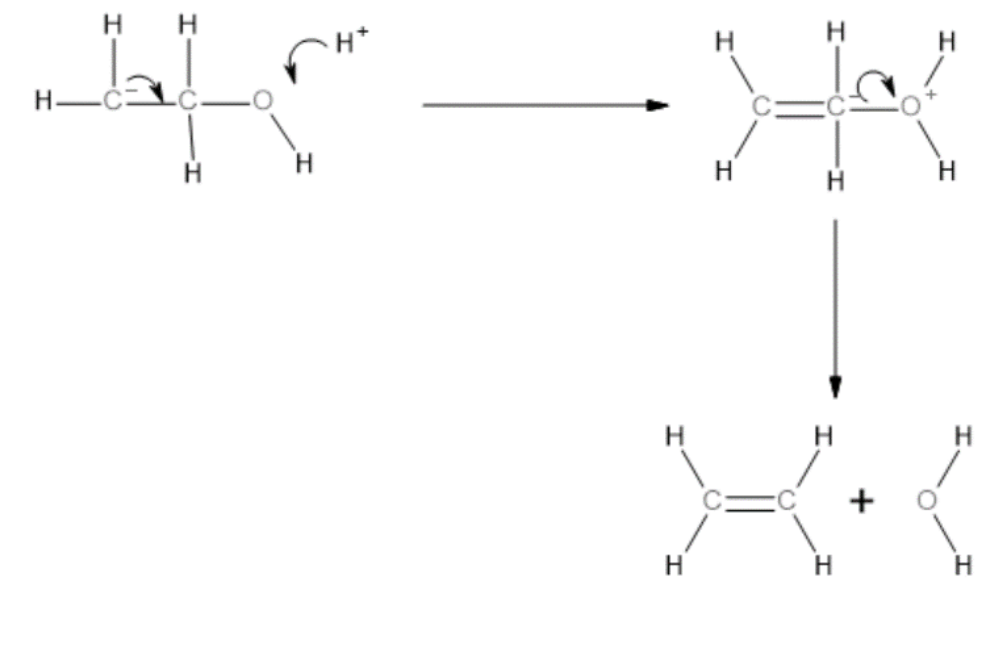
The filled dyz orbital of the platinum atom provides an area of high electron density and so exerts an attractive force on one of the hydrogen atoms in ethanol, thereby weakening the C-H bond. The high temperature means that the ethanol molecules have high kinetic energies, so when they collide, enough energy is transferred to break this weakened C-H bond heterolytically, forming a H+ ion and a carbanion [scheme 1].
Scheme 1 The mechanism for the breaking one of ethanol’s C-H bonds to produce a carbanion.
Then, a H+ ion produced in scheme 1 bonds with one of the lone pairs on the oxygen atom, forming a H2O group (which is a good leaving group). The lone pair on the carbanion then forms a bond between the two carbon atoms, creating a double bond; however, carbon atoms cannot have more than four bonds, so the C-O bond breaks and the H2O leaving group is released, forming ethene and water [scheme 2].
Scheme 2 The mechanism for the formation of ethene and water from the carbanion.
The second stage of this reaction is the substitution of one of the chloride ions in [PtCl4]2- for ethene. This is possible because the two Cl– ions in [PtCl4]2- are ligands, i.e. bonded to Pt by a coordination complex, which makes them easy to remove in ligand substitution reactions.
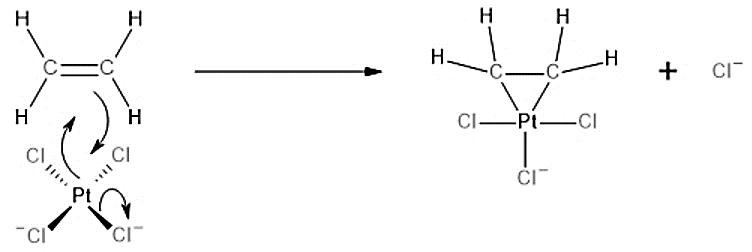
[PtCl4]2- consists of two chlorine atoms and two Cl– ligands bonded to a platinum atom. Due to the large difference in electronegativity between chlorine and platinum, the Pt-Cl bond is very polar, giving the platinum atom a δ+ charge. The double bond in ethene is an area of very high electron density and therefore acts as a nucleophile and is attracted to the δ+ charge on the platinum atom. The double bond in ethene then forms a coordination complex with the platinum atom forcing one of the Pt-Cl– coordination complexes to break, yielding [PtCl3(C2H4)]– and Cl– [scheme 3].
Scheme 3 The mechanism for the formation of [PtCl3(C2H4)]–.
There is a large yield of metallic platinum from this method of synthesising Zeise’s salt. This is due to a redox reaction that also occurs in which ethanol reduces [PtCl4]2- to platinum metal and is itself oxidised to ethanal:
[PtCl4]2-+ C2H5OH Pt + CH3COH + 4H+ + 4Cl–
This secondary reaction provides evidence for the mechanism that I have suggested because it shows that [PtCl4]2- plays a minimal role in the dehydration of ethanol to ethene because otherwise it would react in a redox reaction with ethanol rather than dehydrating it.
Infrared Spectral Analysis
Before considering the bonding in Zeise’s salt, we must first show that the platinum-ethene interaction in the molecule is in fact a bond and not simply a strong intermolecular force. The way that I will prove this is using the infrared (IR) spectra of Zeise’s salt and the reactants used to synthesise it. My logic behind this method is as follows: IR spectra show the different bonds present within substances – intermolecular forces of attraction do not show up on IR spectra
– therefore, if there is a peak present in the IR spectrum of Zeise’s salt that is not present in any of the spectra of the reactants, such a peak must be due to a bond that is not present in any of the reactants but is present in Zeise’s salt. The only bond in Zeise’s salt not present in any of its reactants is the platinum-ethene interaction. Therefore if such an inexplicable peak shows up on the IR spectrum, it shows that the platinum-ethene interaction is in fact a bond and not any other type of interaction.
The IR spectrum for Zeise’s salt in its crystalline hydrate form, which also contains waters of crystallisation, is:
(AIST spectral database)
Through the process of peak labelling by comparing this spectrum with the IR spectra of ethene, K2PtCl4, and waters of crystallisation (obtained from the IR spectrum for gypsum), it is now possible to determine if there are any unexplained peaks:
Peak A is due to the O-H bonds in the waters of crystallisation stretching.
Peak B is due to the merging of the peaks due to the Pt-Cl bonds stretching and the C-H bonds stretching.
Peak C is a weak signal that is due to the C-H bonds bending.
Peak D is due to the O-H bonds in the waters of crystallisation bending.
Peak E is due to the C=C double bond stretching (this is shifted right by around 150 cm-1 from the corresponding peak in the IR spectrum of ethene because of the interaction between the platinum atom and the double bond).
Peak F is due to the Pt-Cl– bond stretching.
Peak G is due to the C=C double bond bending.
Peak H is a weak signal due to the Pt-Cl bonds bending.
Peak I is a weak signal due to the Pt-Cl– bond bending.
Peak J is an unexplained peak.
Since there is an unexplained peak on the spectrum, this shows that the platinum-ethene interaction is in fact a bond rather than an intermolecular force. In fact, 406 cm-1 (the wavenumber of the unexplained peak) corresponds exactly with the universally accepted wavenumber for the platinum-ethene bond (Grogan & Nakamoto, 1966).
Bonding
The bonding in Zeise’s salt is a problem that puzzled chemists for over a hundred years after it was first discovered. In many representations, the platinum atom appears (incorrectly) to be bonded directly to the C=C double bond rather than to any particular atom.
To solve this problem, three chemists: Michael Dewar, Joseph Chatt, and L.A. Duncanson created a revolutionary new theory of bonding for transition metals, which is now known as the Dewar-Chatt-Duncanson (DCD) theory of bonding in their honour.
At the crux of the DCD theory of bonding is the action of both filled and empty d orbitals in the outer shells of transition metal atoms, which interact with bonding and antibonding orbitals of other atoms.
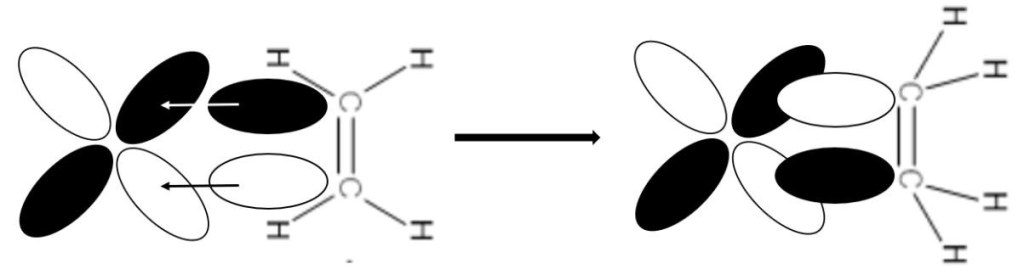
This is exactly what occurs in Zeise’s salt in a process called η2 bonding. The vacant dx2-y2 orbital receives electron density from the σ bonding orbital component of the C=C double bond in a process called σ donation. This creates a σ bonding orbital between the platinum atom and the two carbon atoms [scheme 4].
Scheme 4 σ donation between the σ component of the C=C double bond and the vacant dx2– y2 orbital of the platinum atom (black and white represent opposite phases of the orbitals).
The filled dyz orbital then donates electron density to the vacant π* antibonding orbital component of the C=C double bond in a process called π acceptance [scheme 5]. This creates a π backbond between the platinum atom and the two carbon atoms. Since an antibonding orbital is being filled, this weakens the C=C double bond, causing it to lengthen and its vibrational energy to lower – which is why the peak corresponding to the C=C double bond stretching is shifted to a lower wavenumber on the IR spectrum of Zeise’s salt compared with that of ethene.
Scheme 5 π acceptance between the filled dyz orbital of the platinum atom and the vacant π* orbital component of the C=C double bond.
This weakening of the C=C double bond due to the filling of the π* antibonding orbital also causes the molecular orbital to rehybridise from sp2 to sp3, which changes the molecular geometries around the carbon atoms from trigonal planar to tetrahedral. This causes the hydrogen atoms to move and face away from the incoming PtCl3 group (as shown in scheme 5).
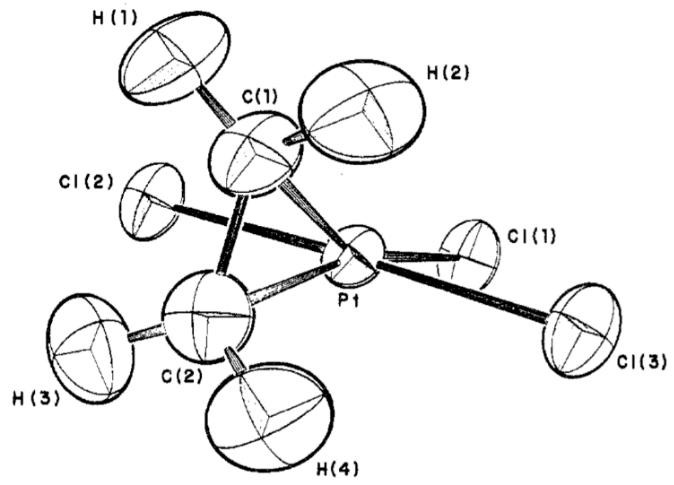
The bonding in Zeise’s salt is further complicated by a phenomenon known as the trans effect, which is that for molecules with square planar geometries, like Zeise’s salt, certain groups will remove electron density from, and thereby weaken the bonding of, the group trans (opposite) to them. This occurs in Zeise’s salt because the very electronegative Cl– group opposite the ethene group removes electron density from the platinum-ethene bond causing it to weaken and lengthen – the platinum-ethene bond length in Zeise’s salt is 2.340 Å, while the Pt-Cl bond length is 2.303 Å.
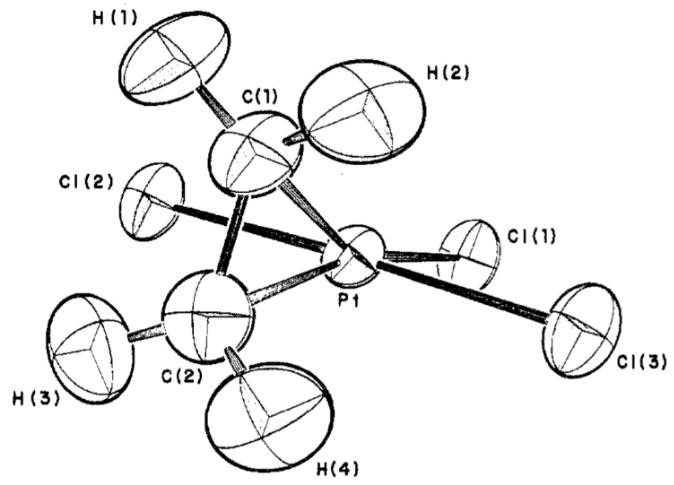
Once all of these bonding complications are considered, the final molecular geometry of
Zeise’s salt is:
Figure 1 The molecular geometry of Zeise’s salt (University of Boston, Massachusetts).
Importance of Zeise’s Salt
In 2015, it was discovered by researchers at the universities of Berlin and Innsbruck that Zeise’s salt can bind strongly to DNA. Although no full mechanism has been published, shown below is the mechanism that I think best describes the interactions that are occurring based on the reactions of similar compounds (such as cisplatin) and analysis of the proposed interactions involved:
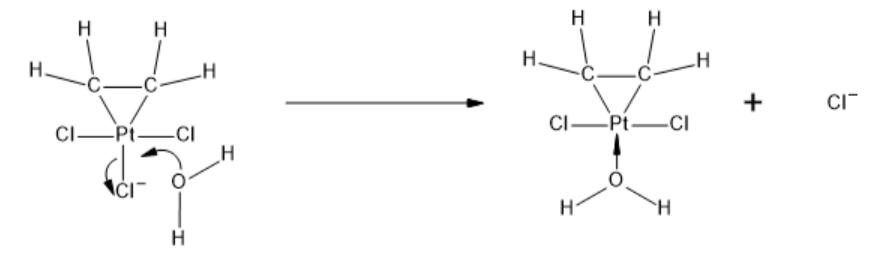
Upon entry into the cell, Zeise’s salt undergoes a ligand substitution reaction. Cl– – as it is a good leaving group – is substituted for a water molecule to produce the dichloroaqua(ethylene)platinate(II) ([PtCl2(H2O)(C2H4)]).
Scheme 6 The mechanism for the ligand substitution stage of the reaction.
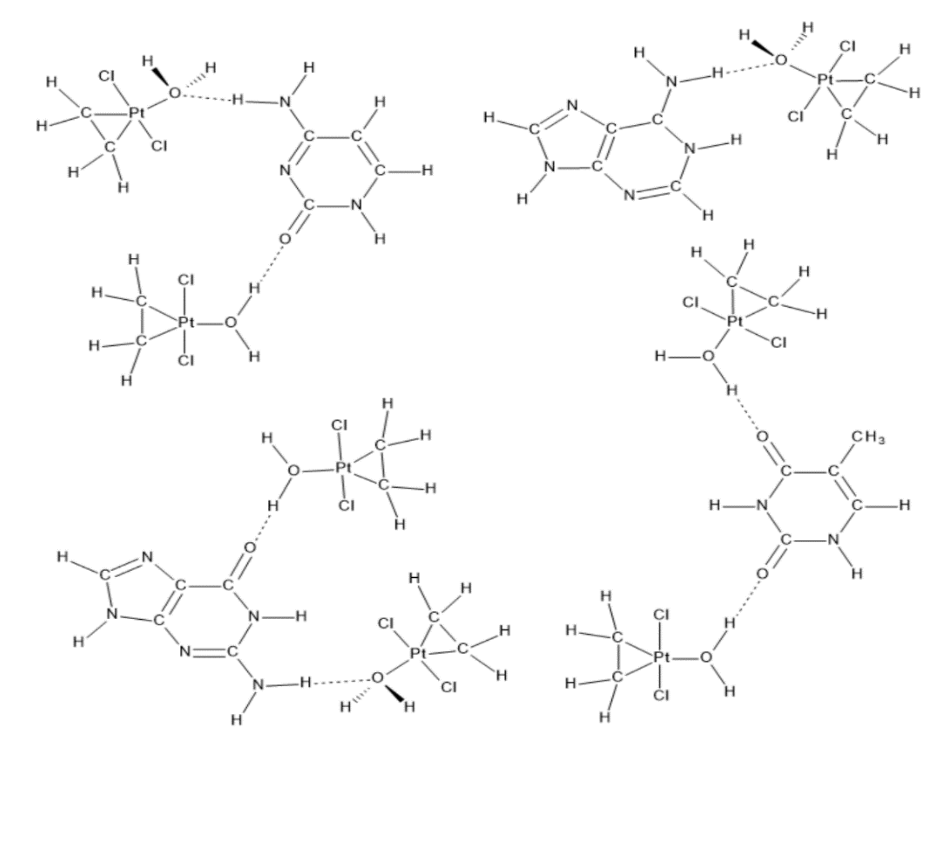
Now that there is a H2O ligand bonded to the platinum atom, [PtCl2(H2O)(C2H4)] can form hydrogen bonds with the four nucleobases [scheme 7] once the DNA double helix has been unravelled by DNA helicase at the start of the replication process.
Scheme 7 Hydrogen bonding between [PtCl2(H2O)(C2H4)] and (clockwise from top left) cytosine,adenine, guanine and thymine.
If the bases are hydrogen bonded to [PtCl2(H2O)(C2H4)]–, they cannot hydrogen bond to their complementary base. This means that the DNA double helix cannot reform and so no new DNA can be produced, which kills the cell. When Zeise’s salt is administered to cancerous tissue, by the above mechanism, the cancerous cells are unable to replicate their mutated DNA, which stops the cancer from spreading, and kills the cancerous cells. Although healthy cells suffer the same effects, since cancer cells replicate their DNA at a much higher rate than healthy body cells, the rate of death of cancerous cells is far higher than that of healthy cells.
Conclusion
William Christopher Zeise is one of chemistry’s forgotten heroes. It is amazing how some yellow crystals, made in a dingy laboratory in Copenhagen, have not only forged an entirely new branch of chemistry, but have also revolutionised the theory of chemical bonding. It seems like every time Zeise’s salt is looked at by scientists, it yields something new and important, and with the discovery of its possible use as an anti-cancer drug, it seems likely that Zeise’s salt has a bright future and will play an extremely important role in our society in years to come.
Bibliography
Balacco, G., & Natile, G. (1990). Formation of Platinum-Enamine Complexes by Reaction of Zeise’s salt with Secondary Amines. Journal of the Chemical Society, DaltonTransactions.
Bond, G. (1964). Platinum Metal Salts and Complexes as Homogenous Catalysts. PlatinumMetals Review, 92-98.
Grogan, M., & Nakamoto, K. (1966). Infrared Spectra and Normal Coordinate Analysis of Metal-Olefin Complexes. I. Zeise’s Salt Potassium Trichloro(ethylene)platinate(II) Monohydrate. Journal of the American Chemical Society , 5454-5460.
Hunt, L. (1984). The First Organometallic Compounds. Platinum Metals Review, 76-83.
La Salle University. (n.d.). Introduction to Organometallic Chemistry 3. Philadelphia.
Meieranz, S., Stefanopoulou, M., Rubner, G., Bensdorf, K., Kubutat, D., Sheldrick, W. S., & Gust, R. (2015). The Biological Activity of Zeise’s Salt and its Derivatives. AngewandteChemie, 1-5.
Merck KGaA. (2020). IR Spectrum Table and Chart. Retrieved from Sigma Aldrich Web Site:
This article was written by sixth-former James Miller.
Estimated read time: 4 minutes
I know that there are many articles on the internet discussing the implications of COVID-19 on the planet, and our time-limited efforts to save it, almost all written by people more specialised and knowledgeable than myself. Instead, what I hope to put to you today a less detailed but more overarching outlook on the situation and how we, as environmentalists, can make the best of it.
Direct Impacts:
With many countries shutting down borders to international travel and millions under lockdown, scientists at the Global Carbon Project predict a reduction in world carbon emissions by potentially more than 5% this year, a significant decrease considering that emissions have been steadily rising by 1.8% on average annually.
Further, air pollution, that kills an estimated 8.8 million people every year, is freefalling. Satellite imagery from NASA shows NO2 concentrations dropping dramatically over urban areas in China. In fact, it was thought that the measures implemented to contain Coronavirus might save more lives through reductions in air pollution than through actually preventing transmission, according to the Hugo Observatory (although I’m not sure whether that prediction still stands in light of how the pandemic has developed).
Viral videos have circulated social media showing wildlife returning to empty towns, starting to fill the spaces left by humans. While many, such as the Dolphins filmed returning to Venetian Canals, were false (and in fact were filmed hundreds of miles away) there have been plenty of reliable recorded cases. In Venice itself, where motorised transport has been hugely reduced, the water is crystal clear – silt is no longer being churned up from the bed. With the clearer water have arrived small shoals of fish, and Cormorants that feed on them. In Sardinia Wild Boar have been roaming the streets, in Wales Mountain Goats have been terrorising towns, and in Vancouver Orca have been returning closer to shore than witnessed in the last 50 years. With humans sealed safely inside our pods, our deserted urban landscape is turning into a modern Chernobyl.
But I’m afraid those looking for a silver lining from this pandemic will find the virus is by no means all good news for the environment. The projected reduction in emissions, if it does occur, is a temporary blip in an ever-increasing trend. A single year of reduced emissions is of little relevance in global warming – what matters is our cumulative anthropogenic emissions over time, our ‘carbon budget’ that we’re quickly using up. In fact, by virtue of having reduced particulates in the air, temperatures could temporarily increase, as those particles normally reflect some of the incoming radiation into Earth’s atmosphere. What’s more, overall, COVID-19 may well increase emissions long term through the rebound effect – where, in an effort to reboot their economies, countries relax environmental legislation. This is already happening in China and the US, the greatest polluters in the world.
Especially applicable to those of us in the conservation movement, political lobbying has largely come to a standstill, as we respect governments’ need to focus on the pressing global health crisis. Conservation charities are also going to go through a very difficult period, and will need all the help they can get.
The most worrying concern that I have, however, is what individuals and authorities are trying to get away with while international attention is diverted. I have heard accounts of Bolsonaro, Brazil’s President (a rather nefarious individual at the best of times) taking the opportunity to forcefully evict indigenous people from shanty towns, before bulldozing their homes to the ground. There are fears that poaching may increase as wildlife parks around the world close to the public. In our very own country, HS2 is powering on with its deforestation program, felling beloved ancient woodland and sending bat roosts and bird nests tumbling to the ground.
A poor year for conservation?
Perhaps the issue of the greatest relevance to campaigners and activists is the postponement of all the major environmental UN Summits scheduled for this year. We were due landmark meetings on oceans, biodiversity, sustainable development and climate change. It was meant to be an ‘environmental super year’ that activists had been gearing up to for months. The delay again has a variety of implications and has been met with mixed reactions. On one hand, we face such urgent timescales that a delay of even a few months is a crushing blow. However, there are some potential advantages. The US presidential election is due on Nov 3rd, so there is a chance that a Democrat might be in power, in which case the USA would likely rejoin the Paris Agreement and pursue more ambitious reductions. This could lead political leaders in other countries to adopt stronger plans as well. It will also give campaigners time to adjust to the situation and better prepare to influence decisions.
A Green Recovery
A particular opportunity presented by the pandemic is the chance to redesign our economy as it is rejuvenated: to put it through, as Caroline Lucas puts it, a ‘green recovery’. There will soon come some big decisions to be made by the Chancellor as to where money shall be invested, and those decisions will determine whether we run down the same tracks as the after 2008 depression (seeing emissions accelerate), or whether we take this unprecedented opportunity to radically change our economy and start to steer the ship away from the looming iceberg. We must, above all else, ensure we don’t solve one crisis by piling fuel on another. Depending on how the situation develops, the summits next year may be timed well to influence that recovery for many countries around the world.But I hope also that lockdown will make a lasting impression on society: that we will not go back to business as before, because we can’t afford to. Governments now can no longer deny the ability to make drastic changes of the type that the climate crisis demands. Companies may have seen potential to reduce unnecessary travel in their operations. People, now savouring their rationed outdoor time, might reconnect with nature and value it more than they otherwise would have done.
A Time for Reflection
Finally, bearing all of the above in mind, what does this mean for campaigners? We now all find ourselves with the prospect of being housebound for several months, unable to penetrate the media or influence our preoccupied politicians. I see this as an unfortunate opportunity. A chance to reflect on lobbying strategies and how to be more effective. A chance to develop our understanding of the science behind and politics surrounding everything we’re fighting for. And foremost, a chance to build wider international communities and stronger local communities. Political involvement of any sort keeps you very busy, trying to keep track of any developments and changes. This might be the most time we get given to prepare for anything, ever again. And it so happens to occur just before what may be the most important year in our lifetime for environmental politics.
I wish everyone the best over the coming months. Keep safe.
This tongue-in-cheek piece was written by OG Michael Kielstra, a current Mathematicsstudent at Harvard University.
Estimated read time: 4 minutes
Every so often, some wag will restart the debate over what is and what isn’t a “useful” degree. This might be someone on the internet, or it might be your father asking why he’s paying all this money for you to do East Asian Studies or Theater and Dance or Classics while your older brother studied Computer Science and now he’s pulling down £80 000 per year with benefits. Academics often weigh in to defend their own fields, often using phrases such as “[The thing I study] has never been more relevant than today”. The main divide seems to be between, on the one hand, the group that views education as job training and a college degree as an investment to be netted out against future earnings, and, on the other, the group that views education as teaching knowledge and good citizenship for their own sakes. I call these groups the plutophiles and sophophiles respectively. The sophophiles view the plutophiles as short-sighted money-grubbers with no sense of beauty, while the plutophiles view the sophophiles as pie-in-the-sky idealists with no sense of pragmatism.
The divide between these two groups is very easy to see on a college campus. Arts and humanities majors tend to be sophophiles, resigned to the fact that they will never earn as much as the people in the science building and making highfalutin arguments about how that doesn’t matter. Science and engineering majors, on the other hand, are more often plutophiles, angling for high-paying jobs in the financial or technological sectors. As we will see, there is more nuance to it than that, but this, I would say, matches up fairly well with most peoples’ first impressions.
At this point I should introduce myself. My name is Michael Kielstra and I am a math student at Harvard. This should immediately put me on the list of plutophiles, or at least on the list of people with degrees that their grandfather isn’t ostentatiously ashamed to talk about. Ever since theology was dethroned, mathematics has been the queen of the sciences, and, knowing the job opportunities for engineers, we can only imagine those open to mathematicians.
However, a math degree, from a plutophilic standpoint, doesn’t actually make very much sense. As anyone who has heard mathematicians talk will know, mathematics very quickly becomes abstract and abstruse. Only this year, I have done problem sets involving hierarchies of infinite numbers, derivatives in curved high-dimensional space, and symmetries of arbitrarily complex shapes. More importantly, the engineers don’t need much of this. I am currently enrolled in a class on high-performance computing, and my fellow-students are struggling with algebra which, to me, is almost trivial. I’m not trying to brag here: it is in fact I who am the stupid one, plutophilically, spending all this time practicing algebra that our brightest high-performance computing experts can mostly get by without. Engineers and computer scientists know a lot of mathematics, certainly, but much less than mathematicians do. They fill up that space in their heads, instead, with practical knowledge that equips them to make money in the real world. The plutophile laughs at mathematicians.
This would explain why so many mathematics professors are sophophiles, regularly publishing tracts eulogizing the beauty of their “independent world/created out of pure intelligence.” (Even Keats got in on this.) That doesn’t make much sense either. I can, and often do, rhapsodize with the best of them about the wonder of high-level mathematics, but it is a wonder denied pretty much entirely to people who aren’t willing to spend hours and hours and hours working on problems that seem hopelessly
convoluted and nigh-on incomprehensible even to professionals. Mathematics has a very high person-hours-to-beauty ratio. On top of that, once the modern professional mathematician does create something beautiful, there are possibly ten thousand people in the world who can immediately appreciate it, and possibly one hundred who can appreciate it fully in context.
And mathematics provides next to no training in citizenship, leadership, or any of the ineffable qualities that sophophiles so regularly argue can be taught at university. Mathematicians are famously absent-minded and socially unaware. Imperial College, in the second year of their mathematics degree, brings in a drama coach – not an executive coach or an education expert, a drama coach – to teach the students how to give engaging presentations. The culture of pure mathematics, although in many ways wonderful, has a tendency towards detachment, arrogance, and the worst kind of agnosticism. The existence or non-existence of God does not follow from the Morse-Kelley axioms of set theory, so why should we care? Why should we care about people who care?
So if mathematics makes no sense to a sophophile, and it makes no sense to a plutophile, we may draw one of two conclusions from the fact that I’m still doing it. The first is that I am thick. I am going to ignore that possibility. The alternative is that the distinction between plutophiles and sophophiles is incomplete at best. This is strange: express any even mildly controversial opinion about higher education, and you will very easily find someone ready to call you a dirty sophophile or a filthy plutophile. However, I believe that grouping our opponents, and thereby ourselves, into these categories is a major mistake. After all, neither category can explain a degree as popular as mathematics. The sophophiles and plutophiles, locked in combat over the purpose of higher education, have so limited their viewpoint that they cannot understand that there might be subjects and courses without a fixed purpose at all.
This is the fundamental error: viewing education as a means to an end, whether that end is to produce billionaires or to produce, to borrow a phrase I loathe from the official mission of Harvard College, citizens and citizen-leaders. Talking about whether something is a “useless” degree presupposes that “use” is an adjective that should always apply to degrees in the first place. The mathematics degree is best explained not as a means to an end, but as an end in itself. I love to do mathematics, I love to learn mathematics, and, yes, deep down, I even love the feeling of working on a really nasty problem set. I love the subject, I personally find it beautiful even if I know that beauty is very esoteric, and I would find a life full of it to be fulfilling. That is all the defense I can give for my life choices, and I believe it makes me an incurable Romantic that I believe it is all the defense I need.
A college degree, in any subject, with any sort of usefulness, is just another option that may not be right for everyone. If you want to create beauty, be an artist. If you want to be a citizen-leader, volunteer. If you want to do what you love, and the thing you love happens to be something for which a college offers a degree, go to college. I want to do math, and I am privileged enough to be able to afford to use a facility designed to help me to do math, so I make use of that facility.
If you want to make money, honestly, I’d recommend plumbing.






 [PtCl3(C2H4)]– + 3Cl– + H2O + CH3COH + 2H+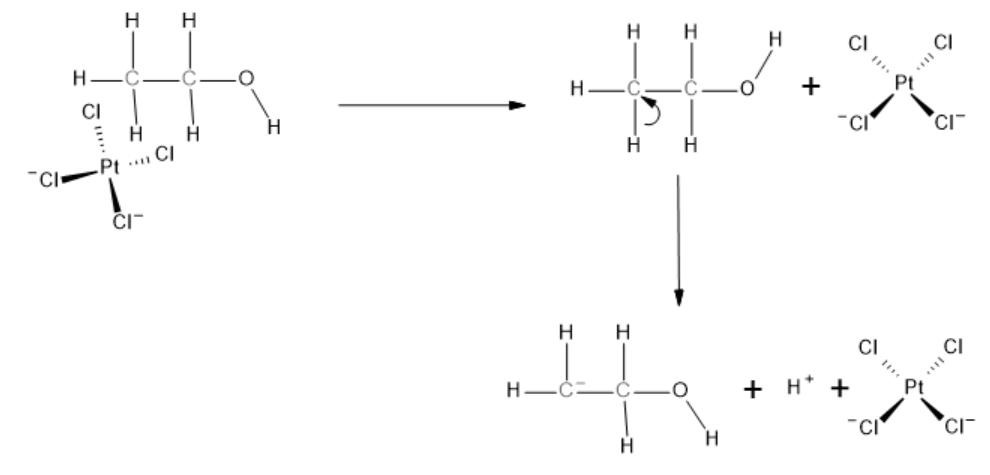



 The Unchained Library